Fun fact: the phrase “swag gap” didn’t come from fashion theory or relationship psychology—it came from memes, screenshots, and brutally honest comment sections.
The “Swag Gap”: When Style Turns Into a Relationship Debate is not really about clothes. It never was. What started as playful internet humour—partners photographed side by side, one dressed like a runway editorial and the other like they just rolled out of bed—has quietly grown into a conversation about identity, confidence, attraction, and power inside relationships.
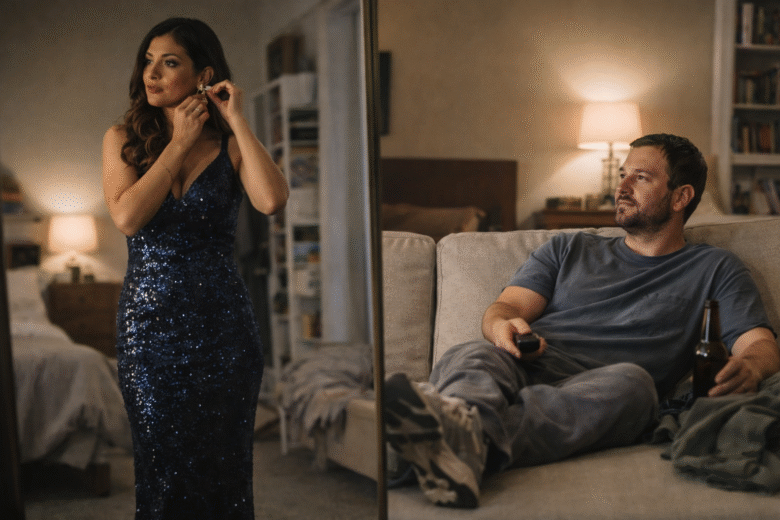
Scroll long enough, and you’ll see it everywhere. A sharply dressed woman next to a man in faded jeans and chappals. A groom glowing in tailored perfection beside a bride whose outfit screams effort and planning—or sometimes the reverse. The caption is always light, almost joking. “Swag gap too strong.” But beneath the humour sits a question we rarely say out loud: Why do style differences bother us so much when love is supposed to be enough?
The internet loves visual contrast, and the swag gap is visual drama at its finest. Two people, one frame, wildly different levels of effort. Memes feast on that difference, but what they really expose is how deeply we tie appearance to value.
Style, whether we admit it or not, has become shorthand for seriousness. When one partner consistently “shows up” visually and the other doesn’t, people read intention into it. Effort becomes love. Neglect becomes indifference. And suddenly, a hoodie isn’t just a hoodie—it’s a statement.
In India, especially, where appearance is deeply social, the swag gap hits a nerve. Weddings are planned for months. Clothes are curated with care. Family photos are permanent records. When one partner appears underdressed, it’s seen not just as personal style, but as social embarrassment. Memes thrive here because they reflect a real, unspoken tension: who is carrying the burden of presentation?
But the swag gap isn’t always about laziness or mismatch. Sometimes it’s about comfort. Sometimes it’s about class background. Sometimes it’s about gender expectations that quietly demand women perform beauty while men are allowed effort-free acceptance.
Look closely at most viral Swag Gap memes, and you’ll notice a pattern. More often than not, it’s the woman who is expected to close the gap. Her style is praised. His is excused. The joke lands softly on him but sharply on her—because if she looks good, it’s effort; if he doesn’t, it’s authenticity.
That imbalance matters.

Psychologists have long pointed out that self-image within relationships is shaped not just by how we see ourselves, but by how we are reflected back. When one partner constantly receives compliments for “natural confidence” while the other is evaluated for appearance, resentment quietly grows. The swag gap becomes emotional, not aesthetic.
There’s also a class layer to this conversation that memes rarely acknowledge. Style costs money, time, and exposure. Not everyone grows up learning how to dress for occasions, how to coordinate colours, how to “carry” an outfit. When memes shame someone for not having swag, they often shame access, not attitude.
Then there’s the digital amplification effect. Social media freezes moments that were once fleeting. A mismatched outfit at a party becomes permanent evidence. Couples don’t just negotiate style privately anymore—they negotiate it under public gaze. Comments compare. Strangers judge. And suddenly, personal comfort is weighed against online approval.
Yet, for all its cruelty, the swag gap meme has also opened space for honesty. Many couples now talk openly about how they want to present themselves together. Some negotiate dress codes for events. Some laugh it off. Some realise the gap reflects deeper mismatches—in values, priorities, or emotional labour.
What’s fascinating is that the conversation is slowly shifting. New memes flip the script. Men upgrading their style. Women choosing comfort over spectacle. Couples intentionally mismatching as a quiet rebellion. The swag gap is no longer just a punchline—it’s becoming a mirror.
And mirrors, even funny ones, force recognition.
Conclusion
The swag gap may look like internet fluff, but it reveals something real: we are still learning how to balance individuality with partnership, comfort with effort, authenticity with social expectation.
Style differences will always exist. The question is not whether couples should match, but whether they feel seen, respected, and equally invested. When memes make us laugh and wince at the same time, it’s usually because they’ve touched a truth we weren’t ready to say plainly.
Maybe the real swag isn’t in the clothes at all—but in the courage to show up as yourself without making your partner feel like they’re carrying the weight alone.
Author’s Note
I see these moments daily—in classrooms, in weddings, in families negotiating how much of themselves to reveal to the world. Writing about the swag gap felt necessary because humour often hides discomfort, and discomfort is where learning begins. I believe writing should slow us down just enough to notice what we usually scroll past—and remind us that even jokes are trying to tell us something.
G.C., Ecosociosphere contributor.