
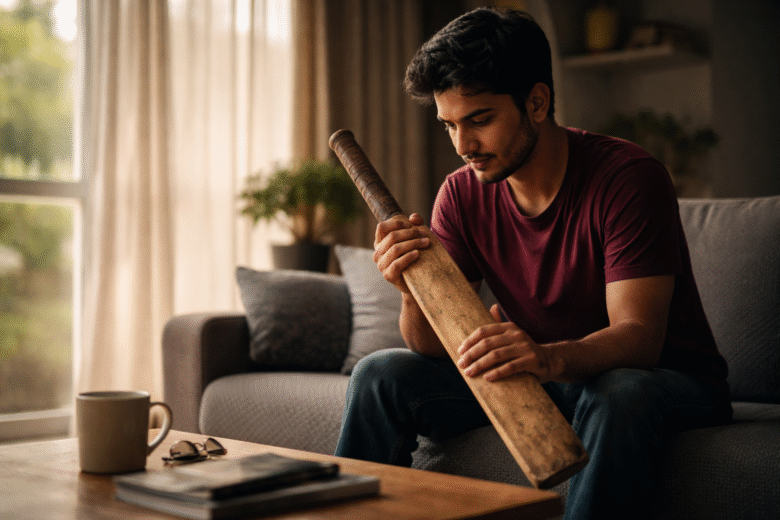
Fun fact: Your brain is wired to remember emotional moments more strongly than ordinary ones—which is why a random childhood game can stay with you longer than yesterday’s entire day.
“Why Adults Suddenly Become Nostalgic for Childhood Games” isn’t just a topic—it’s that quiet feeling that hits you out of nowhere. Maybe while cleaning a drawer and finding an old rubber ball. Maybe when you see kids shouting in a lane. Or maybe at night, when everything is silent and your mind decides to rewind.
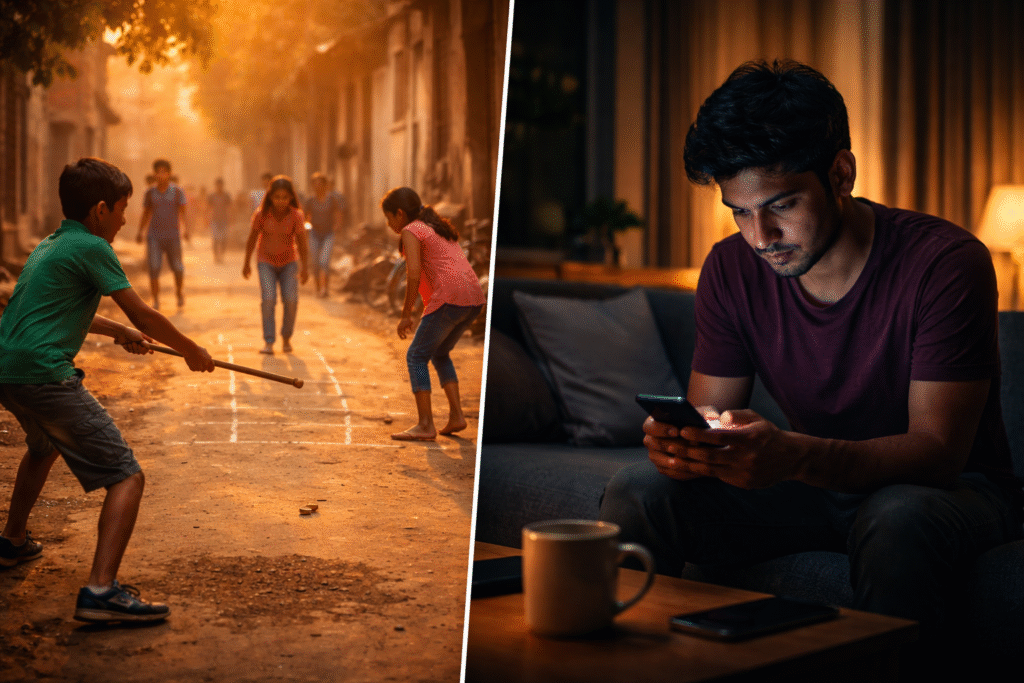
And suddenly, you’re not thinking about emails or deadlines. You’re thinking about that one evening when the light was fading, someone was arguing over whether the ball was out, and nobody wanted to go home.
It’s strange, isn’t it? We don’t miss our old homework. We don’t miss school uniforms. But we miss the games. Deeply. Almost painfully.
We Didn’t Know It Was Special
When we were kids, nothing felt like a “memory in the making.” It was just another day. Another game. Another argument. Another laugh. We didn’t pause to appreciate it. We didn’t take photos. We didn’t think, “One day I’ll miss this.”
But now, looking back, those moments feel… heavier. Not because they were dramatic, but because they were effortless. You didn’t need a reason to step outside. You didn’t need to plan. You just went. And someone was always there.
That kind of ease? It’s rare now.
Adulthood Is Always Asking Something from You
Here’s the truth we don’t say enough: adulthood is exhausting in a very quiet way. There’s always something pending. Something to fix. Something to worry about. Even when you’re resting, a part of your mind is still running in the background.
And then, out of nowhere, a memory appears—running barefoot, shouting your lungs out, laughing without thinking how you look. That contrast hits hard.
Childhood games didn’t demand anything from you. They didn’t ask you to be better, smarter, more productive. They just let you be. And maybe that’s the real gap we feel.
We Replaced Playing with Watching
Somewhere along the way, we drifted from playing the game to simply watching it unfold.
We watch matches instead of playing them.
We scroll instead of running.
We react instead of participating.
It sounds small, but it changes everything. Playing involves your body, your voice, your presence. Watching keeps you on the outside. And after a while, that distance starts to feel empty.
That’s when nostalgia shows up—not loudly, but like a quiet nudge. A reminder that we once lived inside moments, not just observed them.
Those Games Were About People, Not Just Play
Think about it carefully. Was it really about the game? Or was it about who you were playing with?
The friend who always cheated a little.
The one who never followed rules.
The one who laughed the loudest.
Games were just an excuse to be together. Today, we still connect—but differently. More carefully. More formally. We schedule calls. We send messages. We reply when we can.
Back then, connection didn’t need effort. It just… happened. That’s what we miss when we say we miss childhood games.
Time Felt Different Then
As children, evenings felt endless. You could play, argue, restart the game, change teams, and still have time left.
Now? Time feels like it’s always slipping. You check the clock more than you check how you feel. And maybe that’s why old memories feel so wide and open. Because they weren’t squeezed between responsibilities.
Childhood games lived in that open space. And now that space feels… gone.
Nostalgia Is Not Weakness
There’s this idea that nostalgia means you’re stuck in the past. But honestly, it feels more like your mind trying to balance something. When life becomes too serious, too structured, too controlled—your brain looks for moments where things were lighter.
It’s not about escaping reality.
It’s about remembering another version of it.
A version where you didn’t have to measure your worth every day.
The Awkward Truth: We Don’t Let Ourselves Play Anymore
Even when we get the chance, we hesitate. We feel awkward. Self-conscious.
“What will people think?”
“Is this childish?”
Somewhere along the way, we decided that growing up means giving up play. But maybe that’s not maturity. Maybe that’s just… conditioning. Because if you ever see adults actually playing—properly playing—they laugh differently. Freely. Like something unclenched inside them.
Maybe We’re Not Missing the Past—We’re Missing Ourselves
This is the uncomfortable part. When we say we miss childhood games, maybe we’re not missing the games. Maybe we’re missing:
The version of us that wasn’t overthinking.
The version of us that didn’t carry so much weight.
The version of us that could just exist without constantly evaluating everything.
That version still exists. Somewhere under all the layers we’ve built. Nostalgia just… points toward it.
Conclusion
This blog isn’t really about the past. It’s about the present—and what feels missing in it. Maybe we don’t need to go back.
But maybe we need to stop treating joy like something that needs permission. Maybe we need to step outside once in a while—not for fitness, not for productivity—but just to play. Even if it feels strange at first.
Because those memories we keep returning to? They’re not just memories. They’re reminders.
Author’s Note
There’s a strange honesty in the things we feel nostalgic about. They don’t shout. They don’t demand attention. But they stay. And maybe writing is just a way of listening more carefully to those parts of ourselves we keep overlooking.
G.C., Ecosociosphere contributor.



Comments
Your writing always inspires me to learn more.
This gave me a whole new perspective. Thanks for opening my eyes.
This was easy to follow, even for someone new like me.
This was really well done. I can tell a lot of thought went into making it clear and user-friendly. Keep up the good work!
You bring a fresh voice to a well-covered topic.
I appreciate the honesty and openness in your writing.
It’s refreshing to find something that feels honest and genuinely useful. Thanks for sharing your knowledge in such a clear way.
I never thought about it that way before. Great insight!