Fun fact: Ecosystems with more kinds of plants and animals often weather climate extremes better than those with fewer species—like nature’s own shock absorbers.
In an age where headlines are dominated by heatwaves, floods, and food shortages, the phrase “Nature’s Rich Tapestry” might sound poetic—but make no mistake: it’s a survival strategy. Diverse ecosystems aren’t just ecological poetry; they are practical, tested, and indispensable buffers that shield humanity from climate shocks. Today’s planet is changing fast, but ecological diversity gives us a fighting chance to adapt, respond, and thrive in uncertainty.
Imagine a forest made up of only one kind of tree. Now imagine a garden bursting with dozens of species, each playing a unique role. Which do you think is more resilient when drought strikes or pests invade?
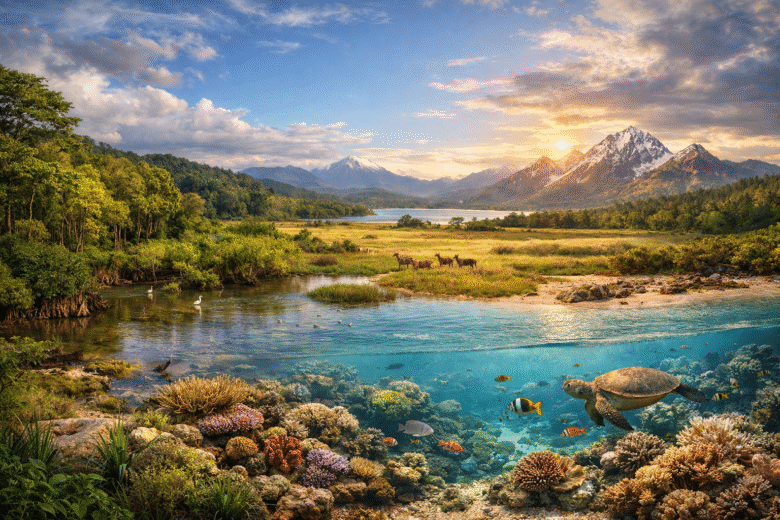
In scientific terms, biodiversity—the variety of life across genes, species, and ecosystems—creates multiple pathways for energy flow, nutrient cycling, and overall ecosystem functioning. This means that when one part of a system fails, others can step in, helping the whole system endure and recover.
A useful metaphor ecologists like to use is that of a house of cards: remove a critical species, and the structure can collapse. But in a richly diverse system, lots of “cards” support key ecological functions, giving the system strength and flexibility.
Resilience in Action: Ecosystems That Buffer Climate Stress
Wetlands: Nature’s Flood Defenders
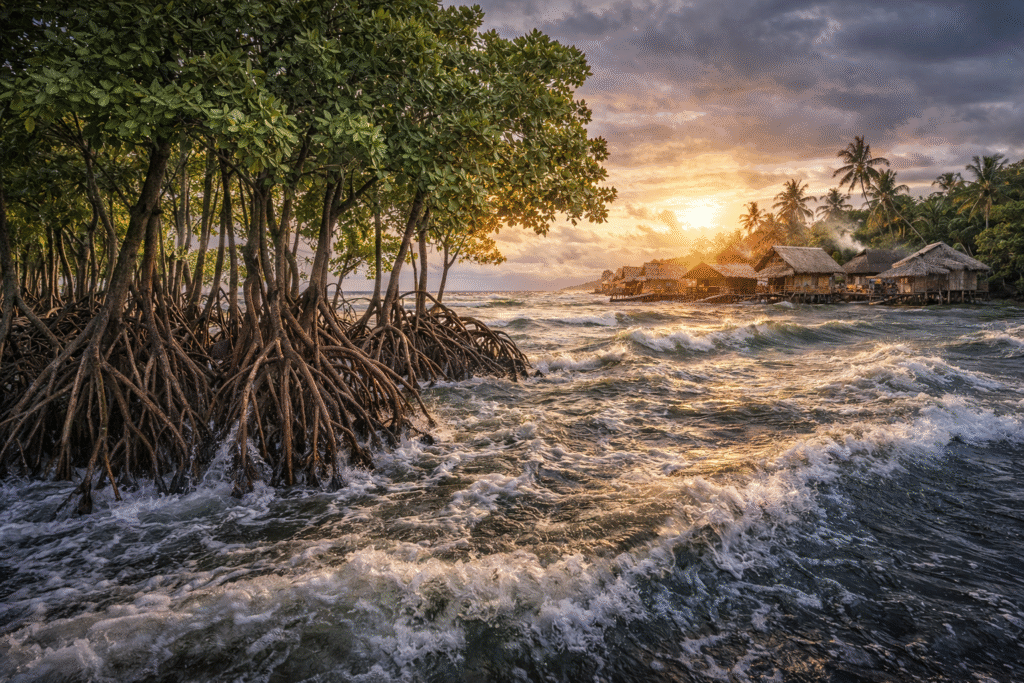
Wetlands—marshes, swamps, and mangroves—act as natural sponges. When storms and heavy rains hit, they absorb and slowly release water, reducing flood peaks downstream. Wetland vegetation also filters pollutants, improving water quality for people and wildlife alike.
In places where diverse wetland plants and animals flourish, these buffering services are stronger and more reliable because different species perform different ecological roles—stabilizing soil, cycling nutrients, and slowing water.
Forests: More Than Timber
Recent research shows forests with a mix of tree species are often far more resistant to extreme weather than monoculture plantations. Diverse forests can better withstand storms, droughts, pests, and disease outbreaks because multiple species share and spread risk.
In India, this principle plays out across its many landscapes—from the Himalayan foothills to the coastal mangroves. Forests that include a rich mix of native species are more adept at carbon storage, moisture retention, and soil conservation—key components of climate mitigation and adaptation.
Species Stories: How Life Forms We Often Ignore Matter
Take the humble pollinator—bees, butterflies, and other insects. Their role in food production is enormous, yet their populations are declining in many parts of the world because of habitat loss and pesticides. Without these tiny workhorses, crop yields fall, food prices rise, and rural livelihoods suffer. This cascade of impacts illustrates a profound truth: ecosystem services are intertwined with human well-being.
Another example is drought refuges—areas that provide shelter for plants and animals during extreme dry conditions. These refuges keep species alive through harsh spells and help regenerate ecosystems afterward. Protecting a diversity of habitats means protecting these vital lifelines.
India’s Biodiversity: A Multi-Layered Safety Net
India is recognized as one of the world’s most biologically diverse countries, housing a remarkable array of ecosystems from deserts and grasslands to rainforests and coral reefs.
Yet, less than 5% of India’s land is effectively protected, and many ecosystems remain vulnerable to development and degradation.
The good news? Success stories like India’s tiger conservation efforts—which have seen the tiger population increase significantly over recent decades—show how focused protection can yield real outcomes for wildlife and the broader ecosystems they represent.
Diversity as Climate Insurance
At this point, it’s worth repeating: diverse ecosystems are nature’s best insurance policy against climate chaos.
Why? Because diversity distributes risk. When climate extremes intensify—be it heatwaves, erratic rains, or rising seas—a system with many interacting species and functions can absorb stress and bounce back better than a stripped-down system. In contrast, ecosystems that lack diversity are brittle: they falter quickly under pressure, leading to cascading failure of services humans depend on, like water purification, carbon storage, and food production.
Conclusion: Our Choice, Our Future
Protecting the rich tapestry of life on Earth isn’t just a romantic ideal—it’s a practical necessity. As we navigate the unpredictable waters of climate change, biodiverse ecosystems offer stability, resilience, and hope. They are nature’s buffer against shocks and a vital source of ecosystem services that sustain human societies.
If we fail to protect them, we aren’t just losing beauty and wonder—we’re undermining our own resilience. The call to action is simple: protect habitats, restore degraded landscapes, and value the diversity of life not as a luxury, but as essential infrastructure for a livable future.
Author’s Note
I write about topics like this not because they are trendy, but because every time I step outside and witness the cacophony of life—birds in flight, insects buzzing, trees whispering—I’m struck by how delicate, yet undeniably resilient, nature can be.
Protecting diverse ecosystems is not just scientific advice—it’s an emotional investment in the world we want our children to inherit. Writing matters not just to inform, but to awaken a deeper sense of connection and responsibility. This topic matters because resilience isn’t abstract; it’s the ground beneath our feet and the air in our lungs.
G.C., Ecosociosphere contributor.
References and Further Reading
- United Nations on Biodiversity and Climate Change
- ScienceDirect on Biodiversity and Ecosystem Services
- Wageningen University and Research on Ecosystem Resilience
- India Biodiversity and Climate Change Report, Ministry of Environment, Forest and Climate Change, Government of India
- Nature Journal on Conservation Priorities in India
- United Nations Decade on Ecosystem Restoration