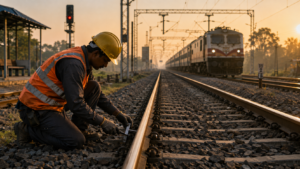
Fun fact: In 2021, a single online post about “lying flat” in China was shared so widely that it was censored within days—proof that sometimes the most powerful protest is simply doing… nothing.
When Beijing recently announced a campaign to remove “negative emotions” from social media, it sounded almost surreal. Imagine being told not just what you can say—but how you are allowed to feel. Yet this move did not appear in a vacuum. It arrived at a moment when young people across China were already whispering two quiet phrases to themselves: lying flat and bai lan.
“Lying flat” means opting out of relentless competition—doing the bare minimum, refusing the race. “Bai lan” roughly translates to “let it rot.” It is not laziness. It is exhaustion that has hardened into resignation.
And here is the uncomfortable truth: this isn’t just a Chinese story.
A Generation Under Pressure
China’s economic rise has been breathtaking. But growth brings expectation. Long working hours, intense academic pressure, skyrocketing housing costs, and shrinking job opportunities have collided with the dreams of millions of young graduates. Youth unemployment has climbed in recent years, creating a sense that effort no longer guarantees reward.
On social platforms like Weibo (a Chinese microblogging platform similar to Twitter) and Douyin (a short-video platform owned by ByteDance, a Chinese technology company), young people shared their frustration openly. Some posted about refusing the overtime culture. Others wrote about abandoning career ambition altogether.
Then came the crackdown. Authorities described a need to promote “positive energy.” Social media platforms were instructed to remove content that spread pessimism or anxiety. Influencers who expressed despair found their accounts suspended.
But you cannot regulate burnout away.
Is “Lying Flat” Laziness or Survival?
From the outside, “lying flat” can look like apathy. Critics argue it threatens productivity. Governments fear it undermines national ambition.
But psychologically, it can be read as a coping mechanism.
When young adults feel trapped between impossible expectations and limited opportunities, they face chronic stress. The body stays in a constant state of mild stress. Sleep suffers. Motivation drops. Anxiety grows. Eventually, the mind does something protective: it lowers the bar.
“Fine,” the brain says. “If I cannot win the race, I will step off the track.”
That step can look like withdrawal. It can also look like a quiet rebellion.
Across India, the United States of America (USA), South Korea, and parts of Europe, young people echo similar sentiments. In India, conversations about competitive exams, unstable jobs, and the pressure to “settle” mirror this fatigue. In the USA, discussions about burnout and “quiet quitting” have entered mainstream culture. Different languages. Same sigh.
The Emotional Cost of Silence
When a state discourages “negative emotions” online, it creates a paradox. On one hand, it seeks social harmony. On the other, it removes one of the few safe outlets for collective catharsis.
Social media often functions as a pressure valve. A graduate in Shanghai posting about job rejection may find comfort in thousands of similar voices. A young woman in Delhi sharing exam stress may feel less alone.
If those expressions are erased, isolation grows.
Mental health research consistently shows that suppressing emotion does not eliminate it. It pushes it inward. Over time, suppressed frustration can transform into numbness. And numbness is harder to detect than anger.
There is also a deeper cultural layer. In many Asian societies, collective stability is valued highly. Personal despair may be seen as destabilising. Yet when personal pain is silenced in the name of stability, the individual carries the burden alone.

The Meaning Behind “Bai Lan”
“Bai lan” is darker than “lying flat.” It suggests decay. It whispers, “Why try?”
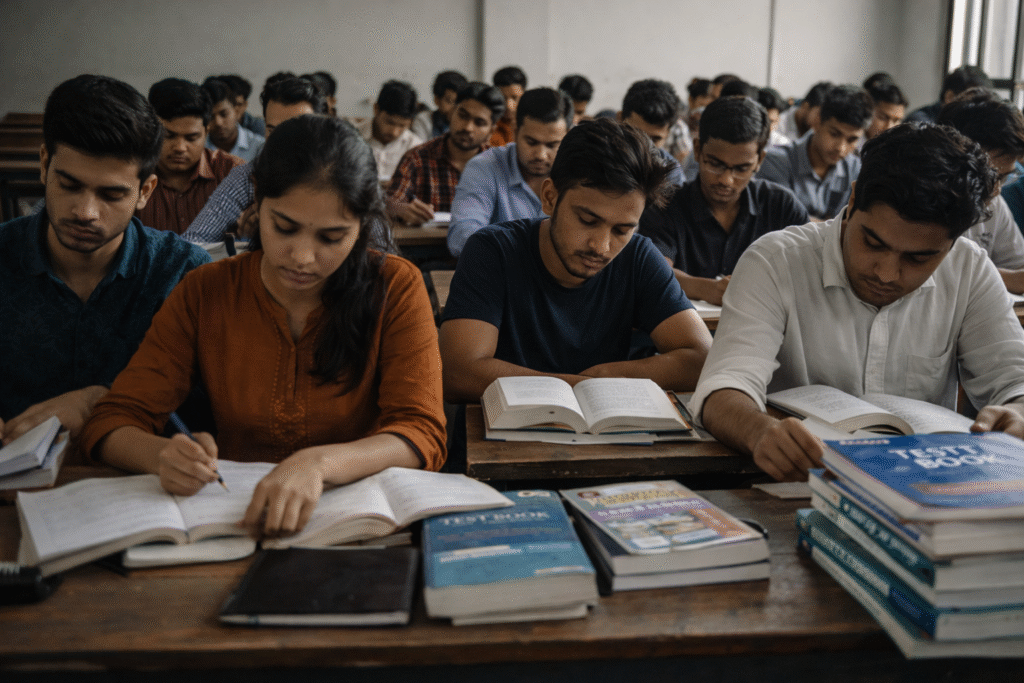
That whisper often emerges after repeated disappointment. A student studies for years, only to face limited prospects. A worker gives extra hours without advancement. A family invests in education, expecting mobility that does not arrive.
In such contexts, optimism can feel forced. Being told to be positive may feel like gaslighting.
Yet here is where nuance matters. Not every young person who jokes about “bai lan” has given up on life. Sometimes the phrase is ironic. Sometimes it is satire. Humor becomes a shield.
But irony can hide real fatigue.
Beyond China: A Global Burnout Culture
The language may differ, but the pattern feels global.
In India, students often prepare for competitive examinations for years. In South Korea, the term “Hell Joseon” reflects frustration with rigid social hierarchies. In Japan, “karoshi” means death by overwork. In Western countries, the conversation revolves around hustle culture and burnout.
Why now?
Partly because social media amplifies comparison. You are not just competing with your classmates—you are comparing yourself to influencers, entrepreneurs, and curated lifestyles. Platforms designed by companies such as ByteDance and Meta (an American technology company that owns Facebook and Instagram) thrive on engagement, and emotional extremes generate clicks.
Partly because economic uncertainty feels chronic. Housing costs rise faster than salaries. Stable jobs are fewer. Climate anxiety adds another layer of existential weight.
And partly because expectations have inflated. Many young people were told they could “be anything.” When structural realities limit that promise, the gap between expectation and reality becomes painful.
“Lying flat” becomes a quiet way of shrinking that gap.
The Psychological Toll
The consequences of “lying flat” and “bai lan” are layered and complicated.
On one hand, stepping back from toxic competition can protect mental health. Reducing ambition temporarily may lower stress. Rejecting 70-hour workweeks may restore sleep.
On the other hand, prolonged disengagement can deepen hopelessness. Humans need purpose. We need to feel that effort matters. If an entire generation internalises the idea that trying is futile, societies lose more than productivity—they lose imagination.
The danger is not that young people are tired. The real risk is that they have grown weary of hope.
So, What Now?
Suppressing negative emotion will not erase the conditions that produce it. Encouraging forced positivity may quiet the timeline, but it does not quiet the mind.
Governments need to look at youth employment, housing affordability, and work culture. Companies must rethink endless productivity models. Families may need to redefine success beyond salary and status.
And young people themselves might need a middle path. Not blind hustle. Not total withdrawal. Something more human.
Maybe the real rebellion is neither lying flat nor letting it rot—but rebuilding ambition in a slower, saner form.
Burnout is not a moral failure. It is often a systemic signal.
If we listen carefully, “lying flat” is not saying, “I do not care.” It is saying, “I cannot breathe.”
Conclusion: Listening to the Sigh
The psychological toll of “lying flat” and “bai lan” is not just about Chinese youth. It is about what happens when aspiration outpaces opportunity.
Silencing despair may make society look stable. But real stability comes from addressing the roots of exhaustion.
If an entire generation feels like it must lie down to survive, perhaps the system—not the youth—is what needs to stand up and change.
Because when young people stop believing in effort, the future quietly dims.
And no amount of mandated positivity can brighten that.
Author’s Note
I wrote this because I see versions of “lying flat” in my own classroom—students who are bright, capable, and quietly overwhelmed. Sometimes the most radical act is not shouting, but noticing. If this piece does anything, I hope it makes us pause long enough to ask our young people not just what they are achieving—but how they are feeling.
G.C., Ecosociosphere contributor.