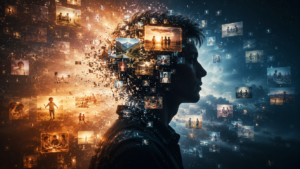
A human brain was never designed to emotionally process the pain of millions of strangers in a single day.
That may sound dramatic, but it explains a strange emotional reality many people now live with.
We swipe past images of war while having our morning tea or breakfast. We watch flood victims moments before a comedy reel. A child crying in one country appears between advertisements for shoes and skincare products. Somewhere along the way, tragedy stopped arriving as an event and started arriving as content.
“The Internet Made Us See Too Much Human Suffering” is not just about social media becoming darker. It is about what constant exposure to suffering is quietly doing to the human mind. In just a single week, we are exposed to more human suffering than many people throughout history encountered in their whole lives. And the frightening part is not only the suffering itself. It is how normal it has started to feel.
The internet promised connection. Instead, many people now feel emotionally exhausted, helpless, guilty, and strangely detached all at once.
There was a time when human empathy had physical limits. You cared deeply about your family, your neighbours, your village, maybe your city. Your nervous system evolved for manageable circles of emotional responsibility. But today, your phone can show you earthquakes in Turkey, bombings in Gaza, hunger in Sudan, violence in Delhi, and climate disasters in Assam before you even finish your morning tea.
The problem is not that people do not care. The problem is that people care too often, too quickly, and for too many things at once.
Modern social media platforms are designed to keep attention active at all times. Companies like Meta, the technology company that owns Facebook and Instagram, and TikTok, the short-video platform owned by the Chinese company ByteDance, operate on algorithms that reward emotionally intense content. Anger spreads fast. Fear spreads fast. Shock spreads even faster.
And suffering has become one of the internet’s most powerful engagement tools.
A video of someone crying travels faster than a calm explanation. A violent clip gains more attention than a nuanced article. The result is a digital environment where tragedy competes for visibility every hour.
At first, people react strongly. They donate. They repost. They comment emotionally. But over time, something strange happens. The brain begins protecting itself.
Psychologists sometimes call this compassion fatigue. It is the emotional exhaustion that happens when people are exposed to continuous distress without meaningful recovery or action. Doctors, nurses, and disaster workers have experienced it for years. But now ordinary internet users are experiencing it too.
You can actually feel it happening.
The first video of suffering may disturb you deeply. By the tenth one, your reaction weakens. By the hundredth, you might simply scroll.
Not because you are cruel.
Because your brain is overloaded.
Many young people now live in a permanent emotional contradiction. They are more globally aware than any generation before them, yet they often feel powerless to change anything. They know about every crisis, but cannot emotionally process all of them. So the mind creates shortcuts. Numbness becomes survival.
This is why so many people now switch between extreme empathy and complete detachment within minutes online. Someone may cry watching a refugee video and then immediately laugh at a meme two posts later. It feels morally confusing because the emotional transitions are unnatural. Human psychology was never meant to shift that quickly.
The internet has collapsed emotional distance.
And that collapse has consequences.

One of the strangest side effects is performative empathy. Online spaces sometimes reward the appearance of caring more than actual caring. Many people now feel expected to respond publicly to tragedies as soon as they happen. Silence itself can become suspicious. During major disasters or conflicts, many users anxiously post statements not because they fully understand the issue, but because they fear appearing indifferent.
Grief has become partially social.
Empathy has become partially visible.
Sometimes this visibility helps important causes gain attention. But sometimes it turns suffering into a strange kind of public theatre where outrage is measured through reposts and temporary profile pictures.
Meanwhile, the actual victims often disappear beneath the performance.
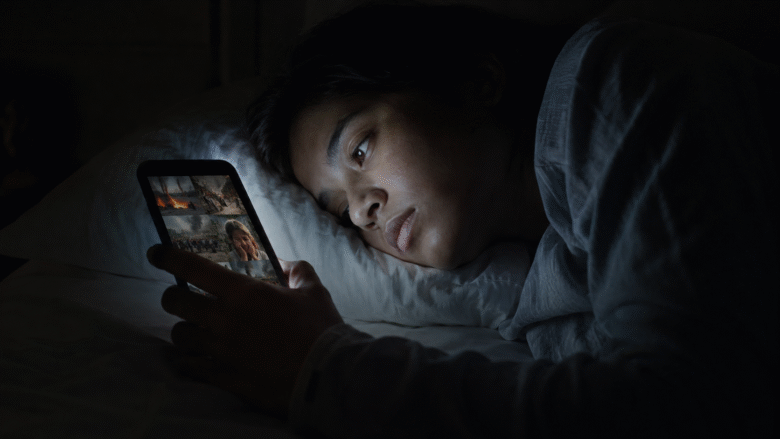
Another problem is the collapse of emotional recovery time. Earlier, tragedy arrived through newspapers or evening television broadcasts. There were pauses between exposure. Today, the suffering never stops. Notifications ensure that disaster follows people into bedrooms, classrooms, buses, and family dinners.
The nervous system rarely gets silence anymore.
And silence matters.
Without silence, the brain cannot emotionally reset. Without emotional reset, people begin living in a state of low-level psychological exhaustion. This is partly why many internet users now describe feeling “drained” even after spending hours doing nothing physical.
Their bodies remained still.
Their minds did not.
There is also a darker psychological shift happening beneath all this exposure. Repeated viewing of violence can slowly distort what feels normal. Graphic footage that once shocked people now circulates casually in group chats. Some users consume real suffering with the same emotional posture they use for entertainment content. The boundaries between witnessing and consuming have started blurring.
That should disturb us more than it does.
Because when suffering becomes background noise, society changes.
People become less patient. Less emotionally available. Less capable of sustained compassion. Attention spans shorten. Outrage becomes temporary. Every tragedy competes with the next one before the previous one is even understood.
And yet, despite all this, the answer is not ignorance.
Looking away completely is not wisdom either.
The internet has also exposed injustices that powerful institutions once hid easily. Videos have documented police brutality, war crimes, environmental destruction, and humanitarian crises that traditional media sometimes ignored. Awareness matters. Witnessing matters.
But humans were not built for infinite witnessing.
That is the real crisis.
Maybe the healthier question is not whether we should care, but how much suffering a human mind can absorb before empathy starts breaking down.
Because empathy is not an unlimited resource.
It needs rest. Reflection. Action. Human scale.
Perhaps that is why small acts of care still feel more emotionally real than endless scrolling. Helping one person nearby often affects the mind more deeply than watching a thousand strangers suffer online. The brain understands direct human connection better than abstract digital pain.
In the end, the internet did not make humans heartless. It simply exposed the limits of the human emotional system.
And maybe the numbness many people feel today is not proof that they stopped caring.
Maybe it is proof that they cared beyond what the mind was built to carry.
Author’s Note
I wanted to write this because I keep noticing how casually suffering now enters ordinary life. A person can watch war footage while waiting for food delivery and barely pause before moving on. That should feel strange to us. Not because awareness is bad, but because emotional overload changes people quietly. Writing about these things feels important because sometimes the first step toward becoming human again is simply noticing what the world has normalized.
G.C., Ecosociosphere contributor.