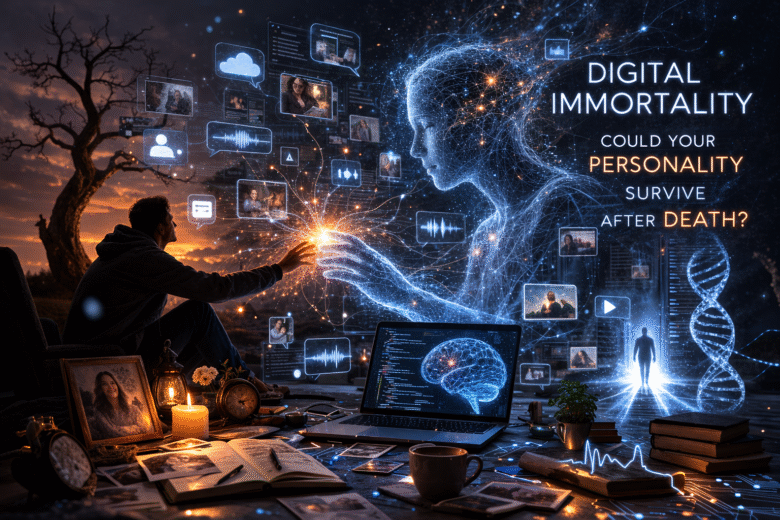
For most of human history, death meant silence. Memories survived in stories, photographs, or fading letters. A person’s voice, humour, and habits slowly dissolved into the past. But technology may be changing that.
Today, artificial intelligence is beginning to create something strange and unsettling: digital versions of people that can continue speaking, answering questions, and even interacting long after the person is gone.
It sounds like science fiction. But it is already happening.
The Idea of a Digital Afterlife
Every day, humans leave enormous digital footprints. Messages, emails, voice recordings, social media posts, photographs, videos, and browsing habits accumulate across the internet. Taken together, this data forms a surprisingly detailed portrait of a person’s personality.
Artificial intelligence systems are now capable of analysing such data and learning patterns of speech, behaviour, and preferences. In simple terms, the technology can study how someone talks, what they believe, and how they respond to questions.
Once trained on enough information, an AI model can begin to simulate that person’s voice and conversational style. The result is not a ghost. But it can feel uncomfortably close.
When AI Starts Talking Like the Dead
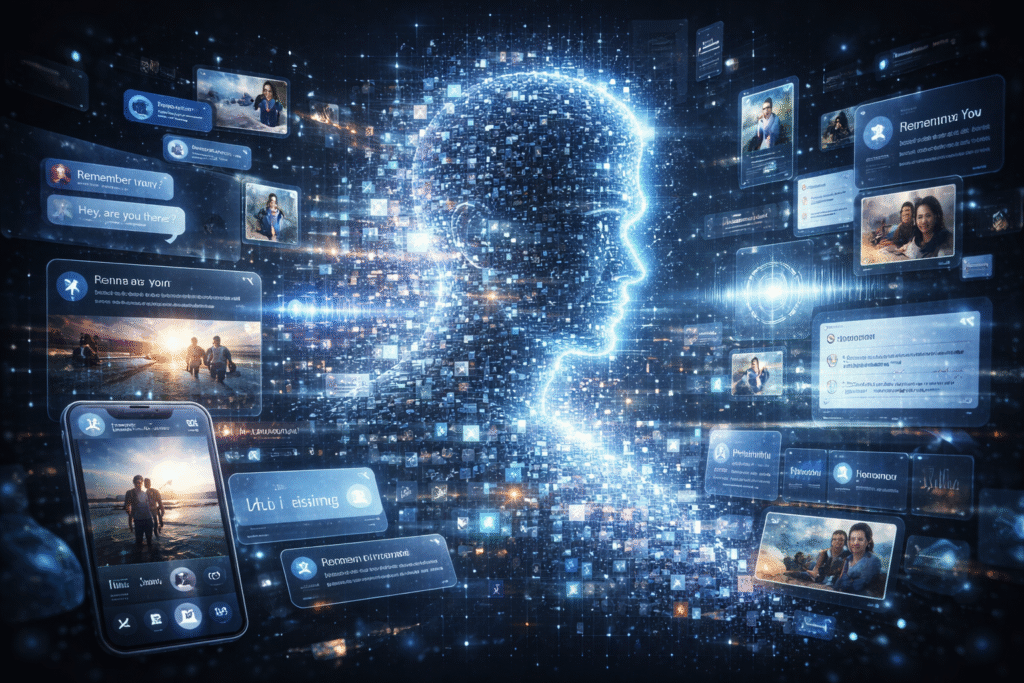
Several companies are already experimenting with digital memorial technologies. Startups have developed systems that allow people to create AI chatbots trained on their personal messages and memories.
These chatbots can respond to questions using language patterns based on the individual’s own words. In some cases, families have reported interacting with digital versions of loved ones after their death.
Voice cloning technologies can even recreate someone’s voice from recordings. Combined with conversational AI, this allows a digital system to sound eerily like the person it represents. What once required imagination now requires only data.
The Psychology of Digital Grief
For some people, the idea of digital immortality is comforting. Losing someone often leaves unanswered questions, unfinished conversations, and a deep sense of absence.
An AI simulation could allow people to revisit memories or feel a continuing connection. But psychologists warn that such technologies may also complicate grief. Traditional mourning involves accepting the finality of death.
If technology keeps a digital presence alive, that emotional process could become more complex. The line between remembrance and simulation may blur. And people may begin asking uncomfortable questions. Is interacting with an AI version of a loved one healing — or is it avoiding reality?
The Ethics of Simulated Identity
Digital immortality raises deeper ethical concerns as well. Who owns a person’s digital identity after death? Can companies profit from simulations of people who are no longer alive? And how accurate would such digital personalities really be?
An AI trained on someone’s messages might reproduce their language style, but it cannot fully replicate the complexity of human consciousness. Memories, emotions, context, and lived experience are far more complicated than text patterns.
A digital personality might look convincing on the surface while missing the deeper layers that made someone truly unique. In other words, digital immortality may create something that resembles a person — without actually being them.
The Future of Memory
Despite these concerns, the technology is advancing quickly. AI systems are improving at understanding speech patterns, emotional tone, and personal history. Some researchers believe future systems could build extremely detailed personality models.
One day, people might leave behind interactive digital archives that allow future generations to speak with simulated ancestors. Imagine a great-grandchild asking an AI model trained on a family member’s writings about life in the past.
History could become conversational. Memory could become interactive. The boundary between past and present might begin to blur.
What It Says About Humanity
Perhaps the most fascinating part of digital immortality is what it reveals about us. Humans have always searched for ways to overcome death. Ancient civilizations built monuments, wrote epic stories, and preserved legacies in art and architecture.
Digital technology may simply be the newest attempt. But it also raises a profound question. Are we trying to preserve memory — or escape mortality?
The answer may determine how this technology shapes the future.
Conclusion: Immortality, or an Echo?
Digital immortality will not bring people back from the dead. At best, it can create an echo of a personality, built from the digital traces someone left behind. Yet even an echo can feel powerful.
As artificial intelligence becomes more sophisticated, the idea of interacting with digital versions of the past may become increasingly normal. Whether this represents a breakthrough in memory preservation or a strange new form of digital illusion remains uncertain.
But one thing is clear. The internet is quietly building an archive of human personalities. And one day, those personalities might speak again.
Author’s Note
Technology often advances faster than society’s ability to understand it. Digital immortality sits at the intersection of memory, grief, and artificial intelligence. Writing about it raises a simple but haunting thought: if machines can simulate a personality convincingly enough, what does that say about how much of us exists in data?
G.C., Ecosociosphere contributor.