
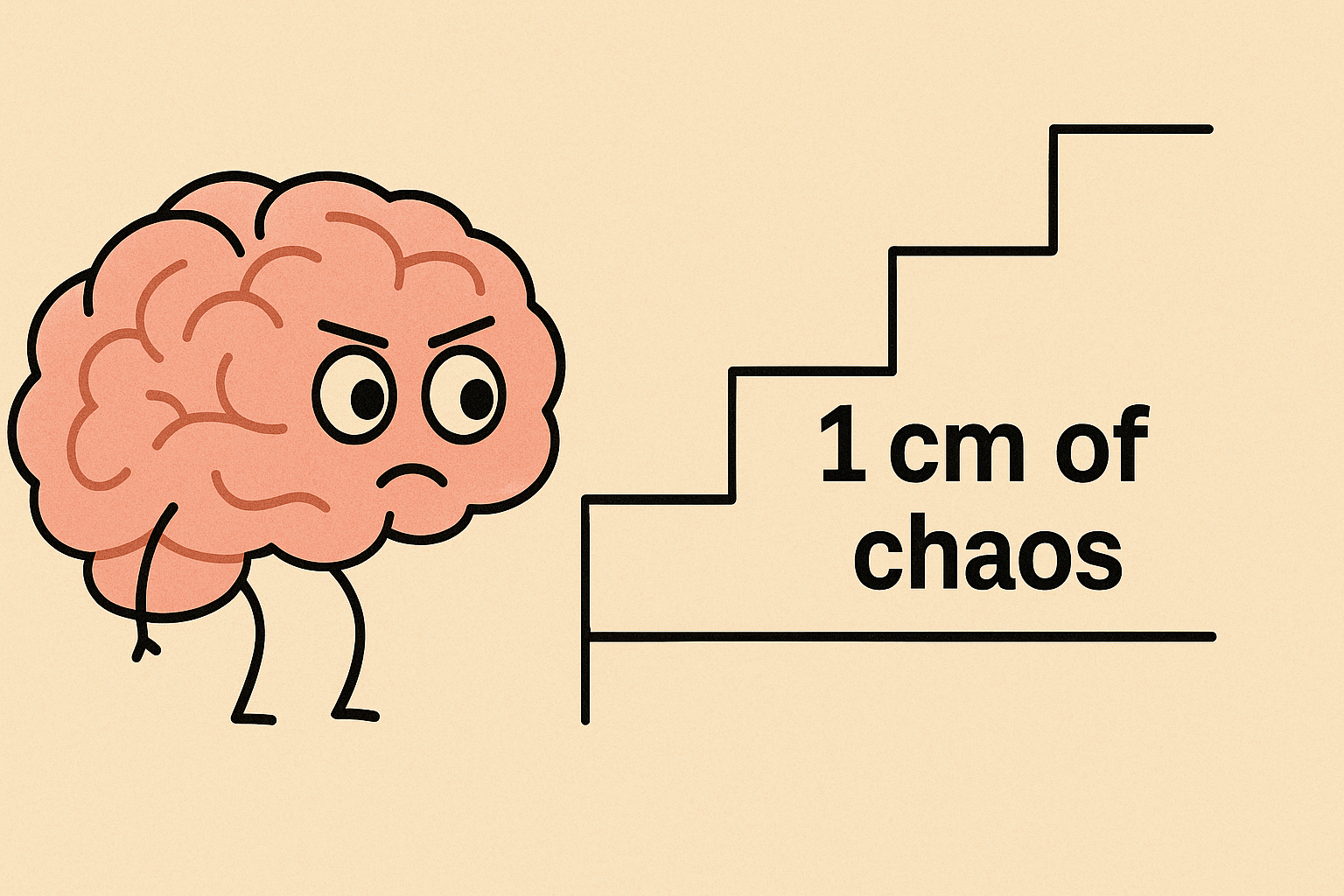
Fun fact: It doesn’t take a mountain to make you fall. Sometimes, all it takes is a single rebellious stair—barely a centimetre off.
We’ve all been there. You’re walking up a staircase you’ve climbed a hundred times, half-awake, coffee in hand. Then—bam!—your toe snags the edge, your heart lurches, and your dignity tumbles down three steps behind you. You look back in disbelief, because how could one step be so cruel?
Turns out, science has been asking the same thing.
The Rogue Riser Experiment
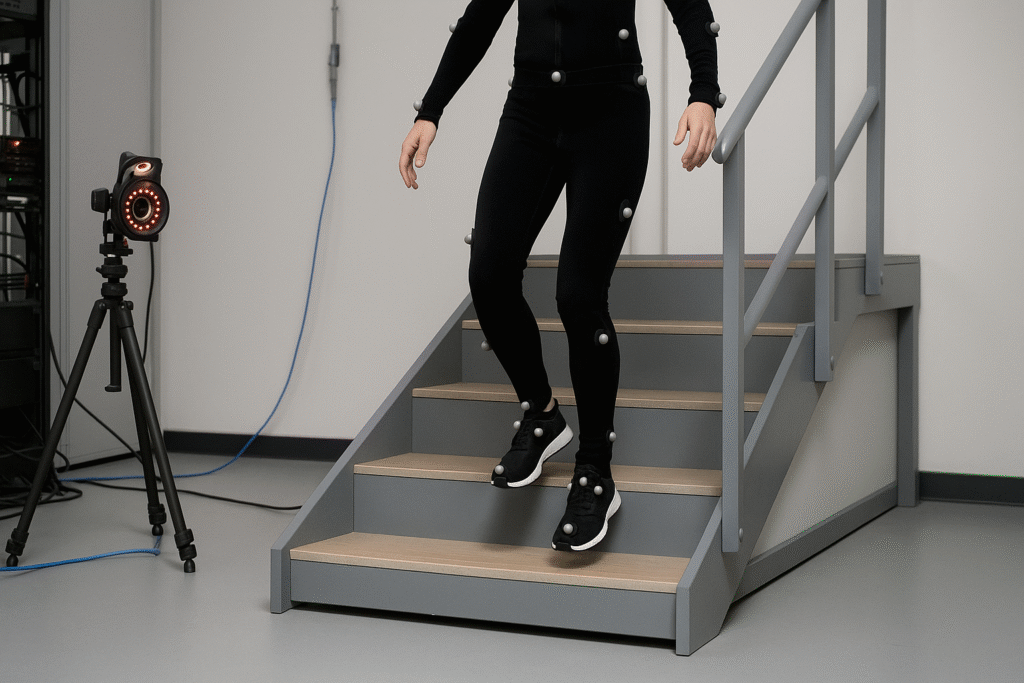
In 2020, researchers at Liverpool John Moores University did something mildly mischievous: they built a staircase and changed the height of just one step. Only one. By a single centimetre. Then they asked people to walk up and down while motion-capture cameras watched their every move.
What happened? People tripped—or nearly did—because their brains simply didn’t expect that step to be different. Even the tiniest variation, the researchers found, throws off the rhythm of walking. When we climb stairs, our legs follow a beat, a kind of muscle-memory metronome. A 10-millimeter disruption? It’s like missing a note in a song you’ve heard all your life.
The result: toe catches, reduced foot clearance, awkward recoveries, and that universal expression of surprise we all know too well.
The Brain’s Stair Algorithm
You might think walking upstairs is simple, but it’s actually a masterpiece of unconscious coordination. The brain times each lift, swing, and step based on experience. Once it learns the pattern, it stops paying attention—like typing your password without looking.
That’s why the “odd step” experiment is so diabolical. The step looks identical, but when your foot expects 17 cm and finds 18 cm, physics reminds you that gravity doesn’t forgive surprises.
One researcher described it perfectly: “It’s not the big steps that trip us—it’s the small ones we never saw coming.”
When Designers Get Too Creative
Building codes quietly acknowledge this fragile choreography. In many countries, the difference between adjacent steps cannot exceed 4.8 millimetres. That’s right—just under half a centimetre of tolerance. Go beyond that, and you’re in lawsuit territory.
Why so strict? Because inconsistency kills rhythm. Staircases are, in a way, trust contracts between architecture and anatomy. You commit your body to their rhythm. Break that rhythm, and chaos ensues.
That’s also why escalator steps feel strange if they suddenly stop moving—our bodies are tuned to motion, not stillness. The same cognitive betrayal applies to stairs: a few millimetres too high or low, and your balance evaporates.
Sheldon Cooper Wasn’t Wrong
In the famous TV show The Big Bang Theory, the character Sheldon obsesses over a single uneven stair and insists it’ll make people trip. The joke works because it sounds ridiculous. But here’s the twist: Sheldon was right.
Engineers, safety inspectors, and gait scientists all agree that even tiny discrepancies—sometimes as little as 6 mm—can increase accident risk. Not because people are clumsy, but because our brains crave predictability.
We’re creatures of rhythm. Our hearts beat it, our feet walk it, our lives depend on it.
Life Lessons from Stairs
There’s something strangely poetic about this: humans, conquerors of mountains and inventors of jet engines, undone by a misplaced millimetre of concrete. But maybe that’s the point.
These experiments reveal how tightly tuned our bodies are to patterns. We thrive in predictability and stumble in disruption. Whether it’s stairs, schedules, or relationships, rhythm gives us balance.
And yet—life is full of uneven steps. The question isn’t whether we’ll trip, but whether we recover with grace (and without spilling the coffee).
Designing for Human Fallibility
Some clever researchers even tried fixing the problem with illusions. In another study, scientists painted stripes on the taller step, creating a “horizontal-vertical illusion” that tricked the brain into lifting the foot higher. The result? Fewer trips, more clearance, happier shins.
It’s design meeting psychology—a reminder that safety isn’t just about structure but perception. We don’t just move through space; we interpret it. And when architecture aligns with how the brain thinks, stairs stop being silent hazards.
Perhaps that’s the moral for cities too: a little empathy in design goes a long way. Smooth transitions matter—whether between steps, sidewalks, or systems.
The Metaphor You Didn’t See Coming
You can’t write about stairs without stumbling into metaphor. Maybe those uneven steps are life’s way of keeping us alert. Maybe the millimetres that trip us are the same ones that make us pay attention again.
We spend so much time planning for the big leaps—career changes, relocations, revolutions—but most falls happen on ordinary Tuesdays, between the familiar and the almost familiar. Between the 17 cm we expected and the 18 cm we got.
So, the next time you trip on a staircase, don’t curse the architect. Thank your nervous system for being so finely tuned. Then maybe, just maybe, look up and laugh. Because you’ve just participated in one of the most humbling human experiments ever conducted.
Author’s Note
Writing this made me pause at every staircase I climbed. I caught myself glancing at risers, wondering which step was the traitor. It turns out, precision isn’t boring—it’s trust made concrete. And in a world of chaos, maybe minding the millimetres is its own kind of mindfulness.
G.C., Ecosociosphere contributor.
References & Further Reading
- Francksen et al. (2020): Negotiating stairs with an inconsistent riser: Implications for stepping safety. Liverpool John Moores University.
- Skervin et al. (2021): Using a stair horizontal–vertical illusion to increase foot clearance over an inconsistently taller stair-riser. PLOS ONE.
- National Bureau of Standards (1978): Accidents on Stairs and Steps (NBS IR 78-1554).
- Cohen, J. (2009): Stairway Design and Human Factors. ASSP Professional Safety Journal.
- Levin & Malkin Law Blog (2018): Is Sheldon Right About Staircases?