Fun fact: Long before humans invented the plough or learned to domesticate wheat and rice, ants were already farming. Yes, you read that right. These tiny insects — often dismissed as picnic raiders or household pests — have been quietly running farms for millions of years. And that’s the question we’ll explore today: How do …
Fun fact: some fast-growing plantation monocultures can actually store less carbon than the natural forests they replace — and they often kill off biodiversity in the process. Welcome to “The Green Cover Scam” — a scandal hidden behind shiny tree-planting campaigns. On the surface, it feels noble: more green cover, cleaner air, climate rescue. But …
Fun fact: Indigenous and forest-dwelling communities steward lands that hold up to eighty percent of the world’s remaining biodiversity. That stark number underlines why Forest Guardians vs. Bulldozers is not a metaphor but a real struggle of land, rights, and identity. When bulldozers roar through a forest, the very people who have defended those ecosystems …
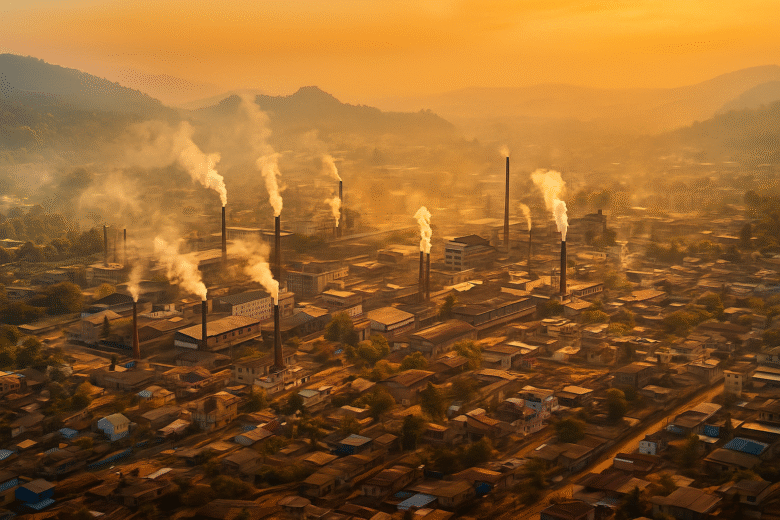
Fun fact: In many cities, adults in poorer neighbourhoods breathe twice the particulate pollution of people in richer areas. In “Ecological Apartheid”, I explore a haunting pattern: poor and marginalized communities forced to live beside dumps, factories, and polluted rivers, while the wealthy retreat to clean, green enclaves. This is not an accident—it is structural. …
Fun fact: At one point, India’s vultures cleaned up more carcasses each year than the population of several small nations. In “The Vulture Catastrophe”, we confront the tragic irony: a drug meant to heal cattle instead poisoned one of India’s most vital clean-up crews. The vultures vanished. In their absence, hidden threats lurked, diseases rose, …
Fun fact: Each year, humanity clears or degrades habitat equivalent to about 30 football fields every minute—a staggering erasure of life. When “When Biodiversity Dies, We Die: The Hidden Chains That Break First” becomes not a slogan but our reality, we must look at what fractures first. The collapse starts with invisible links: pollinators, microbes, …
Fun fact: the eruption of Mount Pinatubo in 1991 cooled the planet by about 0.5 °C for a year—proof that nature itself can “geoengineer.” Welcome to Geoengineering – Plan B or Pandora’s Box? where we probe one of the boldest and riskiest ideas: deliberately hacking the climate. As climate targets drift further out of reach, …
Fun fact: India just overtook China to become the most populous country in the world, joining a planet now home to over 8 billion human beings. 8 Billion and Counting: Population, Consumption, and the Planet’s Future explores why this milestone matters very much—not just in terms of numbers, but in how those people live, what …
Fun fact: the world’s 74 lowest-income countries account for only about 10% of greenhouse gas emissions, yet they are among those hit hardest by climate disasters. Environmental Justice: Who Bears the Brunt of Climate Change? seeks to dig into why the poorest and most vulnerable often suffer first and worst—and what that says about fairness, …
Fun fact: Indigenous peoples manage or influence lands that hold about 80% of Earth’s biodiversity, even though they represent only a small fraction of the world’s population. The New Environmental Stewards: Indigenous Knowledge in Conservation is about what those communities teach us about protecting nature—and why ignoring their voices is both foolish and costly. From …