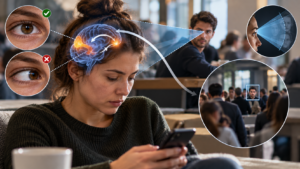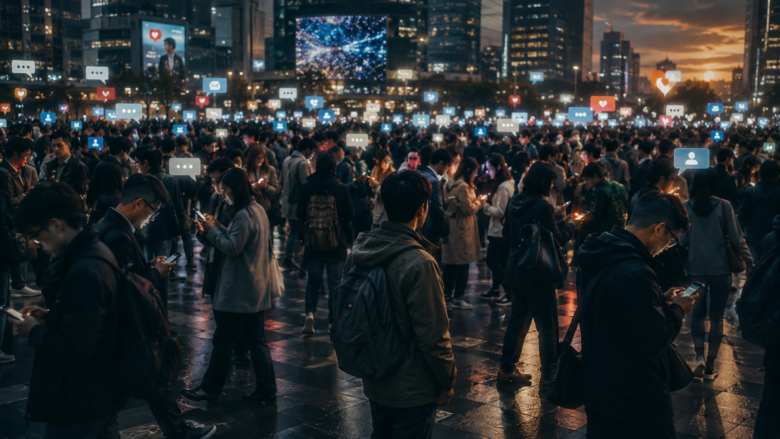
A strange contradiction sits at the centre of modern life.
Most people today communicate with more human beings in a single week than their grandparents might have encountered in a month. We send messages across continents. We join group chats with hundreds of people. We can video call relatives thousands of kilometres away. We can instantly react to photographs, opinions, jokes, celebrations, and tragedies from people we have never met.
By almost every measurable standard, we are more connected than any generation in human history.
And yet many people have never felt more uncomfortable around other people.
Not online. Not through a screen. In person.
A growing number of people describe feeling anxious before phone calls. Small talk feels exhausting. Meeting new people feels strangely difficult. Silence feels unbearable. Even ordinary social situations can create levels of discomfort that seem out of proportion to the moment itself.
How did this happen?
Part of the answer may be that human beings evolved for conversation, but much of modern communication is no longer conversation.
For most of history, communication happened in real time. You had to watch faces. You noticed body language. You interpreted tone of voice. You learned when to speak and when to stay quiet. You developed an intuitive understanding of human interaction through thousands of small social experiences.
Today, many interactions happen through text.
Text removes eye contact. It removes pauses. It removes nervous laughter. It removes awkward moments. It removes many of the tiny signals that help people understand one another.
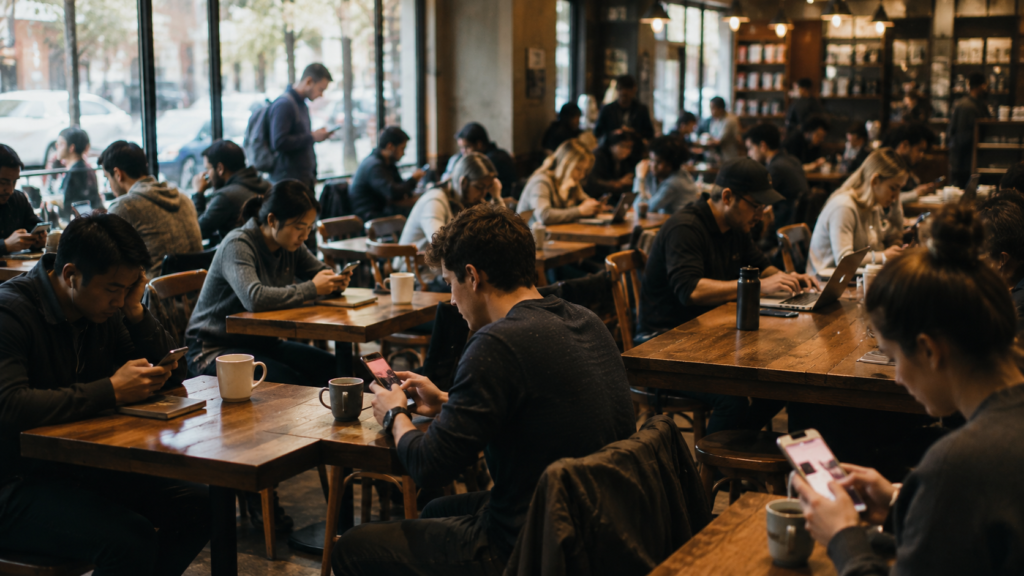
The result is not necessarily worse communication. In some situations, it can actually be easier. Messages can be edited. Responses can be delayed. Mistakes can be deleted before anyone sees them.
But there is a hidden cost. When communication becomes easier, we often lose opportunities to practice the harder skills.
Imagine learning to swim by reading about water. Eventually you must get into the pool.
Social skills work the same way.
Many people spend hours communicating every day while spending relatively little time navigating the unpredictable complexity of face-to-face interaction. The muscles are still there, but they are exercised less frequently.
Another factor is control. Digital communication gives us unprecedented control over how we present ourselves.
We can rewrite messages before sending them. We can choose photographs carefully. We can think for ten minutes before responding. We can construct versions of ourselves that appear calm, confident, funny, or intelligent.
Real-life conversations do not offer that luxury.
A face-to-face interaction is messy and unscripted. You cannot edit a sentence after it leaves your mouth. You cannot pause reality while thinking of the perfect response.
That unpredictability can feel uncomfortable when much of life is spent inside environments designed around control.
The irony is that discomfort is exactly how social confidence develops.
Children become socially skilled not because every interaction goes well, but because many interactions do not. They say awkward things. They misunderstand people. They embarrass themselves. Then they learn.
Modern adults increasingly try to avoid those moments.
We mute ourselves before we stumble. We retreat before rejection. We text instead of calling. We react instead of talking.
Over time, avoidance starts feeling safer than participation. But human beings were never designed to grow through avoidance.
There is another quiet change taking place, too. Many online spaces reward performance more than presence.
A conversation becomes content. An opinion becomes a personal brand. A moment becomes something that might be photographed, recorded, shared, or judged.
When every interaction feels potentially visible, people naturally become more self-conscious.
They stop wondering, “What does this person think?” And start wondering, “How am I being perceived?”
Those are very different mental states.
One creates connection. The other creates anxiety.
Perhaps this helps explain why many people feel lonely even while surrounded by constant communication.
Connection and communication are not the same thing.
Communication is the exchange of information. Connection is the feeling of being understood.
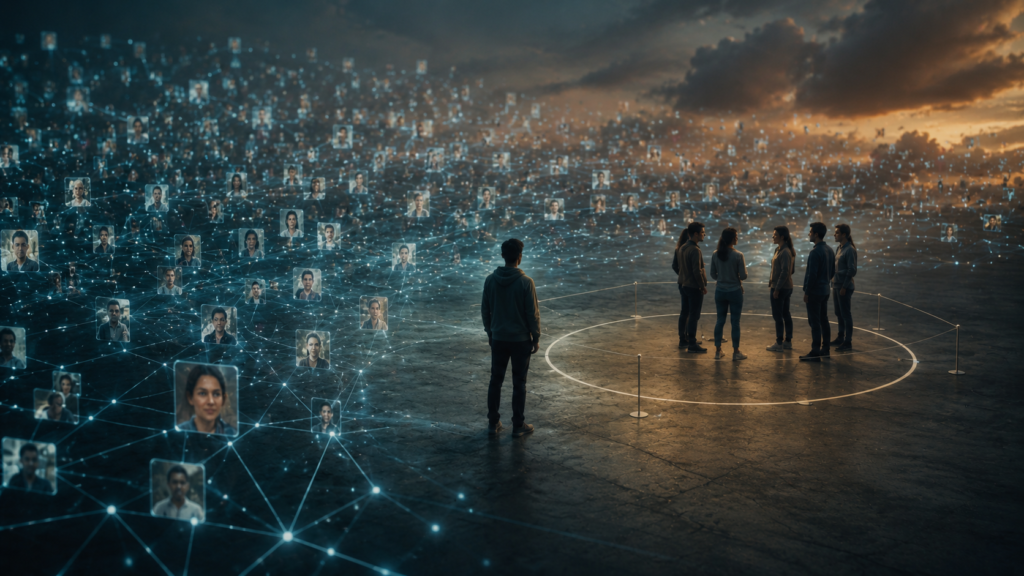
A person can receive hundreds of messages and still feel unseen. A person can spend one quiet evening with a friend and feel profoundly connected.
The human nervous system appears to recognize the difference. It responds not merely to words, but to eye contact, shared laughter, physical presence, subtle expressions, and countless signals that no messaging platform can fully reproduce.
This does not mean technology is the problem. The internet has reunited families, created communities, supported friendships, and helped millions of people find belonging.
The problem is assuming that digital connection can completely replace human presence.
It cannot. And perhaps it was never meant to.
The deeper question is not whether technology has made us less social. It may be whether convenience has quietly replaced practice. Because social confidence is not something we download.
It is something we build.
One awkward conversation at a time. One uncomfortable introduction at a time. One imperfect interaction at a time.
The future may give us faster networks, smarter algorithms, and more immersive digital worlds. But the oldest technology for human connection remains surprisingly unchanged.
Two people. Sharing the same space. Paying attention to each other. And discovering that being understood has never required perfect words.
Author’s Note
The more I think about this question, the less I believe we are suffering from a lack of communication. If anything, we are drowning in it.
What many of us seem to miss is something quieter. The experience of being fully present with another person without notifications, without audiences, without performance, and without the pressure to appear interesting.
Perhaps the goal is not to disconnect from technology. Perhaps it is simply to remember that some forms of human understanding still happen best when no screen stands between us.
G.C., Ecosociosphere contributor.