
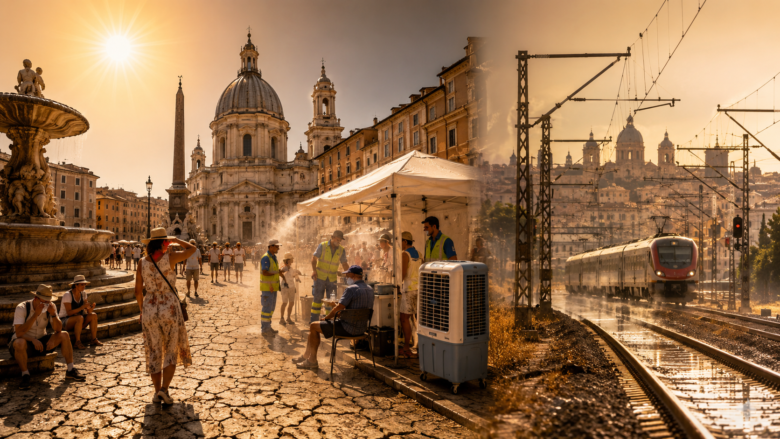
For generations, Europe has been associated with pleasant summers, comfortable temperatures, and cities where people could enjoy long afternoons in parks, cafés, and public squares. While heatwaves occasionally occurred, they were usually short-lived and manageable.
That image is changing rapidly.
In recent years, Europe has experienced record-breaking heatwaves that have disrupted transportation, strained power systems, slowed factories, and claimed thousands of lives. During the latest heatwave, schools closed, trains were cancelled, nuclear power plants reduced electricity generation, and hospitals prepared for an increase in heat-related emergencies.
The question is no longer whether Europe is getting hotter.
It is why the continent is finding it so difficult to cope.
The answer begins in the atmosphere.
Meteorologists attribute the recent heatwave to a powerful high-pressure system known as an Omega Block, often referred to as a heat dome. This weather pattern acts like a lid over the atmosphere. Air slowly sinks, compresses, and becomes warmer while clouds are suppressed, allowing uninterrupted sunshine to heat the ground for days or even weeks.
Normally, weather systems move across Europe, bringing cooler air or rainfall. Under a heat dome, that natural cycle slows down, trapping heat over the same region.
But weather alone does not explain today’s extreme temperatures.
Climate change has raised the baseline from which these weather events occur.
According to recent climate assessments, Europe is warming roughly twice as fast as the global average, making it the fastest-warming continent on Earth. As greenhouse gas concentrations increase, heatwaves become more frequent, longer-lasting, and more intense.
The consequences extend far beyond uncomfortable weather.
They expose weaknesses in the systems modern societies depend upon.
One of the clearest examples is the railway network.
Steel expands when heated. During prolonged heatwaves, railway tracks can become unstable, forcing operators to reduce train speeds or suspend services altogether to prevent accidents. Roads, bridges, and airport runways also experience additional stress as temperatures rise.
Infrastructure is built around historical climate conditions.
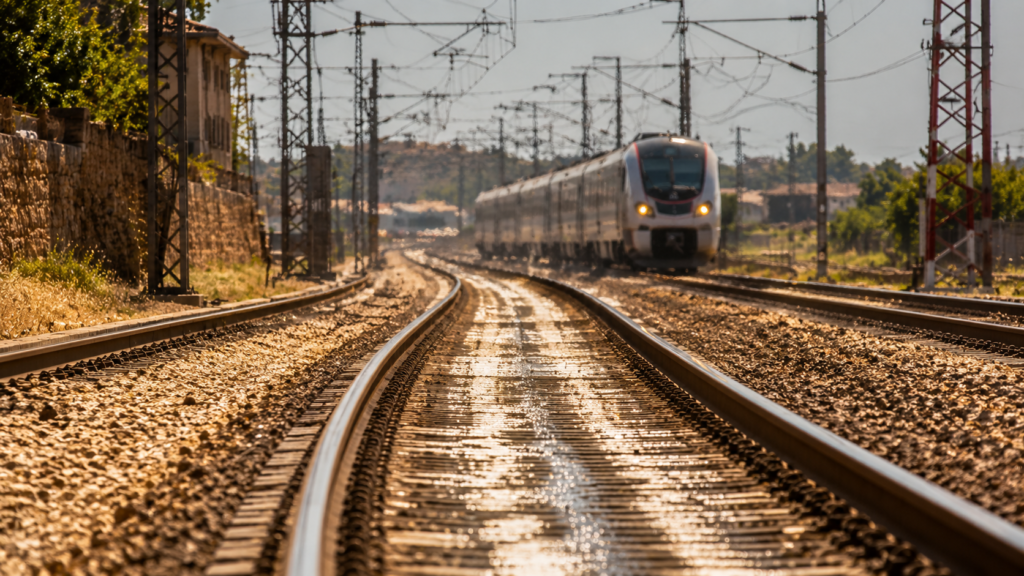
When those conditions change, the infrastructure begins to struggle.
The heatwave has also highlighted an unexpected challenge for Europe’s energy system.
Most nuclear power plants use nearby rivers to cool their reactors. During extreme heat, river water becomes warmer and water levels often fall. Environmental regulations prevent plants from releasing excessively hot cooling water back into rivers because it can harm fish and other aquatic life.
As a result, several nuclear reactors have had to reduce their electricity output.
This creates a difficult situation.
Heatwaves increase the demand for electricity as more people rely on fans and air conditioners, yet the same heat can reduce the ability to generate that electricity.
Cities face another challenge.
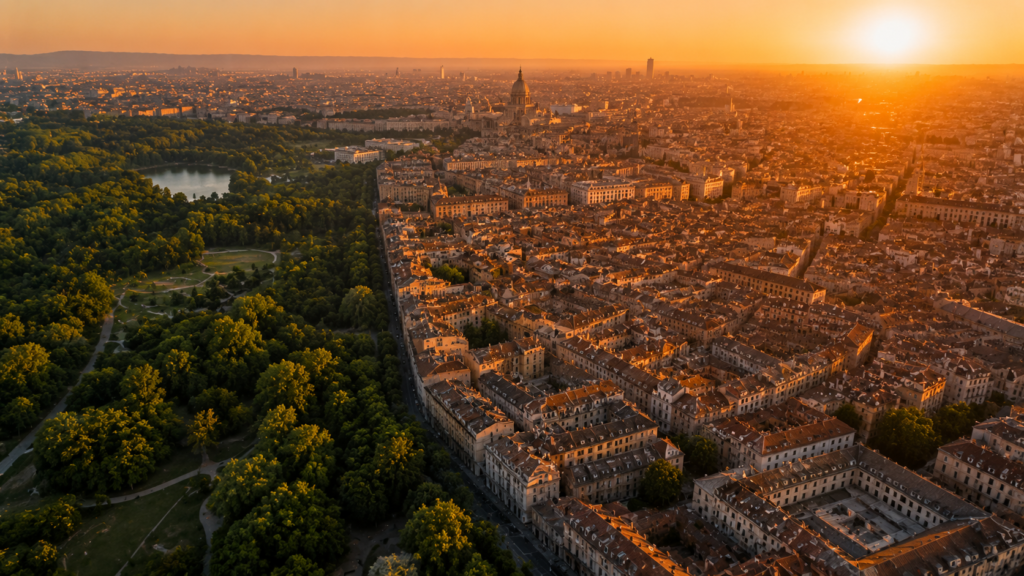
Concrete, asphalt, and buildings absorb enormous amounts of heat during the day and slowly release it after sunset, creating what scientists call the urban heat island effect. Instead of cooling down overnight, many European cities remain warm well into the night.
This matters because our bodies recover from daytime heat during cooler nights. When temperatures remain high after sunset, sleep becomes more difficult, the heart continues working harder, and the risk of heat-related illnesses increases.
The buildings themselves often make matters worse.
Much of Western Europe was built for cold winters rather than extreme summers. Thick stone walls, brick construction, and well-insulated homes help retain heat during winter but can trap it indoors during prolonged heatwaves. Since air conditioning has historically been uncommon in many European countries, millions of people have limited options for staying cool.
Installing more air conditioners may seem like an obvious solution, but it is not a complete answer. Greater cooling requires more electricity, placing additional pressure on energy systems that are already struggling during extreme heat. If that electricity comes from fossil fuels, it also contributes to further greenhouse gas emissions.
This is why many experts argue that adaptation is just as important as reducing emissions.
Cities are increasingly investing in planting more trees, expanding green spaces, creating shaded public areas, installing reflective roofs, and redesigning buildings to remain cooler naturally. These measures reduce temperatures while also making communities more resilient during future heatwaves.
The economic costs are becoming increasingly apparent.
Factories become less productive as indoor temperatures rise. Farmers face declining crop yields during prolonged heat and drought. Healthcare systems treat more patients suffering from dehydration, heat exhaustion, and cardiovascular complications. Tourism patterns begin to shift as some destinations become uncomfortably hot during the summer months.
Heat has become far more than a problem of the environment.
It has become an economic and public health issue as well.
Europe’s experience also offers an important lesson for the rest of the world.
Societies must also prepare for the climate that already exists.
For many years, discussions about climate change focused primarily on reducing greenhouse gas emissions to prevent future warming. That objective remains essential, but recent events demonstrate that reducing emissions alone is no longer enough.
Roads, railways, power stations, hospitals, and homes designed for the weather of the twentieth century may not be equipped for the climate of the twenty-first.
Europe’s recent heatwaves are showing what happens when rapidly changing environmental conditions meet infrastructure built for a different era.
The continent’s challenges are unlikely to remain unique. Many countries around the world rely on infrastructure designed using historical weather patterns. As temperatures continue to rise, more societies may discover that their transportation systems, energy networks, cities, and public services are less resilient than they once believed.
Climate change is reshaping far more than our weather.
It is testing the foundations upon which modern societies were built.
The future of climate resilience may depend not only on reducing emissions, but on redesigning the world we built for yesterday’s climate.
Author’s Note
Europe’s recent heatwaves illustrate that climate change is not just about hotter summers. It is about how rising temperatures interact with the systems that support modern life—from transportation and electricity to healthcare and urban design. Understanding these connections reminds us that resilience will depend not only on reducing emissions but also on preparing our infrastructure for a changing climate.
G.C., Ecosociosphere contributor.



Comments
I’ve been following your blog for some time now, and I’m consistently blown away by the quality of your content. Your ability to tackle complex topics with ease is truly admirable.