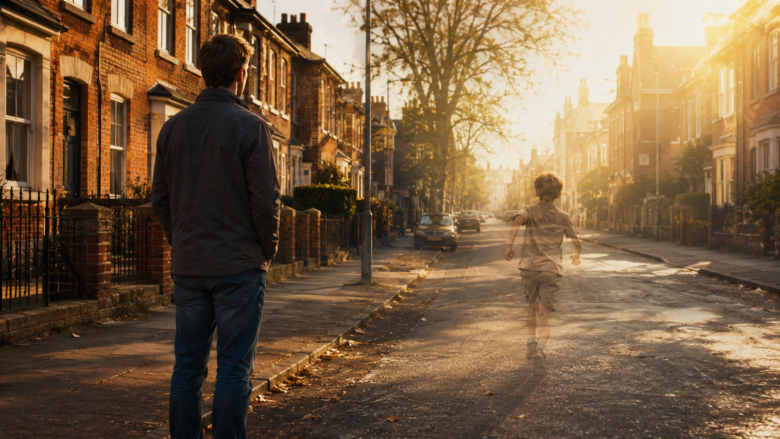
It takes only a few seconds for an old place to remind us that memory is not a photograph. It is a living reconstruction. That is why returning somewhere from your childhood, an old school, a neighbourhood park, or the house where you once lived often feels surprisingly strange.
Everything looks familiar enough to recognize, yet different enough to make you question your own memories. The place seems unchanged, but somehow it no longer feels like the place you left behind.
Most of us have experienced this quiet contradiction. You walk back onto the street where you grew up, expecting it to feel as though time has stood still. The same buildings stand where they always did. The same trees line the road. Even the familiar smell of the air seems to linger. Yet something feels undeniably different.
The roads appear narrower than you remembered. The playground looks much smaller. Rooms that once felt enormous now seem surprisingly ordinary. It is tempting to think that the place has changed, but often the biggest change has happened somewhere else—inside you.
Our brains do not store places as perfect maps. Instead, they store experiences connected to those places. Every location in memory is wrapped together with emotions, sounds, people, smells, and moments that occurred there.
Neuroscientists know that the hippocampus, the brain region responsible for forming memories, works closely with emotional centres such as the amygdala. As a result, when we remember a place, we are rarely recalling bricks, roads, or furniture alone. We are recalling birthdays, conversations, friendships, fears, excitement, and countless ordinary days that quietly shaped our lives.
Returning to an old place is often less about revisiting geography than revisiting an earlier version of ourselves.
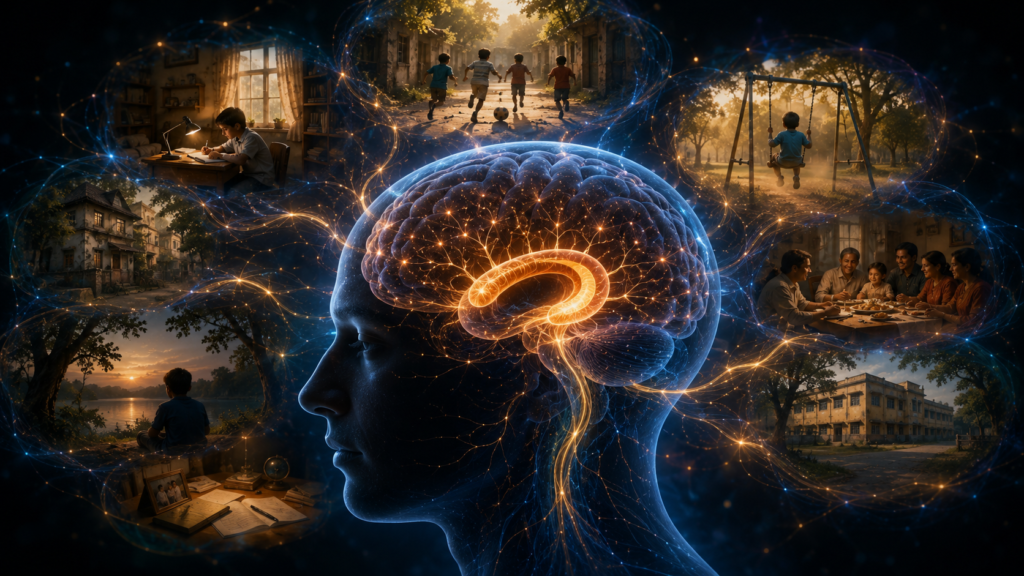
That is why nostalgia can feel so powerful. We tend to believe we miss a location, but what we often miss is the person we were when that place mattered most. The classroom reminds us of friendships that no longer exist.
The neighbourhood reminds us of a time when responsibilities were fewer. A family home brings back people who have grown older—or who are no longer there at all. The place becomes a doorway through which forgotten emotions quietly return.
Psychologists describe memory as reconstructive rather than reproductive. Every time we remember something, we rebuild it instead of replaying it exactly as it happened. Over the years, our minds smooth rough edges, emphasize meaningful moments, and quietly remove countless insignificant details.
The result is that our internal version of a familiar place slowly drifts away from reality. By the time we finally return, we are comparing the real location not with the past itself, but with the version our brain has carefully edited for years.
This explains why childhood places often appear surprisingly small. As children, our bodies were smaller, distances felt longer, and everyday surroundings seemed enormous. Our brains encoded those places from a child’s perspective.
Returning as adults changes that perspective completely. The staircase we once climbed with effort now takes only a few steps. The school corridor that felt endless suddenly seems short. Nothing physically shrank; only our point of view expanded.
Sometimes familiarity survives, but the feeling attached to it does not.
There is another reason these visits can feel strangely unsettling. Places are deeply connected to identity. We often define periods of our lives by where they happened. The university campus represents independence.
A first apartment symbolizes adulthood. A hometown reflects childhood and family. Revisiting these places confronts us with an unavoidable truth: while buildings may remain standing, identities continue evolving.
We are not simply observing an old location—we are measuring the distance between who we were and who we have become.
Interestingly, our expectations also shape the experience. Before returning, we often imagine reliving old emotions exactly as they once were. Popular culture encourages this belief through reunions, homecomings, and sentimental stories where everything feels instantly familiar again.
Reality is usually more complicated. The emotional gap between memory and the present creates what psychologists sometimes describe as expectation violation. Instead of perfect comfort, we experience a quiet sense of disorientation. We recognize everything, yet we no longer completely belong.
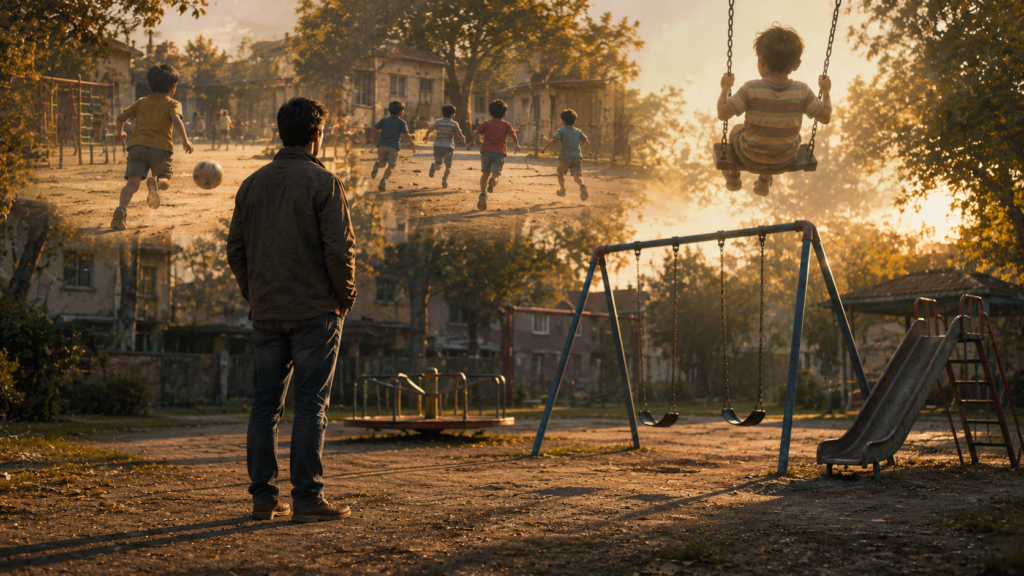
Modern life makes this feeling even stronger. Cities grow rapidly, neighbourhoods are renovated, shops disappear, and technology changes daily routines. Even when buildings remain untouched, the people who gave those places meaning have moved away or built different lives.
A street is more than its architecture. It is the conversations that once echoed through it. When those voices disappear, the place inevitably feels different.
Perhaps that is why some people postpone revisiting meaningful places for years. They are not afraid that the location has changed. They are afraid that it has not.
Because if everything looks the same while they feel entirely different, the passage of time becomes impossible to ignore. Familiar places quietly reveal that life moves forward even when landscapes appear frozen.
Old places remind us that memories preserve moments, but they cannot preserve the people who lived inside them.
Yet there is comfort hidden within this realization. Returning to an old place rarely recreates the past, but it does something equally valuable. It allows us to see our own journey more clearly.
The distance between memory and reality is evidence that we have continued growing, learning, and changing. If an old street feels different today, it is because today’s version of you is different from the one who first walked it.
Perhaps that is the true purpose of returning. Not to recover what was lost, but to understand what has endured. The buildings may remain, the roads may still lead the same way, and the trees may continue standing where they always have.
But the most remarkable transformation was never waiting in the place itself. It was quietly unfolding within the person who chose to return.
Author’s Note
The places that shaped us rarely disappear from memory. Yet when we finally return, we often discover that the greatest changes were never in the buildings or streets—they happened within us. This article explores why revisiting familiar places can feel comforting, unsettling, and deeply emotional all at once.
G.C., Ecosociosphere contributor.
References & Further Reading
- Hassabis, D., Kumaran, D., Vann, S. D., & Maguire, E. A. (2007). Patients with hippocampal amnesia cannot imagine new experiences. Proceedings of the National Academy of Sciences.
- Schacter, D. L. (2012). Constructive Memory: Past and Future.
- Tulving, E. (2002). Episodic Memory: From Mind to Brain.
- Squire, L. R., & Wixted, J. T. (2011). The Cognitive Neuroscience of Human Memory Since H.M.