Think about the people who have shaped your life, and your mind probably begins assembling a familiar collection of faces. Parents, teachers, friends, partners, colleagues, perhaps a doctor who helped you through a difficult moment or a stranger whose kindness stayed with you. We naturally imagine influence as something personal. Someone enters our life, does something meaningful, and leaves a mark behind. Yet this picture misses an enormous part of how modern human life actually works.
Some of the people who influence your life most profoundly are people you will never meet, never recognize, and perhaps never even know existed.
You woke up this morning inside a world built by strangers. The electricity that powered your home depended on engineers, technicians, operators, miners, manufacturers, maintenance workers and countless others scattered across a system too large for any one person to understand completely.
The water from your tap travelled through infrastructure designed and maintained by people whose names are absent from your life. The food in your kitchen may have passed through the hands of farmers, drivers, warehouse workers, inspectors, shopkeepers and packaging workers before reaching you.
Long before you begin interacting with the people you know, strangers have already made your day possible.
This is easy to overlook because successful systems tend to become invisible. We notice electricity when it disappears, roads when they are damaged and deliveries when they are late. Reliability quietly erases the people responsible for creating it. A bridge that safely carries thousands of vehicles every day rarely makes anyone think about the engineers who calculated its load or the workers who poured its concrete. A medicine sitting casually in a cupboard hides decades of research, testing, manufacturing and regulation. Even an ordinary loaf of bread represents agriculture, transportation, machinery, chemistry, commerce and human labour compressed into something we purchase without much thought.

Human civilization has gradually become an extraordinary network of dependence between strangers. For most of our species’ history, people lived in relatively small communities where much of what they depended upon came from individuals they knew personally. You might have known who grew your food, built your shelter or repaired your tools. Modern life has reversed this relationship. We now enjoy access to more goods, knowledge and infrastructure than almost any previous generation, while knowing remarkably little about the people who provide them.
Our lives have become more connected precisely as many of those connections have become less visible.
Consider something as simple as travelling along a road. Your safety partly depends on strangers behaving responsibly. The driver approaching from the opposite direction may never know your name, yet their decision to remain in their lane matters enormously to you. The person maintaining the traffic signal, the worker repairing a damaged section of road and the engineer who designed an intersection are participating in the same invisible cooperation. Thousands of people can move through a city because they repeatedly trust unknown individuals to follow shared expectations. Most of the time, that trust works so smoothly that nobody notices it.
Strangers also shape us in ways that have nothing to do with infrastructure. A researcher working decades before you were born may have discovered something that later saved your life. A teacher you never met may have inspired the teacher who eventually inspired you. Someone writing a book in another country might introduce an idea that changes how you understand yourself. A programmer correcting a tiny error in software may prevent a problem you never experience. Somewhere, someone may make a decision today whose consequences will eventually reach you years from now.
Influence often travels through human networks without either person knowing the other exists.
There is something deeply unusual about this arrangement. Human beings evolved in social worlds where cooperation was largely built around recognizable individuals, family relationships and relatively small groups. Yet civilization has expanded cooperation far beyond those boundaries. We routinely accept food prepared by strangers, travel in vehicles built by strangers, enter buildings designed by strangers and rely on information produced by strangers. Every ordinary day requires countless acts of competence and responsibility from people who receive no personal gratitude from us because we never see them.
And the relationship runs in both directions.
You are almost certainly one of those strangers in somebody else’s life. Something you do may eventually help a person you will never meet. Your work might become part of a system another person quietly depends upon. Something you teach may be repeated years later by someone who once learned it from you. A useful idea you share might travel through several people before reaching someone who needs it. Even small acts of consideration—driving carefully, keeping a shared space clean, returning something where it belongs, doing a job properly when nobody is watching—can benefit people who will never know who made their experience slightly easier.
Perhaps this is one of the quietest forms of human significance: doing something worthwhile without ever seeing the person who benefits from it.

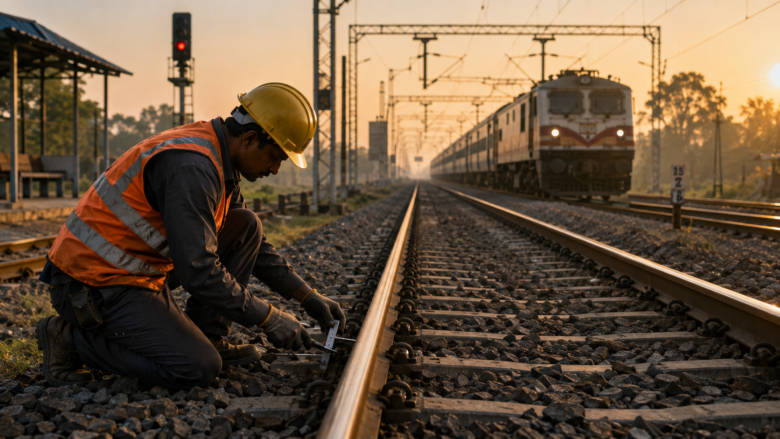
We usually tell stories about civilization through extraordinary individuals. Inventors, scientists, rulers, explorers and entrepreneurs receive names, portraits and biographies. Their contributions can certainly matter enormously, but civilization also rests upon millions of people performing ordinary tasks reliably. Someone checks the railway track. Someone tests the drinking water. Someone repairs a cable beneath a street. Someone cleans a hospital room before the next patient arrives. Someone notices a small manufacturing defect before a product leaves a factory. History may never record these moments, yet everyday life depends upon them.
This perspective also changes the meaning of independence. We often admire the idea of being self-sufficient, of needing nobody and managing life entirely on our own. But modern independence is strangely dependent. The more freedom we possess to travel, communicate, learn, work and choose how we live, the more enormous the network supporting that freedom becomes.
Being independent in modern society does not mean living without other people. It often means being supported by so many people that we no longer notice any particular one of them.
Of course, strangers can also create problems, failures and risks. Human systems are imperfect because the people inside them are imperfect. But the surprising fact is not that these enormous networks occasionally fail. It is that they work as often as they do. Every day, billions of people cooperate indirectly across distances, languages, cultures and occupations. Most will never exchange a word. Yet their actions continuously intersect, forming the invisible machinery of ordinary life.
Tonight, when you switch off a light, drink a glass of water, read something on a screen or lie safely beneath a roof, almost everything surrounding that moment will contain traces of people absent from it. You will not know their faces. They will not know yours. There will be no introduction, conversation or opportunity to say thank you.
And somewhere else, perhaps without realizing it, another stranger may be living inside the consequences of something you once did.
We spend our lives surrounded by people we know, but much of the world that makes those lives possible was built, protected and quietly maintained by people we never will.
Author’s Note
I began thinking about this article while considering how easily we divide the world into people we know and people we do not. Yet so much of an ordinary day depends on individuals who remain completely outside our personal lives. The more I thought about it, the more remarkable that invisible network seemed. This article is a small attempt to notice the countless strangers quietly helping one another live their lives.
G.C., creator and writer of Ecosociosphere.