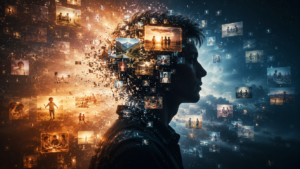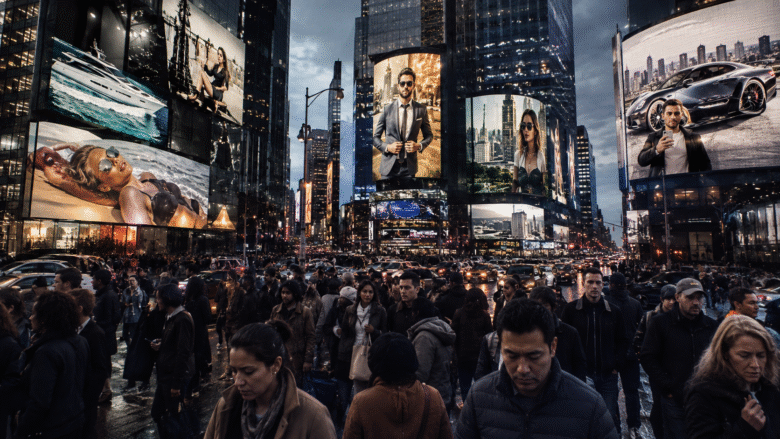
The average human being today probably compares themselves to more people in one day than their ancestors did in an entire lifetime. That single fact explains a lot about why “Nobody Wants to Be Average Anymore” feels less like a trend and more like a psychological emergency unfolding quietly in public.
Somewhere in the last fifteen years, ordinary life stopped feeling enough.
Not bad. Not tragic. Just… insufficient.
A regular job is no longer presented as stability. It is presented as settling. A simple life is no longer seen as peaceful. It is seen as lacking ambition. Even contentment has become suspicious. If somebody says they are genuinely satisfied with a modest life, people almost react as if they have confessed to giving up.
Modern culture does not simply encourage success anymore. It demands exceptionalism.
And the frightening part is how normal this pressure now feels.
Everywhere you look, the message is the same: you must become more. More successful. More attractive. More optimized. More visible. More interesting. Even rest now comes wrapped in performance language. People do not relax anymore. They “recover strategically.” They do not take walks. They “romanticize their lives.” They do not have hobbies. They “monetize passions.”
Human beings are slowly turning themselves into projects.
Not people. Projects.
And projects are never finished.
That is why so many people walk around with the strange feeling that their life has not started yet, even when it already has.
A teacher feels inadequate because they are not also running an online business. An office employee feels embarrassed because somebody on social media became a millionaire at twenty-four. A student with decent grades feels like a failure because another student somewhere cracked three competitive exams while running a startup and filming podcasts.
Nobody compares themselves to reality anymore. They compare themselves to highlights edited for maximum envy.
The smartphone quietly changed the emotional mathematics of human life.
Earlier, people mostly wanted respect within their community. Now they want significance in front of strangers. Earlier, achievement was personal. Now achievement feels performative. It is not enough to accomplish something. It must also look impressive online.
That small shift changed everything.
Because once life becomes performance, ordinary moments begin to feel invisible.
And invisible now feels dangerously close to worthless.
That is why modern anxiety often feels oddly theatrical. People are not just afraid of struggling. They are afraid of being unnoticed while struggling. A heartbreak hurts, but part of the pain now comes from feeling left behind while everybody else appears to be thriving publicly.
The internet created a permanent digital stage, and suddenly everybody became both audience and performer.
The problem is that the stage never closes.
You can feel it in conversations now. People speak like walking advertisements for themselves. Someone is not learning anymore—they are “upskilling.” They are not spending time alone—they are “working on themselves.” Even personalities now feel branded. Quietness becomes “mysterious energy.” Reading books becomes an aesthetic. Drinking coffee becomes content.
There is something deeply exhausting about constantly converting human experience into identity management.
And underneath all this performance sits a growing fear that nobody says out loud clearly enough:
“What if I am just normal?”
That question terrifies modern culture.
Because “normal” today has become confused with irrelevant.
But ordinary life was never supposed to compete with celebrity life. The comparison itself is unnatural. A person living peacefully with stable routines, meaningful relationships, and emotional balance should not feel inferior to somebody constantly broadcasting luxury and achievement online. Yet millions do.
Why?
Because modern capitalism discovered something incredibly profitable: insecurity.
If people feel ordinary, they can be sold improvement forever.
Improve your face. Improve your body. Improve your productivity. Improve your mindset. Improve your career. Improve your morning routine. Improve your networking. Improve your sleep. Improve your confidence. Improve your brand.
The self-improvement industry now often behaves less like guidance and more like an endless dissatisfaction machine.
And social media platforms amplify it because insecurity keeps people engaged. A calm person closes the app. An anxious person keeps scrolling.

That is why the internet constantly creates emotional whiplash. One moment you are watching somebody buy their dream house. Next moment somebody your age is travelling the world. Then someone else announces they retired early through cryptocurrency investments. Then comes a fitness transformation. Then a luxury wedding. Then a “day in my life” video filmed in perfect lighting.
Meanwhile, millions of people are sitting quietly in rented rooms wondering why their own lives suddenly feel small.
But maybe the real tragedy is not comparison itself.
Maybe the real tragedy is that people no longer know how to recognize value unless it attracts attention.
A mother raising emotionally healthy children may never trend online. A son caring for ageing parents will not become viral content. A school teacher helping students gain confidence will probably never receive national applause. Yet these acts hold society together more than most “inspirational” internet content ever will.
Modern culture celebrates visibility far more aggressively than usefulness.
And visibility is a terrible measure of human worth.
Because the people most essential to daily life are often the least glamorous ones. Farmers. Nurses. Drivers. Clerks. Teachers. Electricians. Workers whose names never become headlines but whose absence would collapse normal life within days.
Yet the modern world keeps whispering that unless your life looks extraordinary, it barely counts.
No wonder so many people feel quietly ashamed of their existence despite doing absolutely nothing wrong.
Even childhood has changed under this pressure. Children are no longer simply encouraged to grow. They are expected to become exceptional stories. Parents panic if their child is “average.” Schools push constant competition. Teenagers already speak the language of burnout before adulthood even properly begins.
Everybody feels behind because the finish line keeps moving.
And perhaps that is the cruelest part of all this: extraordinary quickly becomes ordinary once enough people achieve it.
A high-paying job was once success. Now it is “basic.” Owning a home was once stability. Now social media asks why you do not own two. Being fit was once healthy. Now people pursue impossible perfection under filters and edited videos.
Human desire has always existed. But modern culture industrialized it.
The result is a generation that often cannot enjoy what it already has because it has been trained to obsess over what it lacks.
And still, despite all this noise, something deeply human continues resisting underneath.
People still secretly crave ordinary things.
Uninterrupted sleep. Honest friendships. Slow evenings. Familiar people. Financial stability. Feeling emotionally safe around someone. Eating without photographing the meal. Laughing without needing to upload proof of happiness afterward.
Most people do not actually want fame. They want relief.
But relief has become difficult in a culture where everybody feels pressured to become remarkable all the time.
Perhaps we need to rehabilitate the dignity of ordinary life before an entire generation burns itself out trying to escape being average.
Because there is nothing shameful about living quietly. There is nothing pathetic about stability. There is nothing meaningless about being one human being among billions.
A life does not become valuable only after strangers applaud it.
And maybe the healthiest people in the future will not be the ones who became extraordinary.
Maybe they will simply be the ones who escaped the pressure to constantly prove they were.
Conclusion
The fear of being average is shaping modern life more deeply than many people realize. Social media, hustle culture, and endless comparison have turned ordinary existence into something people feel pressured to apologize for. But a society that teaches people to hate normal life eventually creates exhausted citizens who can never feel satisfied.
Perhaps the real rebellion now is not becoming exceptional.
Perhaps the real rebellion is learning how to live meaningfully without needing constant validation from the world.
Because in the end, most human happiness still comes from ordinary things done with sincerity.
And that should have never stopped being enough.
Author’s Note
I kept thinking about how many people today seem permanently disappointed in themselves even when their lives are objectively decent. That feeling did not come from nowhere. It was built slowly through comparison, performance, and the fear of invisibility. Writing about these things matters because sometimes people do not need motivation. Sometimes they need permission to stop treating themselves like unfinished products.
G.C., Ecosociosphere contributor.