The human body burns calories even while sleeping, which means doing absolutely nothing is still technically hard work.
Somewhere along the way, modern life turned rest into a reward instead of a basic human need. That is the uncomfortable truth sitting underneath the title “We Turned Rest Into Something You Have to Earn.” People today do not simply rest anymore. They justify it. They schedule it. They apologize for it. Even while lying in bed on a Sunday afternoon, many feel a strange pressure whispering in the background: “You should be doing something productive.”
And maybe that whisper is now so common that we barely notice it anymore.
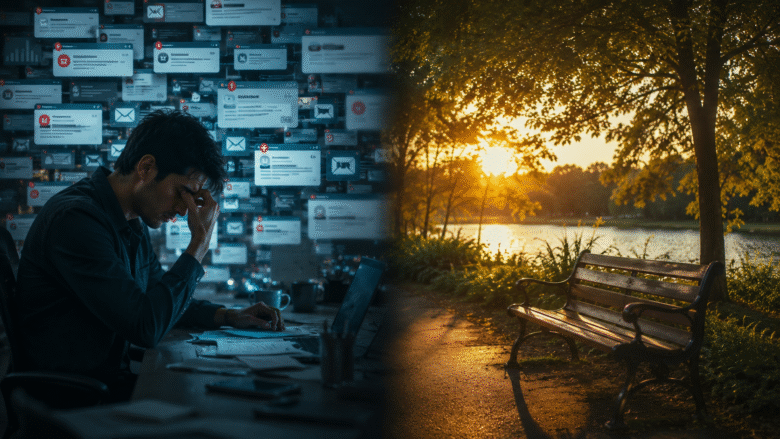
You see it everywhere. A person watches one episode of a show and immediately feels guilty. Someone finally takes a break yet keeps opening their inbox all day as if rest needs supervision.
Students cannot enjoy holidays because they think they are “falling behind.” Workers answer messages during dinner because they fear appearing lazy. Even scrolling through social media has become exhausting because every second post seems to scream that somebody else is waking up at 5 a.m., building a startup, learning five skills, investing in cryptocurrency, and apparently becoming a better human before breakfast.
Rest has started feeling suspicious.
The strange thing is that human beings were never designed to operate like machines. The body has limits. The mind has limits. Attention itself has limits. But modern culture often treats exhaustion as evidence of ambition. If you are tired, busy, and overwhelmed, people assume you must be important. On the other hand, if you are relaxed, slow, or unhurried, society quietly treats you like somebody who is wasting potential.
That mindset did not appear overnight. Part of it came from workplace culture, especially after smartphones erased the boundary between “work” and “home.” Large technology companies like Meta, which owns social media platforms such as Facebook and Instagram, and LinkedIn, a professional networking platform owned by Microsoft, helped create an environment where productivity became visible and performative. People no longer just work. They display work. They post about “grinding.” They upload aesthetic photos of laptops beside coffee cups. They announce how little sleep they got as though it were a medal.
The internet did not invent hustle culture, but it definitely gave it a spotlight and a soundtrack.
There is also something deeply psychological happening here. Rest forces people to sit alone with themselves. Quiet moments allow the mind to drift freely, but many people now struggle with stillness because doing nothing feels strangely unproductive to them.
The moment life becomes quiet, anxiety enters the room. So instead of resting, people keep themselves constantly occupied. Podcasts during walks. Videos during meals. Notifications before sleep. Noise everywhere.
Many people today are physically resting but mentally still running.
The irony is painful. Humanity spent centuries trying to create machines that would reduce labour and increase leisure. Washing machines replaced hand washing. Computers automated calculations. Artificial Intelligence promises to reduce repetitive work even further. Yet instead of becoming more rested, people somehow became more exhausted. Technology saved time, but society immediately filled that saved time with new expectations.

You can see this clearly among young people. Earlier generations often dreamed about stability. Many young people today dream about freedom from burnout. That alone says something important about the world we created. A student can feel guilty for taking a nap during exam season. A young employee can panic after ignoring emails for one evening. Even hobbies are becoming competitive now. Reading books is tracked. Exercise is optimized. Meditation apps send reminders about productivity. Nothing is allowed to simply exist anymore without becoming measurable.
Even rest has become performance.
And perhaps the saddest part is how deeply moral language entered the conversation. People call themselves “lazy” for needing breaks. Think about that for a moment. When the body asks for rest and recovery, society often treats it as a weakness instead of a natural human need.
But no one calls a phone charger lazy for recharging a battery. No one insults a machine for overheating. Only human beings are expected to function endlessly while pretending they are perfectly fine.
The body always sends signals eventually. Burnout, anxiety, irritability, emotional numbness, insomnia, and exhaustion are often not random failures of personality. Sometimes they are the consequences of living in a culture that treats rest as something you must deserve.
And what exactly counts as deserving it anymore?
For many people, the answer keeps moving further away. Finish this task first. Earn more money first. Achieve something first. Be useful first. The reward never arrives because the system survives by making people feel permanently unfinished.
That is why genuinely resting can feel strangely rebellious today.
To sit quietly without guilt. To take a walk without tracking steps. To spend an evening doing nothing important. To sleep without apologizing for it. These things sound small, but modern culture has made them emotionally difficult. Many people have forgotten how to rest without mentally defending themselves.
Maybe that is why conversations around burnout resonate so deeply now. People are tired in a way sleep alone cannot fix. They are tired of measuring their worth through output. Tired of proving they are busy enough. Tired of feeling guilty for being human.
Rest should not have to be earned through suffering.
A society that cannot tolerate people resting peacefully eventually creates people who cannot tolerate themselves peacefully either. And perhaps the real crisis is not that people are lazy. It is that people are exhausted while pretending exhaustion is normal.
Maybe the next great act of rebellion is not working harder.
Maybe it is finally learning how to stop.
Author’s Note
I wanted to write this because the guilt surrounding rest has become strangely invisible. People laugh about burnout while carrying it quietly every day. We have become so used to exhaustion that calmness now feels unnatural. Writing about these things matters because sometimes people do not need another productivity trick. Sometimes they just need permission to remember that being alive is not the same thing as constantly performing usefulness.
G.C., Ecosociosphere contributor.