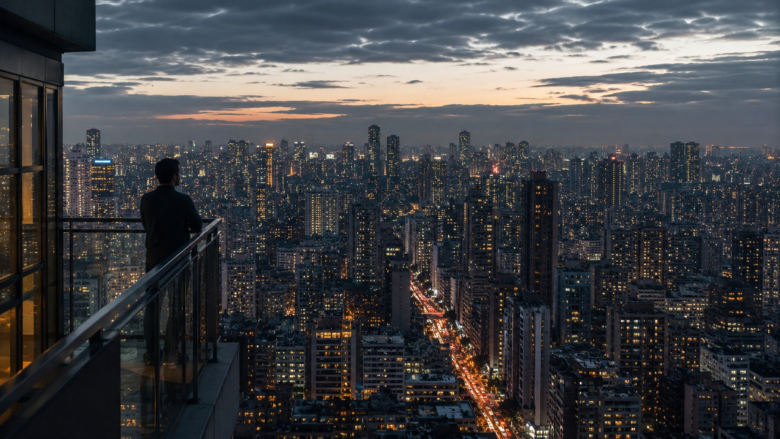
There is a peculiar feeling that belongs almost exclusively to modern cities.
You can spend an entire day surrounded by human beings and never once feel connected to any of them.
The elevator arrives. Someone glances at their phone. The train is crowded. Hundreds of faces pass within arm’s reach. Coffee is bought from a stranger. Groceries are scanned by a machine. Another evening ends behind the door of an apartment surrounded by other apartments occupied by people whose names you do not know.
Nothing dramatic has happened. Nobody has insulted you. Nobody has excluded you. Nobody has told you that you do not belong. Yet a quiet loneliness lingers anyway.
For a long time, we have treated this feeling as a personal problem. We blame technology. We blame social media. We blame busy schedules or changing values. Sometimes we blame ourselves. We assume we should simply try harder to make friends.
But what if part of the story lies elsewhere?
What if the architecture of everyday life is quietly contributing to the loneliness we feel?
Cities are among humanity’s greatest achievements. They concentrate knowledge, opportunity, creativity, commerce, culture, and innovation into a single place. They allow millions of strangers to cooperate without ever meeting. They make modern civilization possible.
Yet they may also reveal a strange misunderstanding about human nature.
For most of human history, people did not live among millions of strangers. They lived among dozens or hundreds of familiar faces. Villages were small. Communities were stable. Daily life repeatedly brought people into contact with the same individuals. The baker was known. The farmer was known. The children playing in the street were known. Even disagreements existed within a framework of familiarity.
Human beings evolved inside these conditions.
Our brains are not simply designed for social contact. They are designed for repeated social contact. There is a difference.
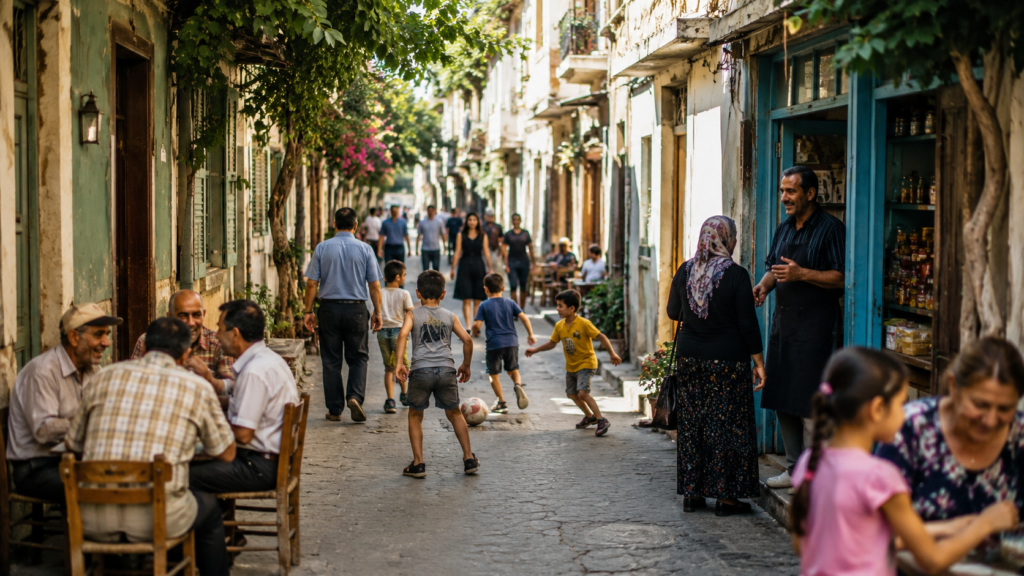
A crowded subway contains more people than an ancient village ever could, yet the brain does not automatically interpret that as connection. What it looks for are familiar faces, predictable relationships, and signs that we belong somewhere. A stranger seen once disappears from memory. A face seen every day gradually becomes part of the emotional landscape of life.
Modern cities offer endless exposure to people but often very little familiarity.
We have become experts at proximity while quietly losing intimacy.
The irony is that many of the changes that contributed to this were originally intended to improve life.
Cities became larger because populations grew. Roads widened because transportation became important. Buildings rose higher because land became expensive. Neighbourhoods became specialized because efficiency demanded it.
Everything made sense individually.
But together, these decisions transformed the texture of everyday life.
A person once walked through streets lined with local shops and familiar faces. Today they may drive from a residential district to a business district before returning to a residential district designed primarily for sleeping rather than living.
The spaces in between have gradually disappeared.
Urban planners often speak about something called “third places”—those environments that are neither home nor work. Public squares, libraries, parks, neighbourhood cafés, community centres, and other shared spaces have historically played a crucial role in human connection. They allowed relationships to emerge naturally without requiring appointments, invitations, or formal plans.
Many modern cities have fewer of these places than they once did. As a result, social interaction increasingly becomes something that must be scheduled rather than something that simply happens. The consequences are subtle but profound.
Friendship often begins with accidental repetition. The person you keep seeing during morning walks. The shopkeeper who remembers your name. The parent you encounter every afternoon at the playground. Human relationships frequently grow from familiarity before they grow from affection.
Remove the opportunities for repeated encounters, and connection becomes harder to sustain.
The strange thing is that our brains notice this even when we do not.
Neuroscience suggests that human beings constantly evaluate their surroundings for signals of safety and belonging. A street filled with trees, benches, open storefronts, and visible human activity feels different from a landscape dominated by highways, parking lots, concrete walls, and isolated towers.
Neither environment is inherently dangerous.
Yet one feels alive while the other feels transactional.
One invites participation. The other encourages passage.
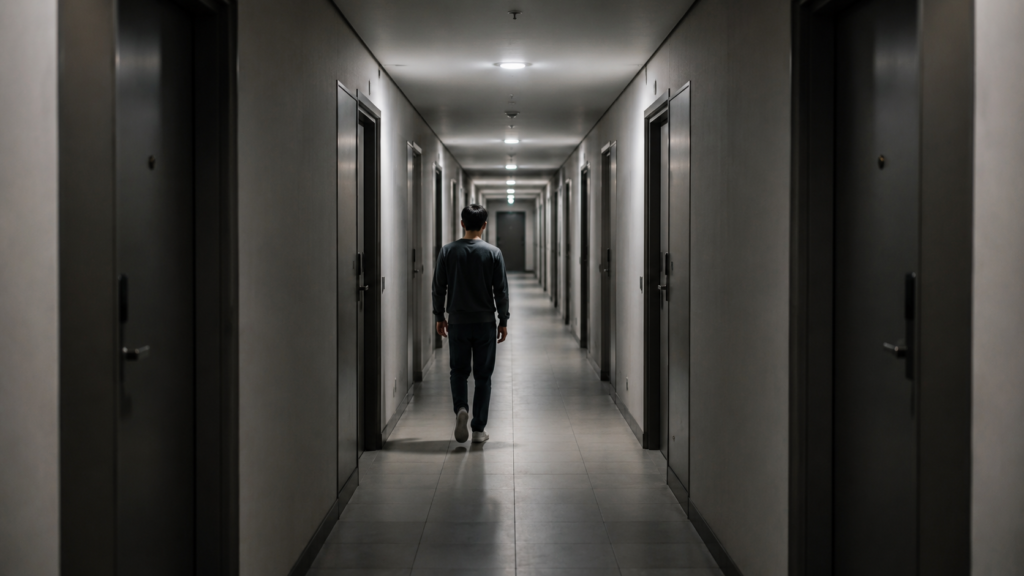
Architecture influences emotion more than we often admit. Buildings are not merely structures. They are experiences. They shape movement, attention, stress levels, and social behavior. A neighbourhood can quietly encourage conversation or quietly discourage it. A city can create opportunities for human connection or remove them without anyone consciously noticing.
This helps explain why loneliness can feel so intense in urban environments.
The problem is rarely a complete absence of people. More often, the reality is exactly the reverse. We are surrounded by human beings yet deprived of the conditions that transform strangers into neighbours.
Perhaps this is why loneliness in cities often feels different from loneliness elsewhere. It carries an additional layer of confusion. If nobody is around, loneliness makes sense. But when millions of people surround us, loneliness feels almost irrational.
The feeling eventually crystallizes into a quiet question: How can so many people be nearby and yet feel so far away?
The answer may be that connection was never created by density alone.
For generations, we assumed that bringing people physically closer together would naturally produce community. Yet proximity and belonging are not the same thing. Human beings can occupy the same building, the same street, or the same city while remaining emotionally distant from one another.
A city can be crowded without feeling connected.
A neighbourhood can be populated without feeling alive.
A skyline can grow taller while the social fabric beneath it grows thinner.
None of this means cities are doomed to loneliness. In fact, many urban designers are now trying to reverse these trends. Around the world, there is growing interest in walkable neighbourhoods, public gathering spaces, mixed-use communities, pedestrian-friendly streets, and architecture designed around human interaction rather than pure efficiency.
What makes these ideas interesting is that they are not really about buildings.
They are about relationships. They are attempts to answer a question that has followed humanity from villages to megacities.
How do we create places where people feel that they belong? Perhaps the most remarkable thing about modern loneliness is that it forces us to reconsider what a successful city actually is.
For decades, success was measured in height, growth, traffic, population, and economic output.
Those things matter. Yet they reveal only part of the picture. Because at the end of the day, a city is not merely a collection of roads, buildings, and infrastructure. It is an emotional environment.
And perhaps the true measure of a city is not how many people it can hold.
Perhaps it is how many people can walk through it feeling that they are part of something larger than themselves.
Not surrounded by humanity. Connected to it.
Author’s Note
When people talk about loneliness, the conversation usually turns inward. We examine individual habits, personalities, and technologies. Those factors matter. But environments matter too. The spaces we build quietly influence the lives we live within them. Sometimes the question is not why people feel lonely. Sometimes the question is whether the places around them were ever designed to make connection easy in the first place.
G.C., Ecosociosphere contributor.