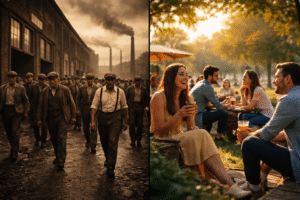
For over a century, we built cities around a machine.
Not around children.
Not around pedestrians.
Not around conversation.
Around cars.
We widened roads, demolished neighbourhoods, poured flyovers through markets — and called it development. The louder the engine, the stronger the economy. The faster the traffic, the greater the progress. Now something quietly radical is happening.
Major cities are removing cars from their downtown cores. And the sky isn’t falling.
Paris: Reclaiming the River
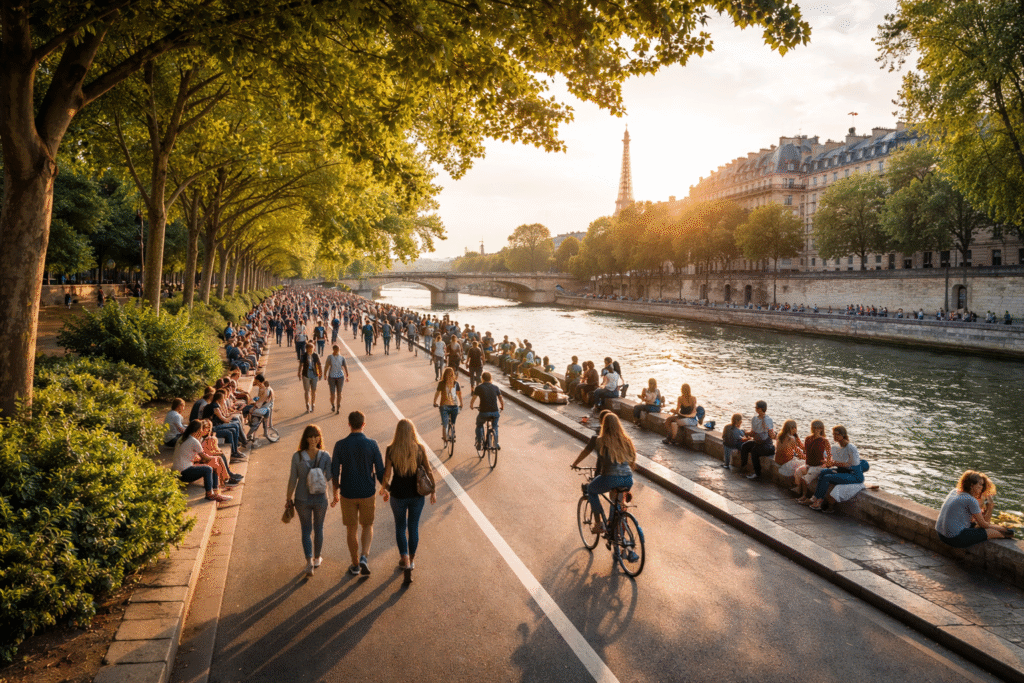
Paris turned sections of the Seine riverbank — once packed with traffic — into pedestrian promenades. When the decision was announced, critics predicted chaos. Gridlock. Economic damage. Political suicide.
Instead, something far less dramatic happened. People came back. Cycling surged. Air pollution dropped in several monitored zones. Public space expanded. Cafés spilled outward. The river felt like a river again — not a bypass.
The city didn’t collapse. It softened.
Oslo: The Experiment That Worked
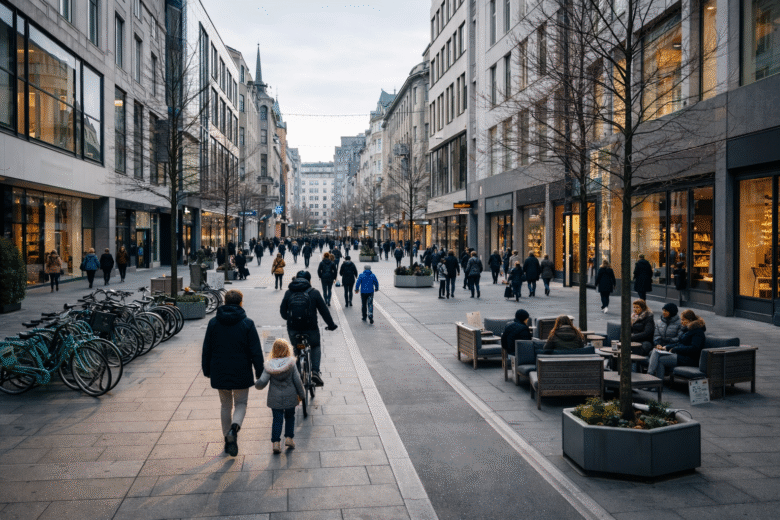
Oslo removed most private cars from its central district. Not symbolically. Systematically. Parking spaces vanished. Streets were redesigned. Public transport was strengthened instead of widening roads.
Retail didn’t die. Foot traffic increased. Road injuries declined. The city centre became quieter. What changed most wasn’t mobility. It was an atmosphere. When engines fade, human presence fills the vacuum.
London: The Price of Road Space
London didn’t ban cars outright. It introduced congestion pricing. Drivers entering central zones pay. The result? Fewer vehicles, faster buses, more cyclists. It forced a simple realization: road space is political.
For decades, we treated it as free. But nothing about it was free. We paid in asthma. In noise. In time lost to traffic. Congestion pricing did something uncomfortable. It exposed the subsidy.
Why This Feels Like an Attack
Let’s be honest. Cars represent independence. Power. Privacy. Status. To restrict them feels like a restriction of freedom itself.
But here is the uncomfortable counterpoint: freedom for one driver often means constraint for everyone else. When a street is dominated by vehicles, pedestrians move nervously. Children stay indoors. Elderly residents hesitate.
Is that freedom? Or is that hierarchy? Car-free zones don’t eliminate movement. They rebalance it.
India: The Inevitable Question
This is where the conversation turns from theory to urgency. Delhi’s air regularly ranks among the worst globally. Bengaluru’s traffic steals hours daily. Mumbai moves — but barely. And yet we still respond with flyovers.
More lanes.
More asphalt.
More urgency.
We have experimented with car-free Sundays. Each time, the result is revealing. Streets fill with families. Children cycle. Vendors breathe easier. The atmosphere changes almost instantly. So, the question becomes sharper: If we know what healthier streets look like, why do we keep rebuilding the unhealthy version?
The Myth of “Economic Necessity”
The most persistent argument against car-free zones is economic fear. Businesses will suffer. Customers won’t come. Commerce will shrink.
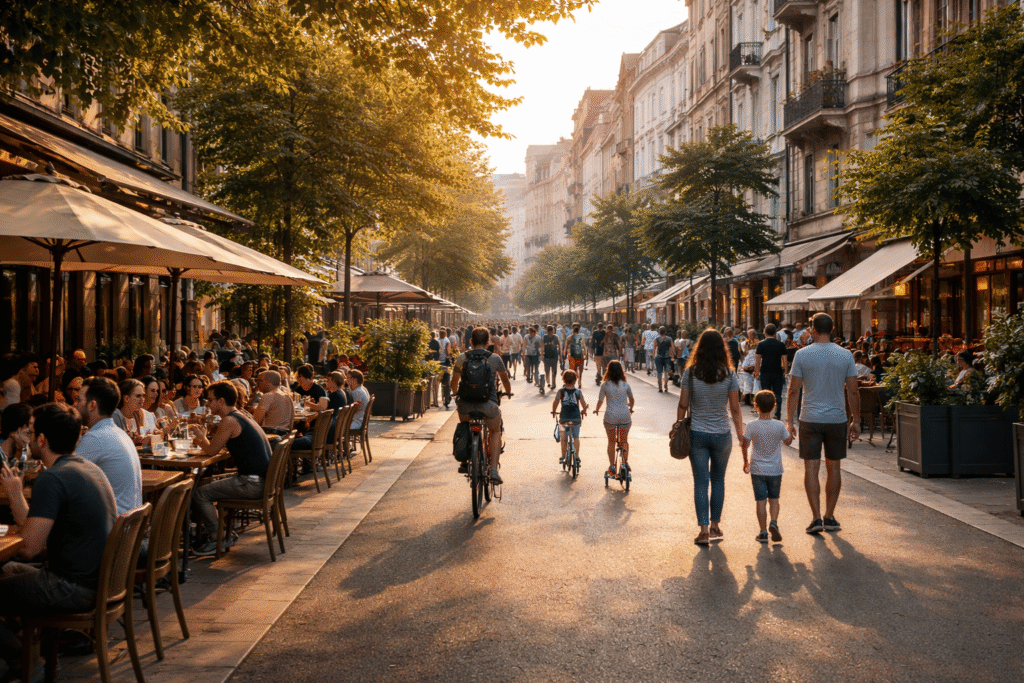
And yet, city after city shows the opposite pattern: pedestrian-friendly zones often see increased retail activity. People linger longer. They spend more time. They engage. Economic life does not require engine noise. It requires human presence.
A Different Definition of Progress
For decades, we equated development with speed. Fast roads meant modernity. Flyovers meant ambition. But maybe maturity looks different.
Maybe a truly advanced city is one where a child can cross a street without sprinting. Maybe progress is measured not in horsepower — but in public space. Cities removing cars are not anti-technology. They are anti-chaos.
They are asking a deceptively simple question: Who is the city for?
Conclusion: The Sound of a Different Future
Stand in a car-dominated intersection and close your eyes. You hear impatience. Stand in a pedestrian plaza and close your eyes. You hear life. The shift from cars to people is not cosmetic. It is philosophical.
It challenges the idea that speed equals success. And it suggests something quietly radical: The future city may not be faster. It may be kinder.
Author’s Note
Every time I’m stuck in traffic, I notice something unsettling — we’ve normalized stress as infrastructure. We built tension into our roads and accepted it as inevitable. Writing this made me realize that maybe the most political act a city can commit is not building something new but removing something old. Not expanding space for engines — but reclaiming space for breath.
G.C., Ecosociosphere contributor.