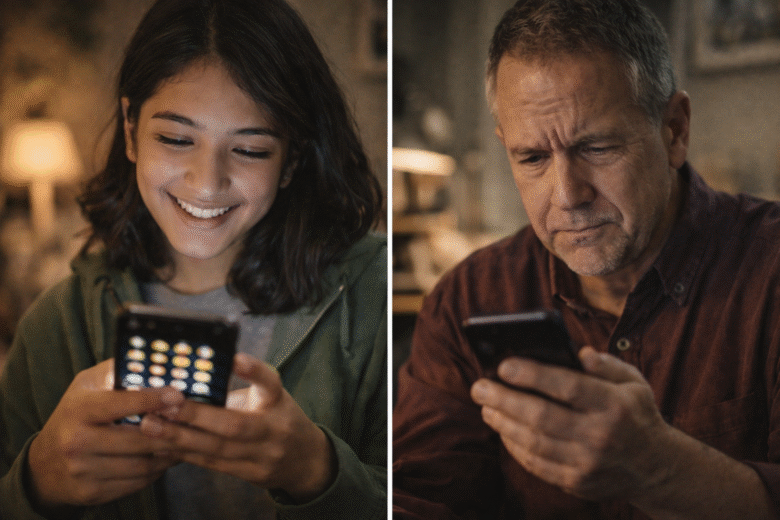
Fun fact: the “thumbs up” emoji can mean “great job,” “okay,” “end of discussion,” or “I am mildly annoyed” — depending entirely on the age of the person reading it.
That’s not a typo. That’s modern communication.
Somewhere between rotary phones and reel videos, we created a new dialect — one built out of hashtags, emojis, screenshots, and silence. And like every dialect in history, it is dividing generations faster than any election ever could.
You may think you speak English. Your child may think you speak English. But put both of you in a group chat and suddenly you are from different planets.
Welcome to the quiet cultural tension inside Hashtags, Emojis & the Generation Divide — where language is no longer about grammar, but about vibes.
The Emoji That Betrayed You
Let’s start with the infamous thumbs-up. For many parents, it is polite. Efficient. Civilized. A digital nod. For many teenagers, it can feel passive-aggressive. Dismissive. Like a door gently closing.
Why? Because digital language evolves socially, not logically. Tone shifts through shared experience. Among younger users, especially on platforms like TikTok — a short-form video application owned by ByteDance, a global technology company — emojis operate as cultural codes. Meaning depends on context.
The skull emoji? It rarely means death. It means, “I’m laughing so much that I’m ‘dead’ — at least figuratively.”
The crying emoji? Often not sadness. Often exaggerated laughter. The same symbol. Entirely different emotional temperature. And suddenly the generation divide is not about morality or politics. It is about interpretation.
Hashtags Are Not Labels. They Are Attitudes.
When Twitter — a social media company that allows users to post short public messages — popularized hashtags, they were organizational tools. Now? They are emotional punctuation.
#Blessed can be gratitude.
It can also be sarcasm.
#Adulting can mean pride.
Or exhaustion.
Hashtags have become tone indicators. They tell you whether the writer is serious or self-aware. And younger users have mastered this ambiguity. Older generations sometimes read hashtags literally. Younger users read them socially. This is not carelessness. It is literacy — just a different kind.
Digital Language Is a Survival Tool
Here is something we don’t say enough: young people grew up online. They learned social rules in comment sections. They navigated friendships in group chats. They experienced embarrassment through screenshots.
Digital language is not decoration. It is emotional armor. Irony protects vulnerability. Emojis soften criticism. Hashtags create distance from pain.
“I’m fine” followed by a melting-face emoji does not mean fine.
It means: “I am overwhelmed, but I refuse to dramatize it.”
There is intelligence in that compression.
The Speed Problem
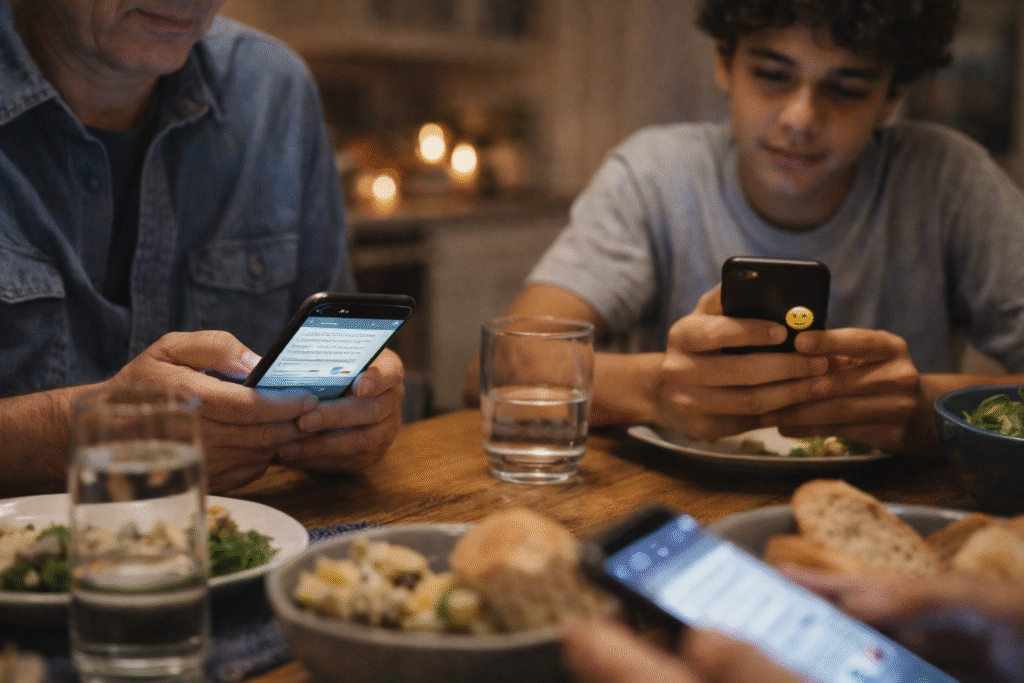
Older generations learned to communicate slowly. Letters. Landlines. Face-to-face conversations. Younger generations live in rapid exchange. Message. Reply. Reaction. Meme. Repeat.
Tempo shapes tone. A long paragraph of text from a parent can feel intense to a teenager. A one-word reply from a teenager can feel disrespectful to a parent. Neither is necessarily wrong. They are simply speaking different digital dialects.
And that is what Hashtags, Emojis & the Generation Divide really expose — not a decline in language, but a shift in rhythm.
The Cultural Ownership of Meaning
Every generation has claimed language as its own.
Boomers had slogans.
Gen X had sarcasm.
Millennials had abbreviations.
Gen Z has symbols.
And symbols are powerful because they are flexible. On Instagram — a photo-sharing platform owned by Meta, a multinational technology company that operates Facebook and Instagram — an emoji can reshape the emotional meaning of an entire post. It can turn criticism into humor. It can turn sadness into resilience.
When young people reject an emoji as “cringe,” they are not being dramatic. They are renegotiating cultural ownership. They are saying, “That was yours. This is ours.” Language is identity. Even when it comes wrapped in a yellow cartoon face.
Is This Shallow? Or Is This Evolution?
It is easy to mock emojis. It is harder to admit that they are filling gaps traditional language struggles within digital spaces.
Text strips away facial expressions. Tone disappears. Sarcasm gets misunderstood. Emojis bring some of that nuance back. They are not replacing words. They are supplementing them.
If Shakespeare were alive today, he might invent new words.
Teenagers invent new meanings instead.
The tools are different. The instinct is the same.
The Real Generation Divide
The divide is not technological. It is interpretive. Younger people assume fluid meaning. Older people assume fixed meaning.
One sees emojis as evolving slang. The other sees them as static icons. One sees hashtags as commentary. The other sees them as labels.
The conflict is not about intelligence. It is about context. And context is learned socially.
So What Now?
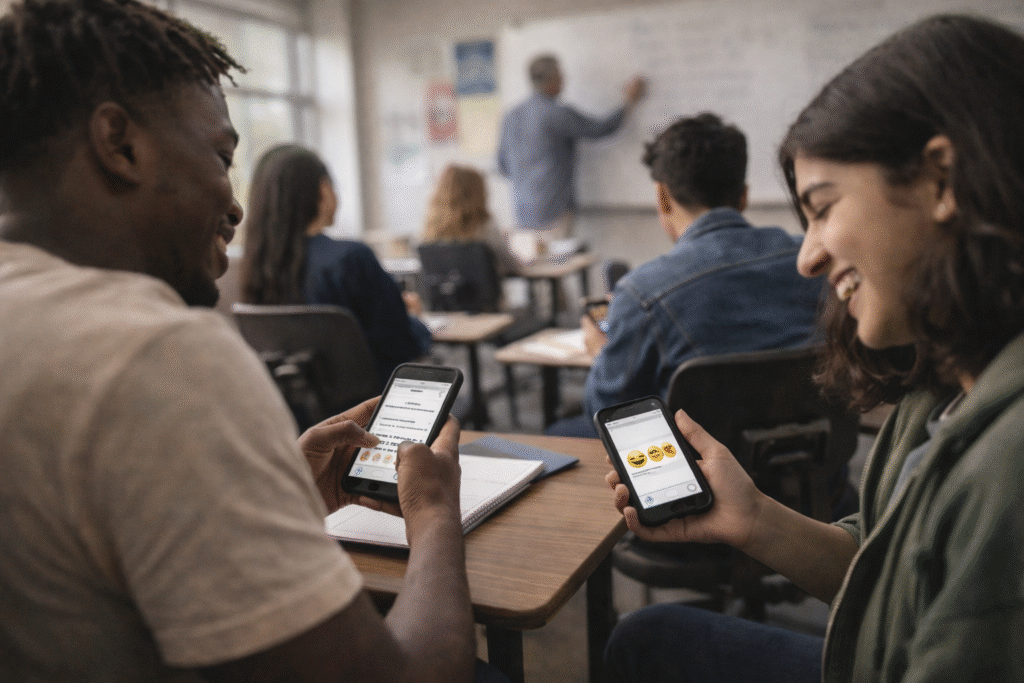
We have two choices. We can roll our eyes at each other. Or we can get curious.
Ask a teenager what an emoji means.
Explain why a full sentence matters.
Laugh at the misunderstanding instead of turning it into a moral debate.
Because if we cannot navigate a thumbs-up emoji, how will we navigate bigger conversations?
Hashtags, Emojis & the Generation Divide are not trivial topics. They are windows into how culture is shifting in real time.
The next social movement might begin with a hashtag.
The next misunderstanding might begin with an emoji.
Either way, language will keep evolving — with or without our approval. The question is simple: will we evolve with it?
Author’s Note
This topic stayed with me because I see it daily — in family conversations, in small misunderstandings that are really about tone, not intention. It is easy to dismiss digital language as shallow. It is harder to see it as adaptive. Writing about it felt necessary because communication is not just about speaking clearly. It is about listening across differences. And sometimes, that difference is only one emoji wide.
G.C., Ecosociosphere contributor.