Rules are everywhere. They tell us which side of the road to drive on, how many players may stand on a football field, when we should wait our turn, what clothes are appropriate for certain occasions, and even which fork we are expected to use at a formal dinner. Some rules are written into law and backed by punishment.
Others exist only as quiet expectations, yet breaking them can still earn a disapproving stare from everyone in the room. Human life is so thoroughly surrounded by rules that we rarely notice how extraordinary this is.
We have taken an unpredictable world and covered it with instructions.
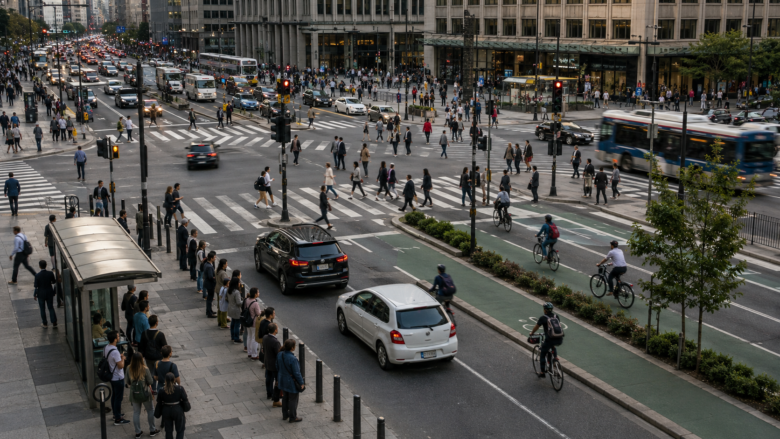
At first, this can look like an obsession with control. Human beings seem unusually fond of deciding what may happen, where it may happen, who may do it, and under what circumstances. But rules serve a deeper purpose. They allow large numbers of people to coordinate their behaviour without constantly negotiating every decision. Imagine approaching a busy intersection where there were no traffic lights, lanes, right-of-way conventions, or agreed side of the road.
Every driver would have to predict what every other driver intended to do. Movement would become slower, more dangerous, and mentally exhausting. A traffic rule removes much of that uncertainty by giving strangers a shared expectation.
That ability becomes even clearer when we look at games. A football match is possible only because everyone agrees that certain imaginary restrictions matter. A white line painted across grass becomes a boundary. Touching the ball with a hand becomes acceptable for one player but forbidden for most others. A whistle can instantly stop twenty-two people running at full speed.
None of these rules exists in nature. Humans invented them, agreed to respect them, and in doing so transformed an open field into an organised competition.
The rules do not interfere with the game; in an important sense, they create the game.
The same principle quietly operates throughout society. Money works because we accept rules about ownership and exchange. Elections require procedures for deciding who votes, how votes are counted, and when power changes hands. Schools depend on timetables, examinations, classroom expectations, and countless routines that allow hundreds of people to occupy the same institution without renegotiating their behaviour every morning.

Even standing in a queue involves an invisible rule: whoever arrived first should normally be served first.
Without that expectation, waiting would become competition. Some of our most powerful rules are not written anywhere. Etiquette is full of them. We knock before entering closed rooms, lower our voices in libraries, avoid standing uncomfortably close to strangers, say thank you after receiving help, and usually allow people to finish speaking before responding.
There may be no official penalty for ignoring these conventions, but social consequences are surprisingly effective. Someone who repeatedly interrupts conversations, pushes ahead in queues, or ignores personal space may quickly be judged rude or inconsiderate.
Human communities enforce many rules not through police or courts, but through approval, embarrassment, reputation, and trust.
This may help explain why rules became so important during human evolution. Our ancestors survived through cooperation. Hunting, gathering, raising children, sharing resources, defending groups, and exchanging information all required people to predict one another’s behaviour. Groups in which expectations were reasonably clear could coordinate more effectively than groups in which every interaction became a fresh argument.
Over generations, humans became extraordinarily sensitive to fairness, reciprocity, obligation, and violations of social expectations. Even young children quickly notice when someone appears to be breaking the rules of a game, especially when the rule-breaker gains an unfair advantage.
Rules also reduce something the human brain generally dislikes: uncertainty.
Every social encounter contains countless possible actions, and constantly deciding among them would consume enormous mental effort. Conventions narrow those possibilities. When we enter a shop, board a bus, attend a wedding, sit in a classroom, or visit someone’s home, we already possess a rough script for what is supposed to happen.
We do not need detailed instructions because culture has supplied them gradually. Much of what we call “normal behaviour” is simply a collection of rules learned so thoroughly that they no longer feel like rules.
Yet humans have an interesting relationship with the systems they create. We depend on rules while simultaneously complaining about them. A speed limit can feel irritating when the road seems empty. A dress code can appear unnecessary. A bureaucratic procedure may survive long after anyone remembers why it was introduced.
Once rules become institutions, they can continue through habit rather than usefulness. Some protect fairness and safety; others preserve outdated traditions, concentrate power, or simply make life more complicated.
The human talent for creating rules is therefore matched by another important ability: questioning them.

This tension is essential because societies change faster than many of their rules. Technologies appear, values shift, populations grow, and behaviours that were once unusual become ordinary. Regulations surrounding privacy, artificial intelligence, online communication, transportation, employment, and countless other areas are constantly being reconsidered because yesterday’s instructions may not fit tomorrow’s world.
A functioning society therefore needs both stability and revision. If every rule changed constantly, cooperation would become difficult. If no rule could ever change, society would become trapped by its own past.
Perhaps the strangest thing about rules is how easily imaginary boundaries become emotionally real.
A painted line can determine whether a goal counts. A red light can make hundreds of powerful machines stop simultaneously. A piece of paper can establish ownership. A spoken promise can create an obligation that lasts for decades.
These things have power because other people recognise them too. Humans possess an unusual capacity to build shared systems of meaning and then organise enormous parts of life around them.
That is why rules appear wherever humans gather. They are found in playgrounds and parliaments, families and factories, religions and restaurants, sports stadiums and silent libraries. Some protect us, some organise us, some frustrate us, and some eventually deserve to disappear.
But beneath all of them lies the same remarkable social achievement: the ability of individuals to adjust their behaviour according to expectations that exist largely in other people’s minds.
A world without rules might sound wonderfully free for a moment. In practice, it would require us to negotiate almost everything from scratch—who goes first, what belongs to whom, what counts as fair, and what everyone else is likely to do next.
Rules spare us from much of that uncertainty. They turn crowds into queues, roads into traffic systems, fields into games, and millions of strangers into societies capable of functioning together.
Humans invent rules for everything because rules allow us to do something even more extraordinary: live among people we do not know and still have some idea of what will happen next.
Author’s Note
Rules are so deeply woven into everyday life that most of them become invisible. I wanted to explore why humans repeatedly create systems of expectations wherever they gather—from playgrounds and sports fields to roads, classrooms, and entire nations. What interests me most is that many of these rules work without anyone actively enforcing them. We follow them because other people expect us to, revealing just how much civilization depends on shared understanding rather than authority alone.
G.C., creator and writer of Ecosociosphere.
References & Further Reading
- Elinor Ostrom — Governing the Commons
A foundational exploration of how communities develop rules and institutions to manage shared resources. - Michael Tomasello — A Natural History of Human Morality
Examines cooperation, shared expectations, fairness, and the evolutionary foundations of human morality. - Robert Cialdini & Noah Goldstein — “Social Influence: Compliance and Conformity”
Annual Review of Psychology. A useful overview of how social expectations influence individual behaviour. - Cristina Bicchieri — The Grammar of Society
Explores how social norms emerge, why people follow them, and how expectations maintain collective behaviour. - Émile Durkheim — The Rules of Sociological Method
A classic work useful for understanding how social structures and collective expectations influence individuals.