There is a moment in every crowd when people stop behaving like separate individuals and begin behaving like weather.
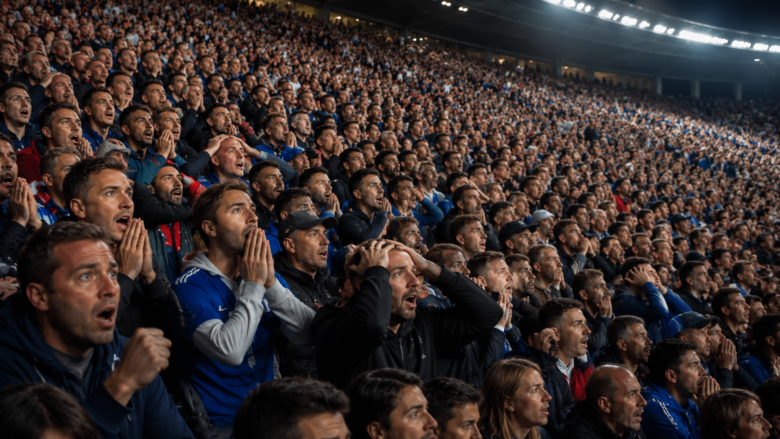
You can feel it in stadiums just before a goal. In protests, seconds before panic spreads. In concerts, when thousands of strangers somehow begin moving like one body. Even online, inside comment sections and outrage cycles, there are moments where individual personalities seem to blur into something larger, louder, and less predictable.
One person alone is usually cautious. A crowd can become fearless, irrational, compassionate, violent, euphoric, or strangely tender. And the uncomfortable part is that crowds are not made of different kinds of humans.
They are made of ordinary people temporarily rearranged by collective emotion.
Modern culture likes to imagine human beings as independent thinkers. We picture ourselves making private decisions untouched by social influence. But the brain was never built for isolation. Human beings evolved in tribes long before cities, democracies, or social media existed. Survival depended on paying attention to the emotional state of the group. If everyone around you suddenly became afraid, hesitation could be fatal.
So, the nervous system learned something efficient.
Feel first.
Understand later.
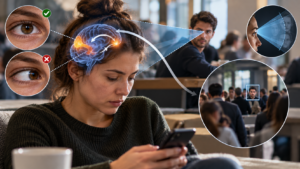
Scientists studying emotional contagion have found that people unconsciously absorb expressions, tones, gestures, and emotional states from surrounding humans. We mimic each other constantly without noticing. A laugh in a quiet room spreads faster than logic. Anxiety spreads too. So does anger.
Sometimes this is harmless. Sometimes beautiful. Sometimes catastrophic.
This is partly why crowds feel powerful in ways that are difficult to explain rationally. Inside large groups, people often experience a temporary weakening of individual identity. Psychologists call this deindividuation — the strange shift where the mind becomes less focused on “What am I doing?” and more drawn to “What are we doing?”
That difference matters more than it sounds.

History is filled with moments where crowds carried human beings toward things they may never have done alone. Crowds have rescued strangers during disasters. Crowds have also trampled strangers to death during panic. The mechanism itself is not moral. It amplifies whatever emotional current becomes dominant.
Fear becomes panic.
Grief becomes solidarity.
Excitement becomes frenzy.
Anger becomes permission.
And perhaps most dangerously, collective certainty begins to feel like truth.
If enough people believe something loudly enough, the human brain starts mistaking shared confidence for evidence. This helps explain why conspiracy theories, stock market manias, internet outrage, and political extremism spread so effectively. Human beings are deeply vulnerable to the emotional atmosphere around them, especially when uncertainty is high.
But crowds are not only dangerous. That would be too simple.
There is a reason human beings keep gathering despite everything.
At concerts, protests, festivals, religious rituals, and sporting events, people often describe feeling emotionally larger than themselves. For brief moments, the usual distance between strangers weakens. Thousands of separate lives synchronize through rhythm, chanting, movement, or emotion.
Neuroscientists studying synchronized group activity have found that coordinated behaviour can increase bonding, trust, and feelings of connection. The experience can feel almost spiritual, even for people who are not religious.
Maybe because human beings were never designed to experience life entirely alone.
Modern life fragmented many older forms of community. Villages became apartment complexes. Shared rituals became private routines. More people now live surrounded by others while emotionally detached from them. Perhaps that is why collective experiences still carry so much emotional force. People are not only searching for entertainment or ideology.
Sometimes they are searching for evidence that they still belong somewhere.
The internet complicated this in ways humanity probably was not prepared for.
For most of history, crowds were temporary. A rally ended. A stadium emptied. A protest dispersed. People returned home and their nervous systems calmed down.
Now crowds remain active permanently.
Social media created environments where millions of people can become emotionally synchronized within minutes. Fear, outrage, humiliation, excitement, and suspicion move through networks faster than reflection does. Online crowds can form instantly around scandals, rumours, tragedies, or political conflicts, often before facts fully emerge.
And because people feel simultaneously anonymous and visible online, behaviour changes there too. Individuals often become harsher, more performative, more absolute. Nuance struggles to survive inside emotionally charged digital spaces because uncertainty spreads slower than confidence does.
The internet did not invent mob psychology.
It removed geographical limits from it.
Still, reducing all crowd behaviour to manipulation or irrationality misses something important. Collective emotion is not automatically false simply because it is collective. Crowds sometimes reveal truths individuals are too isolated or frightened to express alone. Many social movements, revolutions, labour rights struggles, and civil rights campaigns depended on people discovering courage through collective presence.
A single frightened person may stay silent.
Ten thousand frightened people may suddenly realize they are not alone.

That has changed history repeatedly.
Maybe the real tension is that human beings fear crowds for the same reason they crave them: crowds dissolve loneliness, but they also dissolve boundaries.
The same psychological machinery that allows people to experience unity can also make them surrender judgment. The same instinct that creates solidarity can create fanaticism. Human beings are social creatures to a degree modern individualism still struggles to fully accept.
Perhaps this is why collective emotion feels so overwhelming now. Modern society encourages people to think of themselves as independent identities while simultaneously placing them inside enormous emotional systems they barely understand — political movements, fandoms, online cultures, algorithmic outrage cycles, economic fear, national grief, digital tribalism.
Most people like to believe they stand outside these forces.
But very few humans are untouched by the emotional climate surrounding them.
And maybe recognizing that vulnerability matters more than pretending immunity to it.
Because the frightening thing about crowds is not that humans lose their humanity inside them.
It is that crowds reveal how deeply human beings have always belonged to each other.
Author’s Note
Crowds frighten people because they reveal something uncomfortable: human beings are far less separate from each other than we like to believe.
But maybe crowds also reveal something else.
That beneath all the noise, outrage, celebration, panic, and belonging, most people are simply trying not to feel alone inside their emotions.
G.C., Ecosociosphere contributor.