For a long time, status was easy to recognize.
It appeared in luxury cars, large homes, expensive watches, designer clothing, and exotic vacations. Success was measured by visible possessions. The more someone could display, the more successful they appeared.
But something interesting seems to be happening.
In a world where many people are constantly stressed, exhausted, distracted, and overwhelmed, the most desirable thing is no longer always something you can buy.
It is peace of mind.
Mental stability is quietly becoming one of the most admired qualities in modern life.
This shift makes sense when viewed through the realities of the twenty-first century. Many people today have access to comforts that previous generations could barely imagine. Food can be delivered within minutes. Entertainment is available instantly. Communication happens across continents in seconds.
Yet anxiety, burnout, loneliness, and emotional exhaustion remain widespread topics of conversation.
The problem is that comfort and peace are not the same thing.
Someone may own expensive possessions while feeling constantly worried. They may appear successful while struggling to sleep, focus, or relax. They may have financial security while feeling emotionally drained.
As people become more aware of this distinction, their idea of success begins to change.
The person who remains calm during uncertainty often appears more impressive than the person who owns the newest luxury item.
The ability to protect one’s mental well-being has become increasingly rare.
Modern life competes relentlessly for attention. Notifications interrupt thoughts. News cycles operate continuously. Social media platforms encourage comparison. Work follows many people home through phones and laptops.
The result is a feeling that the mind is never fully at rest.
In such an environment, emotional stability starts to look like a form of wealth.
A person who can disconnect without guilt, enjoy free time without anxiety, and maintain healthy relationships despite daily pressures possesses something many others are searching for.
That is difficult to fake.
Luxury has always signalled access to scarce resources. Historically, rare materials, large properties, or exclusive experiences demonstrated status because few people could obtain them.
Today, peace may be the scarcest resource.

Many people have experienced the strange realization that achieving a long-desired goal does not automatically create lasting happiness. A promotion, a purchase, or a milestone often provides satisfaction for a while before everyday concerns return.
The mind adapts surprisingly quickly.
Because of this, people increasingly pay attention to something deeper. Not what a person owns, but how they live.
Can they enjoy the present moment? Can they maintain meaningful relationships? Can they handle setbacks without falling apart? Can they create boundaries that protect their well-being?
These qualities are becoming markers of a life that feels successful rather than merely looks successful.
Social media has also contributed to this change in unexpected ways.
For years, platforms encouraged people to showcase possessions, achievements, and carefully curated lifestyles. But constant exposure to these images has produced a certain fatigue.
Many people now recognize that a perfect-looking life can conceal significant struggles. As a result, authenticity often attracts more admiration than perfection.
Someone who appears grounded, emotionally secure, and comfortable with themselves may generate more genuine respect than someone displaying endless symbols of wealth.
People are beginning to realize that inner stability influences nearly every aspect of life.
It affects relationships because emotionally balanced people tend to communicate more effectively. It affects health because chronic stress can have profound physical consequences. It affects work because focus, resilience, and decision-making depend heavily on mental well-being.
In other words, peace is not separate from success. It often helps create it.
This does not mean money has become unimportant. Financial security remains essential. Stability becomes much harder when basic needs are uncertain. Economic comfort still matters and likely always will.
But beyond a certain point, many people appear to be pursuing something different.
They are not simply trying to earn more. They are trying to worry less. The aspiration is shifting from abundance alone to balance.
Perhaps that is why conversations about mindfulness, therapy, boundaries, rest, and emotional health have become so common. These topics are not merely trends. They reflect a growing recognition that a successful life requires more than material achievement.
It requires a mind capable of enjoying what has already been achieved.
The irony is that peace cannot be displayed as easily as a luxury watch or a sports car. Yet people recognize it almost immediately when they encounter it.
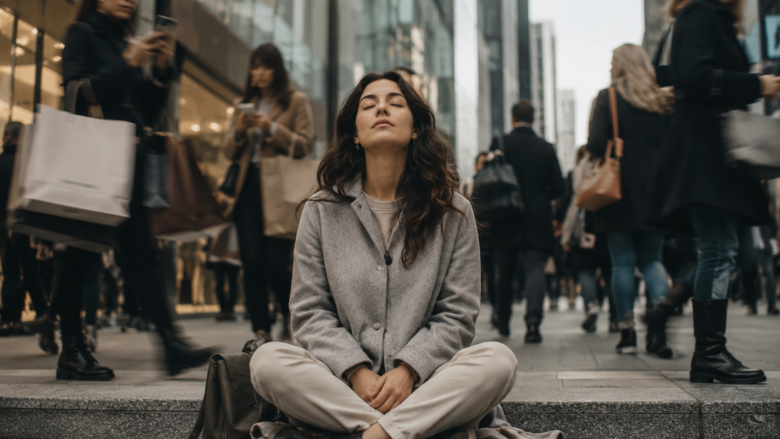
You can see it in someone who is not constantly chasing validation. You can hear it in someone who does not need to prove their worth in every conversation. You can feel it in someone who remains steady when the world around them becomes chaotic.
Perhaps that is why mental stability is emerging as the new status symbol.
Not because it is fashionable. But because in an age of constant noise, calm has become one of the rarest and most valuable things a person can possess.
Author’s note
In a culture that often celebrates visibility, achievement, and material success, it is easy to overlook the value of inner peace. This article explores a growing shift in how people define success and why mental stability may be becoming one of the most admired qualities of modern life.
G.C., Ecosociosphere contributor.