
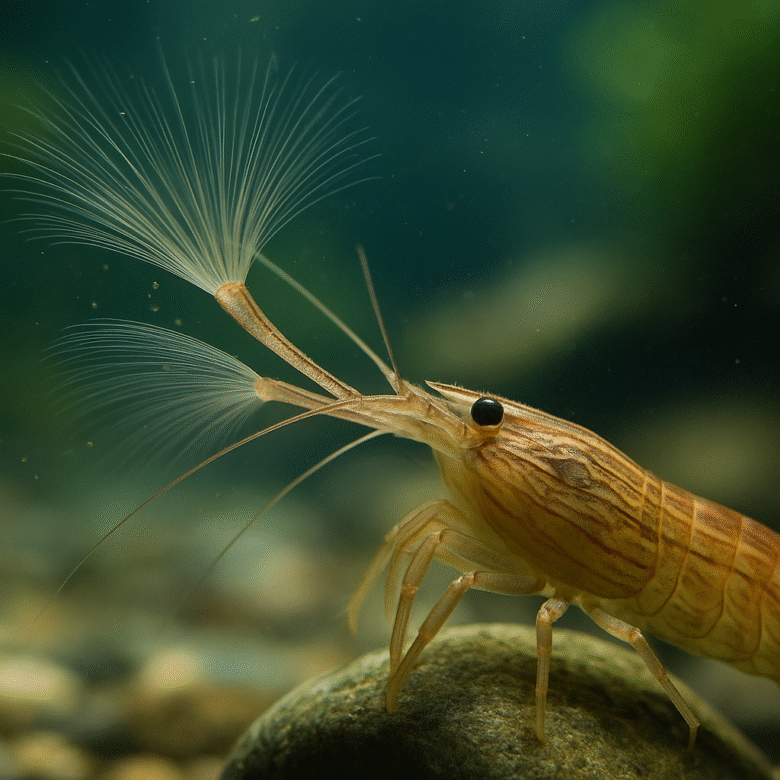
Fun fact: Some freshwater shrimp can “filter-feed” using tiny fans on their arms—like underwater butterflies catching invisible dust.
Every now and then, nature stages a comeback so unexpected that it forces us to rethink what we believe about extinction, biodiversity, and our connection to the water bodies that quietly keep India alive. That is precisely what happened when scientists announced the rediscovery of the Bamboo Shrimp after more than 72 years. And that rediscovery is the heart of The Shrimp That Came Back: Rediscovering Forgotten Freshwater Biodiversity in India.
For over seven decades, the species slipped out of scientific memory—lost not because it went extinct, but because nobody went looking hard enough. This shrimp did not roar or demand attention. It simply lived where most of us never bother to look: in fast-flowing, oxygen-rich freshwater streams that are rapidly disappearing from the Indian landscape.
The return of this elusive creature is not just a zoological update. It is a warning, an invitation, and a reminder that our rivers and streams still hide secrets—some tiny, some delicate, and all irreplaceable.
A Discovery That Wasn’t Supposed to Happen
The Bamboo Shrimp—scientifically identified as Atyopsis spinipes—was last recorded in India about 72 years ago. After that, silence. No confirmed sightings. No museum updates. No ecological surveys that mentioned it. It slipped into a grey zone: not extinct, but not officially present either.
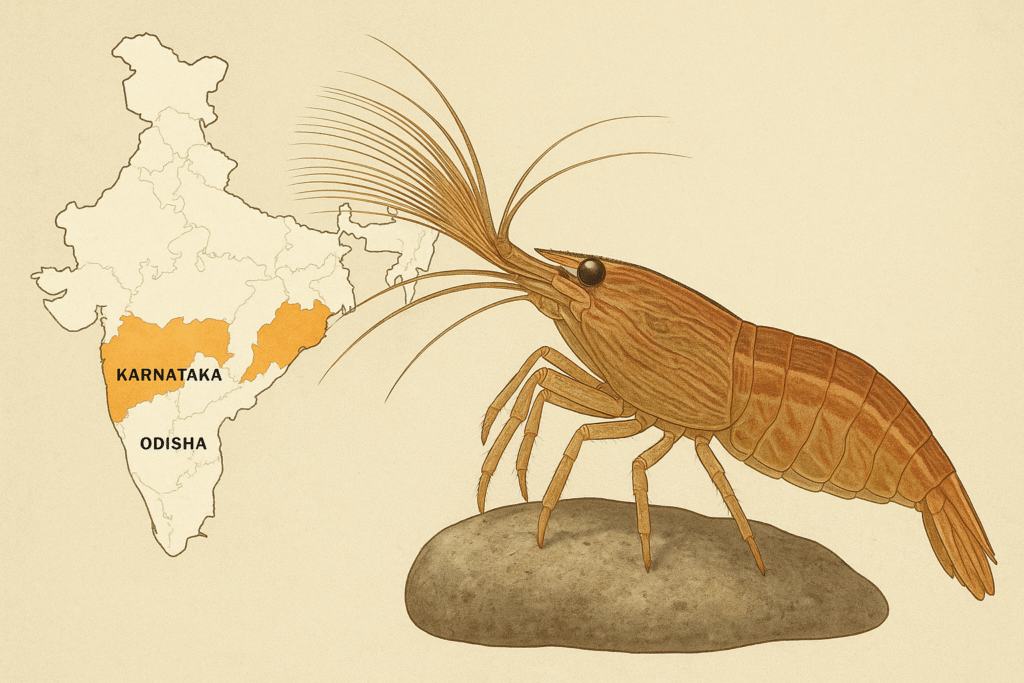
Then, during recent biodiversity surveys in Karnataka and Odisha, researchers found it again.
And just like that, history changed.
The species had been hiding in plain sight, feeding quietly in well-oxygenated streams, using its delicate fan-like arms to filter microscopic particles drifting through the current. It is nature’s clean-up crew. A living indicator of water that has not yet been choked by pollution, silt, and neglect.
A small mistake in history added to the confusion. Earlier records misidentified the species as Atyopsis mollucensis. With better morphology studies and genetic tools, scientists realized the old classification was wrong.
In short: the shrimp did not disappear. Our attention did.
Why This Shrimp Matters More Than You Think
India has always been proud of its megafauna—the tigers, elephants, rhinos, and lions that decorate textbooks and tourism brochures. But freshwater ecosystems are our most fragile and least understood ecological systems.
The rediscovery of the Bamboo Shrimp is symbolic because it signals a deeper truth:
India’s freshwater biodiversity is not fully documented. Not even close.
We know more about Mars than we do about what lives in the small streams behind our villages.
Freshwater ecosystems make up barely a fraction of Earth’s surface, yet they hold an astonishing share of biodiversity. But they are also the first to collapse under pressure—pollution, mining, sand extraction, dam construction, reduced flow, and climate shifts.
The Bamboo Shrimp is picky. It demands cold water, high oxygen, fast flow, and minimal silt. If it is present, the stream is healthy. If it disappears, the ecosystem is declining.
That makes it a bio-indicator—a species whose presence tells the truth about environmental health.
The Hidden Rivers of India
The rediscovery forces us to confront a difficult question:
What else have we overlooked?
India’s rivers are famous, but it is the smaller streams—the tributaries, forest rivulets, spring-fed channels—that host the most secretive species.
These microhabitats are rarely studied. Even state-level scientific departments often lack the funding, time, or mandate to conduct detailed freshwater surveys.
And because these habitats disappear silently, their species disappear silently too.
The Bamboo Shrimp returned—but how many others can’t?
We often imagine biodiversity loss as dramatic: a species gasping in the final breaths of extinction. But reality is quieter. Most disappear without headlines, without rituals, without memorials.
The rediscovery hints at a bigger possibility: If this shrimp survived decades of neglect, maybe other hidden species are still holding on, clinging to the last good streams left in the country.
The Threats the Shrimp Cannot Fight Alone
The habitats where the Bamboo Shrimp thrives are under threat.
- Sand mining eats away riverbeds.
• Dams slow down water flow that the shrimp needs to survive.
• Climate change alters temperatures and rainfall patterns.
• Pollution suffocates oxygen levels.
• Urbanisation pushes streams underground or fills them with concrete.
The shrimp’s delicate filter-feeding fans cannot withstand murky, stagnant, or polluted water. It is not resilient like some hardy invasive species. It is more like a living water test.
If the shrimp is healthy, the river is healthy.
If the shrimp vanishes again, we know exactly why.
The Unseen Value of Rediscoveries
Rediscoveries do something powerful: they revive curiosity.
They show that the story of Indian biodiversity isn’t finished yet—it is being written in real time. Rediscoveries bring hope in a grim ecological era. They remind us that conservation is not just about protecting the famous animals but also the small, fragile ones that tell us whether our rivers can sustain life.
The Bamboo Shrimp also shows us the importance of taxonomic correction. One wrong label 72 years ago created confusion that lasted for decades. Modern biology—with genetic sequencing and advanced morphological tools—helped restore accuracy.
Correct identification is not academic nitpicking. It defines conservation priorities, protection plans, and biodiversity laws.
What the Shrimp Teaches Us About Ourselves
It might sound strange to say that a tiny shrimp can be philosophical, but it can.
Its rediscovery whispers a lesson:
Nature does not disappear as quickly as we assume—but it’s not waiting forever either.
This little creature survived through decades of environmental change, unnoticed, uncelebrated. It didn’t ask to be rediscovered. It simply kept doing what it does—filtering water, balancing ecosystems, playing its tiny role in a vast web.
The rediscovery asks us a quiet, unsettling question:
Do we even know what we are losing?
And an even more urgent one:
What would it take for us to care?
Conclusion
The Shrimp That Came Back: Rediscovering Forgotten Freshwater Biodiversity in India is more than a headline. It is a reminder of what remains hidden, vulnerable, and precious in our freshwater ecosystems.
We live in a time when loss feels normal, pollution feels routine, and biodiversity feels optional. The Bamboo Shrimp challenges that complacency. It tells us there is still time to protect the parts of nature that slip through our fingers because we seldom bother to look.
Conservation is not a luxury. It is maintenance of the living systems that quietly support our own survival.
If a shrimp can return after 72 years, maybe our attention can return too.
Author’s Note
Sometimes a story surprises you into paying attention. Writing about the Bamboo Shrimp reminded me that the world still holds gentle truths hidden beneath fast water and falling light. As a teacher, I spend my days helping students notice the important things; as a writer, I remind myself to notice the quiet things too. This piece mattered because it asked a simple question with a complicated answer: how much life exists around us that we never bother to see? Maybe writing about it is one small way of learning to see again.
G.C., Ecosociosphere contributor.