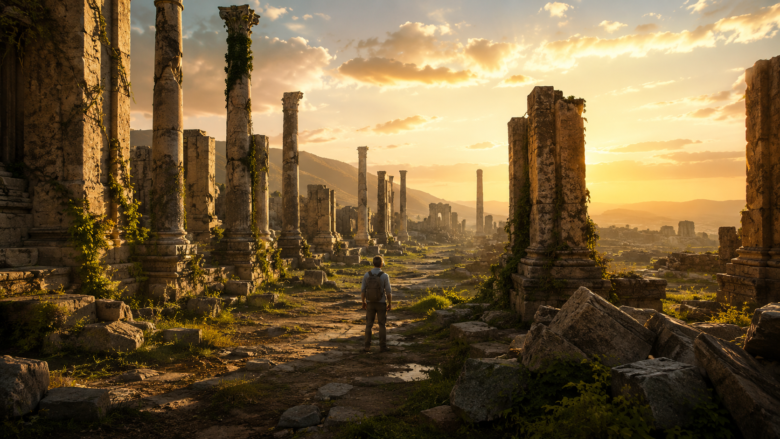
There is something strangely powerful about standing in a place that has been left behind.
An abandoned house at the edge of a town. A forgotten factory slowly being reclaimed by weeds. The crumbling remains of an ancient city that once held thousands of lives. Even people who have little interest in history often feel drawn toward such places. They stop, look, imagine, and wonder.
The attraction is difficult to explain. After all, ruins are usually associated with loss, decline, and disappearance. They are reminders that something ended. Yet rather than avoiding them, human beings often seek them out. We travel across continents to walk through the remains of old civilizations. We photograph abandoned buildings. We watch documentaries about lost cities. Entire communities exist around exploring forgotten places.
Part of the answer may lie in the fact that ruins allow us to see time itself.
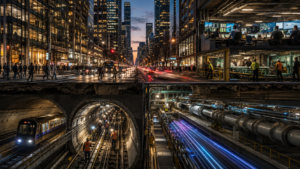
Most of modern life is designed to hide the passage of time. Buildings are repaired. Roads are resurfaced. Products are replaced. We spend much of our lives surrounded by things that appear permanent, even when they are not.
Ruins break that illusion.
A cracked wall, a fallen roof, or a weathered stone serves as a quiet reminder that nothing remains unchanged forever. Time becomes visible. Instead of reading about centuries in a history book, we can stand in a place where those centuries left physical marks behind.
Psychologists often describe humans as storytelling creatures. We constantly construct narratives to understand ourselves and the world around us. Few places spark the imagination quite like a ruin, inviting us to fill its silence with stories of what once was.
A modern office building tells us what it is. A ruin asks questions.
Who lived here? What did they hope for? What happened to them? Why was this place abandoned? What did the world look like when these walls were new?
The missing pieces become part of the experience. Our minds naturally begin filling the gaps.
This may explain why ruins often feel more emotionally powerful than fully preserved historical sites. When every detail is known and explained, there is less room for imagination. Ruins leave space for mystery, and human beings have always been drawn toward mysteries.
There may also be something deeper taking place.
Ruins quietly confront us with impermanence.
Modern culture often encourages the opposite. We build careers, accumulate possessions, make long-term plans, and imagine stable futures. These activities are important, but they can create the impression that permanence is possible.
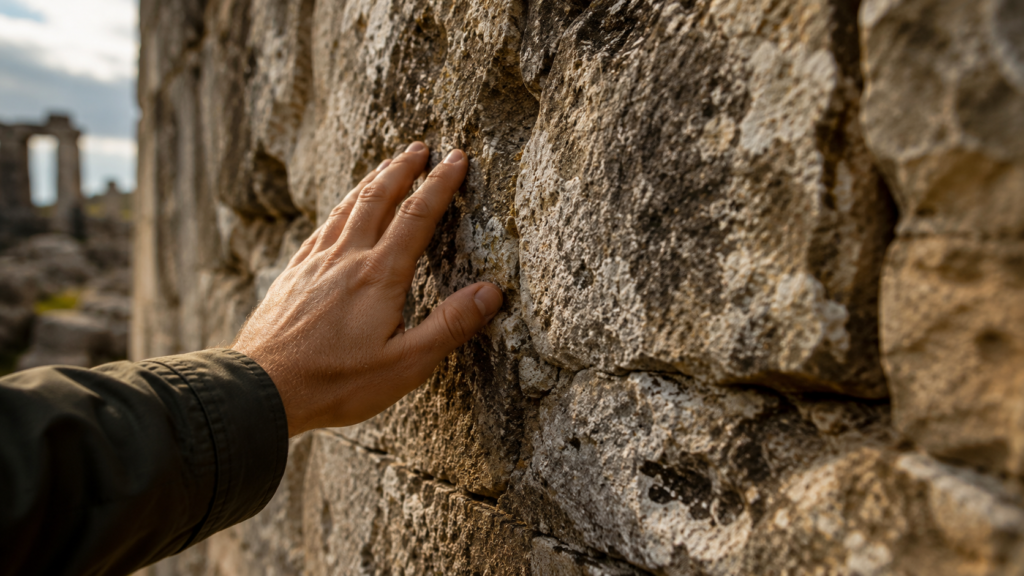
Ruins remind us that no civilization has ever escaped change.
The people who built ancient temples, palaces, roads, and monuments were not expecting them to become ruins. They were creating what felt like the present. In many cases, they believed they were building for eternity.
Yet centuries later, visitors walk through the remains.
There is something humbling about that realization.
It places our own lives within a much larger story. The concerns that dominate today’s headlines suddenly appear smaller when viewed against the backdrop of hundreds or thousands of years.
Interestingly, researchers have suggested that experiences of awe often emerge when people encounter things larger than themselves. We usually think of mountains, oceans, or the night sky as sources of awe, but ruins can create a similar feeling.
Not because of their size.
Because of their timescale.
A person standing among the remains of an ancient city is confronted with generations of human lives compressed into a single place. Entire histories unfolded there. People loved, argued, celebrated, worried, raised children, and made plans for futures they would never see.
The awareness of those unseen lives can create a feeling that is both melancholic and strangely comforting.
The emotions associated with ruins are often mixed. Sadness and fascination frequently exist together.
Part of us sees absence.
Another part sees continuity.
The civilization may have disappeared, but humanity did not. The people are gone, yet traces of their existence remain. Their stories still reach us across centuries through stone, pottery, roads, writings, and architecture.
Perhaps this is why ruins rarely feel completely empty. Even when nobody is present, they seem full of human presence.
There is another reason abandoned places may attract us. They reveal nature’s patience.
When a building is abandoned, nature slowly begins reclaiming it. Plants emerge through cracks in concrete. Trees grow inside forgotten rooms. Animals move into spaces designed for human use.
The process can feel strangely beautiful because it reminds us that human beings are not separate from the natural world. We build our structures, but nature never truly disappears. It waits.
Over time, the boundary between what humans created and what nature creates begins to blur.
Many people find this transformation surprisingly moving. Perhaps because it challenges the modern belief that progress always means expansion, growth, and control.
Ruins suggest a different story. They show that every period of construction eventually becomes part of a longer cycle.
In the end, our fascination with ruins may not be about the past at all. It may be about understanding the present.
A ruin is a reminder that every thriving city was once new, and every new thing will eventually become old. The buildings and cities we take for granted today may one day become the mysteries future generations seek to understand.
That thought can feel unsettling. Yet it can also be strangely reassuring.
The ruins we admire today are evidence that countless generations came before us, lived meaningful lives, and left traces behind. Their worlds disappeared, but they remain part of the larger human story.
Perhaps that is what we are really searching for when we walk through forgotten places. Not evidence that things end. Evidence that they mattered.
Author’s Note
The fascination with ruins is often described as an interest in history, architecture, or archaeology. Yet beneath those interests may be something more personal: a desire to understand time, change, and our place within a story much larger than ourselves.
G.C., Ecosociosphere contributor.