
Have you ever noticed that some mysteries become more fascinating precisely because they remain unsolved?
A vanished civilization, an unexplained signal from space, a locked-room crime that defies explanation, or even an unfinished novel often occupies our thoughts far longer than stories with neat conclusions.
At first glance, this seems irrational. Humans generally dislike uncertainty. We want answers, predictability, and closure. Yet when it comes to mysteries, uncertainty itself often becomes the attraction.
This apparent contradiction reveals something remarkable about the human brain. Curiosity is not simply a desire to collect information; it is one of the most powerful cognitive forces shaping how we learn, explore, and understand the world.
Long before humans built laboratories or libraries, our ancestors survived because they investigated unusual sounds, unfamiliar landscapes, and unexpected events. Those who asked questions often discovered new food sources, avoided hidden dangers, or developed better tools.
Evolution rewarded curiosity because unanswered questions frequently carried information that mattered.
Modern mysteries rarely determine our survival, but our brains continue to respond as though they might. The moment we encounter something incomplete, the mind begins searching for patterns.
Psychologists describe this as the drive to reduce uncertainty. Instead of simply accepting missing information, the brain instinctively tries to complete the picture. This process explains why we replay conversations in our heads, obsess over cliffhangers, and spend hours trying to solve puzzles that offer no practical reward. An unanswered question feels unfinished, and unfinished things naturally demand attention.
Neuroscience has shown that curiosity activates many of the same reward circuits involved in motivation and learning.

When people anticipate discovering new information, regions associated with dopamine become more active. Interestingly, this reward is not limited to finding the answer.
Much of the pleasure comes from the search itself. Every clue creates the possibility of understanding, and that possibility keeps motivation alive. It is why detective novels become impossible to put down, escape rooms attract millions of visitors, and internet communities dedicate years to decoding obscure mysteries that may never be solved.
This explains another curious feature of human behaviour. If every mystery ended with a perfect explanation, many would quickly lose their appeal. Consider how often people continue discussing famous historical disappearances, unidentified archaeological discoveries, or unexplained astronomical phenomena decades after they first emerged. The absence of certainty keeps the story mentally alive.
Each new theory offers another opportunity for the brain to test possibilities, compare evidence, and imagine different outcomes. The mystery becomes less about the answer and more about the endless exercise of thinking.
Part of this fascination also comes from our remarkable ability to imagine alternatives. Humans possess an unusually advanced capacity for mental simulation. We constantly picture events that have not happened and reconstruct events we never witnessed. Faced with an unsolved mystery, the brain begins generating possible explanations almost automatically.
Some are logical, others imaginative, but each possibility provides another pathway for exploration. In many ways, mysteries transform passive observers into active participants. Instead of simply receiving information, we become investigators.
Culture has amplified this ancient tendency.
Throughout history, myths, legends, and folklore often survived precisely because they left room for interpretation.
Stories about lost cities, mysterious creatures, hidden treasures, and unexplained disappearances invited every generation to contribute new ideas.
Even today, filmmakers, novelists, and game designers deliberately leave certain questions unanswered because ambiguity encourages discussion long after the story ends. Audiences frequently remember the mysteries they debated more vividly than the plots that explained everything.
There is also an emotional reason why unresolved questions remain attractive. Real life rarely provides complete certainty. Relationships end without satisfying explanations. Historical records contain gaps. Every scientific breakthrough tends to uncover new mysteries alongside its answers.
Mysteries reflect the reality that knowledge is always incomplete. Instead of presenting a perfectly ordered universe, they remind us that the world remains larger than our current understanding. Surprisingly, many people find that uncertainty inspiring rather than frightening because it preserves a sense of possibility.
Science itself depends on this mindset. Every major breakthrough begins with a question that nobody can yet answer. Why do diseases spread? What lies inside an atom? Are we alone in the universe?
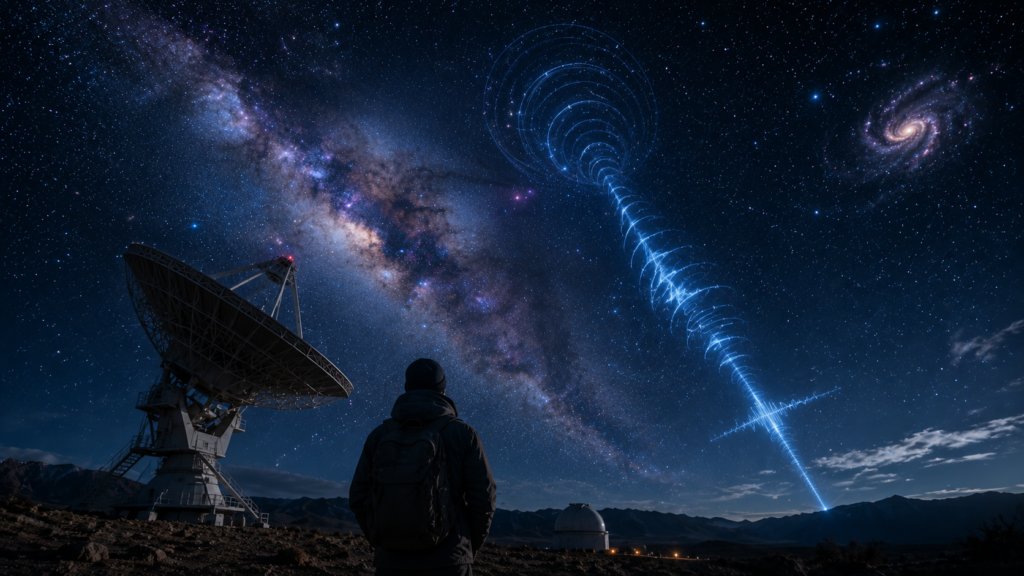
The willingness to live with uncertainty while searching for better evidence has driven human progress for centuries.
Scientists are not motivated because mysteries exist; they are motivated because mysteries invite investigation. In this sense, curiosity transforms uncertainty from an obstacle into an opportunity.
Of course, not every mystery deserves endless attention. Human beings sometimes invent explanations simply because uncertainty feels uncomfortable. Conspiracy theories often exploit this weakness by offering confident answers where genuine evidence is lacking.
The healthiest form of curiosity accepts that some questions remain open until reliable evidence appears. It values investigation more than immediate certainty. The difference lies not in asking questions but in resisting the temptation to believe the first satisfying answer.
Perhaps this is why humanity has never run out of mysteries. Every solved puzzle reveals another waiting behind it. Every scientific discovery opens new frontiers. Every generation inherits questions that previous generations could not answer.
Rather than signaling the limits of human knowledge, mysteries reveal its endless horizon.
They remind us that understanding is not a destination but a continuous journey.
In the end, humans do not love mysteries because they enjoy ignorance. We love them because mysteries awaken one of our oldest instincts—the desire to explore what lies beyond the edge of what we know.
An unanswered question is more than a gap in information. It is an invitation. It encourages us to observe more carefully, think more deeply, and imagine possibilities we had never considered.
Perhaps that is why some mysteries remain unforgettable even when they are never solved. They continue doing what the human brain has always loved most: giving it one more reason to keep searching.
Author’s Note
Every unanswered question tells us something about the human mind. Our fascination with mysteries reflects not a weakness but one of our greatest strengths—the relentless drive to understand a world that always holds more secrets than answers.
G.C., Ecosociosphere contributor.