A puppy rolls onto its back, paws folded uselessly against its chest. Its ears are slightly too large for its head. Its stomach is round. It looks up at you.
And for some reason, you want to crush it.
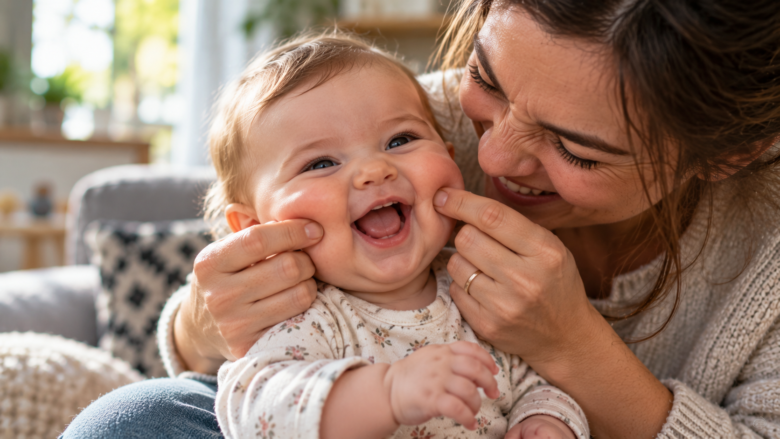
Not actually crush it, of course. You want to squeeze it, perhaps harder than seems reasonable. You might clench your teeth, curl your fingers or announce that you could “just eat it.” Put an especially round-cheeked baby in front of someone and the same strange vocabulary can appear: I could bite those cheeks.
Nothing about the feeling seems to make sense. The more affection we feel toward something small and vulnerable, the more violently we sometimes describe what we would like to do to it.
Psychologists have a name for this contradiction: cute aggression.
The aggression in the name is slightly misleading. People experiencing cute aggression generally do not want to cause harm. The urge is better understood as an aggressive-looking expression appearing in the middle of an intensely positive emotional experience. Researchers have placed it within a broader category called dimorphous expressions of emotion: occasions when what we express seems to belong to the opposite emotional category from what we actually feel.
We cry at weddings. We laugh when overwhelmed or nervous. A parent looking at a baby may grit their teeth while speaking affectionately. Strong happiness does not always produce a bigger smile.
Sometimes it produces something that looks strangely like its opposite.
An emotion can become so positive that its expression starts to look negative.
In research published in 2015, Oriana Aragón and colleagues investigated these mismatched expressions using, among other things, images of babies and animals. People who felt overwhelmed by positive emotion toward cute stimuli were also more likely to report aggressive-sounding responses toward them. The researchers proposed that these expressions may help regulate unusually intense positive emotion.
That possibility becomes more interesting when we consider what cuteness does to us in the first place.
Certain features reliably make infants appear especially cute: large eyes, rounded faces, chubby cheeks and proportions associated with youth. Similar features appear in the animals humans tend to find irresistible. A puppy, kitten or baby rabbit does not need to be human to activate some of the perceptual and motivational machinery associated with responding to vulnerable young.

Cuteness, then, is not merely something pleasant to look at. It can pull us toward its owner. We want to approach, hold, protect and care for it.
And that may be precisely where the squeezing begins.
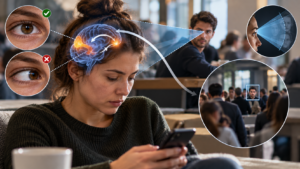
A later study by Katherine Stavropoulos and Laura Alba asked 54 adults to look at images of babies and animals while researchers recorded electrical activity from the scalp. Participants also rated experiences including cuteness, caretaking, emotional overwhelm and cute aggression. With cute animals in particular, stronger cute-aggression responses were associated with measures related to both emotional salience and reward processing. Participants who rated the animals as especially cute also tended to feel more overwhelmed, and that feeling of overwhelm was closely connected with the aggressive-sounding response.
The important part is not that the brain contains a special “squeeze the puppy” circuit. The study does not show that. Instead, it suggests that cute aggression sits at the intersection of systems involved in emotional significance, reward and the urge to care.
The thing we want to squeeze is often the same thing we want to protect.
That apparent contradiction may be the clue.
The urge to squeeze may appear because the desire to care has become unusually intense.
Suppose someone hands you an ordinary mug. You might like it. You probably remain perfectly capable of continuing a conversation.
Now suppose someone places a tiny puppy in your hands.
Its paws are resting against your wrist. It yawns. Perhaps it falls asleep there.
The emotional response can become much larger than the situation seems to require. Affection arrives alongside attention, reward, approach and caretaking impulses. “Cute” starts to feel inadequate as a description, which may be why our language begins reaching for stranger expressions. We do not merely like the puppy. We cannot stand how cute it is. We want to eat it. We need to squish it.
These phrases are revealing because they describe an excess. The feeling seems to have exceeded the ordinary vocabulary of affection.
Cute aggression may be one way that excess gets expressed.
This does not mean everyone experiences it, or that every urge to pinch a cheek serves as a measurable emotional pressure valve. The experiments so far are relatively small, and the precise regulatory function remains an interpretation supported by the observed relationship between intense positive emotion, feeling overwhelmed and aggressive-looking expression. The neural study also found clearer differences for cute versus less-cute animals than it did for manipulated images of human babies.
So the neat story, that the brain simply generates aggression to “cancel out” excessive cuteness, goes further than the evidence allows.
Something subtler seems to be happening.
Emotion is not organised into perfectly separate boxes. Affection does not always look affectionate. Happiness does not always look happy. The face, voice and body sometimes produce expressions that appear inconsistent with the experience underneath them, especially when that experience becomes intense.
This is why cute aggression belongs to a larger family of familiar oddities.

Someone receiving wonderful news may immediately begin crying. A person reunited with someone they love might laugh while tears run down their face. Parents sometimes use mock-threatening voices toward babies they adore. None of these responses makes much sense if emotional expression is supposed to work like a simple display board: happiness in, smile out.
But human emotion appears to be messier than that.
The body is not merely reporting how we feel. It is responding to the intensity of feeling itself.
There may even be something useful about that messiness. A baby at its most helpless is also capable of provoking an extraordinary amount of attention and affection. Becoming completely incapacitated by that response would not be particularly helpful when the object producing it needs feeding, carrying, protecting or soothing. Researchers have therefore suggested that dimorphous expressions such as cute aggression may help bring an overwhelming positive state back toward a manageable level, although exactly how and why this happens still needs further study.
Which brings us back to the puppy.
It is still lying there with its absurdly large ears and soft stomach. Nothing about it is threatening. You certainly do not wish it harm. In fact, almost everything happening inside you points in the opposite direction: approach it, hold it, protect it, keep it close.
And yet your teeth clench.
Your hands curl.
You announce that you could squeeze it to pieces.
For a moment, affection has become so intense that affection no longer looks quite like affection.
The puppy has not become less lovable.
It may simply have become too lovable for a smile to contain.
Author’s Note
The phrase “cute aggression” caught my attention because it gives a scientific name to something that sounds ridiculous until you notice how often people do it. We rarely say that a beautiful sunset makes us want to bite it, yet babies, puppies and other small creatures somehow produce an entire vocabulary of squeezing, eating and crushing. The interesting part turned out not to be the aggression at all, but what it reveals about how untidy emotional expression can become when a feeling grows unusually strong.
G.C., creator and writer of Ecosociosphere.
References
- Aragón, O. R., Clark, M. S., Dyer, R. L., & Bargh, J. A. (2015). Dimorphous expressions of positive emotion: Displays of both care and aggression in response to cute stimuli.
View the study on PubMed - Stavropoulos, K. K. M., & Alba, L. A. (2018). “It’s so cute I could crush it!”: Understanding neural mechanisms of cute aggression.
Read the full open-access study