
You pick up a towel from the clothesline and press it against your cheek. It looks dry, but something about it tells you otherwise. There is a slight coolness, perhaps a little heaviness in the fabric, and the unmistakable feeling that it needs another hour in the sun. You might even ask someone else to check it, although you probably already know the answer. We make such judgements all the time, rarely giving them much thought.
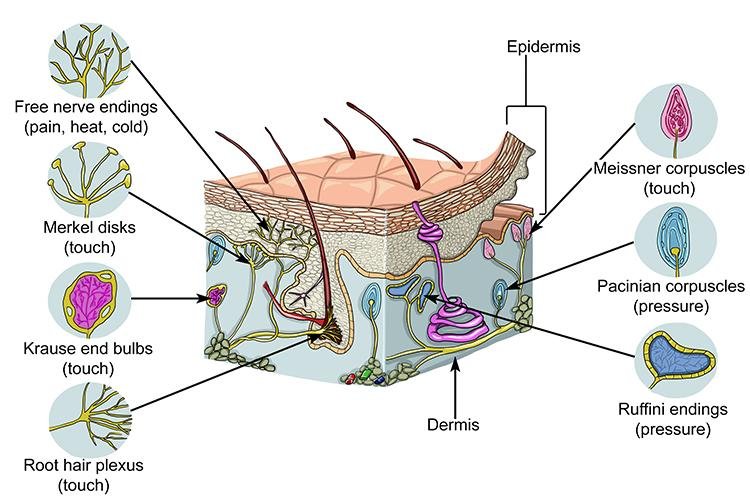
Yet there is an odd detail about this familiar ability: human skin has no known receptor specifically designed to detect wetness.
That seems difficult to believe at first. We have nerve endings that help us feel heat, cold, pressure and pain, so it would be reasonable to assume that moisture has its own little detector somewhere in the skin. After all, we can recognise a wet floor, damp clothing or the first drops of rain without looking at them.
But our skin appears to manage all this without directly measuring whether water is present. Instead, it relies on other sensations that usually accompany moisture, and our brain makes sense of them together.
One of the biggest clues is something most of us have experienced after washing our hands. Even after you have shaken off the water, your hands can feel cooler than they did before. This is partly because water takes heat away from your skin, especially when it is colder than your body. As the remaining moisture evaporates, it carries away additional heat.
The same thing happens when sweat dries on a hot afternoon, which is one reason sweating helps cool us down. A little moving air can make the cooling much more noticeable.
Our skin already has a system for detecting such changes. Specialised nerve endings called thermoreceptors respond to temperature, and some of the cold-sensitive ones contain a protein known as TRPM8. This protein helps nerve cells respond to cooling, changing their electrical activity as the temperature falls.
Those signals travel through sensory nerves towards the spinal cord and brain, where they contribute to our experience of cold. The interesting part is that none of these signals directly announces the presence of water. They simply provide information about a change in temperature.
If cooling were the whole explanation, however, we would have a rather confusing experience of the world.
Touching a cold steel plate would feel exactly like touching a wet one. A chilly bedsheet might seem soaked, and a cold stone floor might convince us someone had spilled water on it. Occasionally, something like this does happen. A surface can feel vaguely damp until we look at it or touch it again. But usually we manage to tell the difference, which suggests that our brains are paying attention to something besides temperature.
A damp piece of clothing offers another clue. Anyone who has worn a shirt that has not dried properly knows that its unpleasantness goes beyond feeling cold. The fabric may cling to the skin, resist movement or rub differently against the body. Water changes the way surfaces interact, sometimes making them stick together and sometimes making them slide more easily.
Our skin contains another set of sensory nerve endings, called mechanoreceptors, that respond to pressure, stretching, movement and vibration. They help us notice these small differences, even when we are not consciously examining them.
Now the feeling begins to make more sense. Moisture often produces cooling, while also changing how something feels against the skin. The nervous system receives both kinds of information and the brain interprets their combination.
Scientists call this a synthetic perception, meaning that the experience is built from other sensory signals.
It is similar to recognising someone’s footsteps from a familiar combination of sounds. No single sound necessarily identifies the person, but together the sounds become recognisable.
There is a particularly interesting experiment that shows just how much we depend on these clues. Researchers studying wetness perception placed cold, completely dry materials against people’s skin.
Under certain conditions, some participants reported feeling wetness even though there was no water involved. Their skin had detected a real temperature change, but the resulting experience did not accurately describe the surface. The illusion did not occur in everyone, which makes the finding more interesting rather than less. Our brains appear to interpret similar information a little differently.
In 2014, researcher Davide Filingeri and his colleagues investigated the issue further by testing how people responded to wet materials at different temperatures. They found that colder wet contact generally produced stronger wetness sensations than warmer wet contact. They also examined what happened when particular temperature and touch signals were reduced, finding that the ability to recognise wetness became weaker. This provided experimental support for something that everyday experience had already hinted at: we depend heavily on cooling and physical contact to decide whether our skin is wet.
Sometimes we feel wetness because the evidence resembles water, even when water itself is missing.
The opposite situation is possible too. If water is close to the temperature of our skin, it may not provide the strong cooling sensation we usually associate with being wet. During the first moments of contact, particularly when nothing is moving against the skin, we may have difficulty recognising it.
Once the water starts moving or changes how a surface slides against us, the sensation may become easier to identify. This explains why wetness is not always proportional to the amount of water present. A small cold patch can attract more attention than a larger amount of comfortably warm moisture.
What I find especially interesting is that we seem to learn these associations without ever trying to.
As children, we encounter wetness through bathing, rain, sweat, spilled drinks and countless other ordinary experiences. Each one gives the nervous system another opportunity to associate certain temperature and touch sensations with moisture. Researchers believe this kind of experience may contribute to how our brains interpret wetness, although the exact neural processes are still being investigated. We do not need to memorise the properties of water to become familiar with how it feels.
Of course, the brain is not simply guessing at random. Water has real physical effects on skin, and those effects usually provide reliable information. But the distinction between receiving a signal and interpreting it matters. We tend to imagine our senses as direct connections to the world, as though each property around us has its own detector. Wetness suggests a more complicated arrangement, in which the brain can recognise something by noticing what it does to us.
There is also a practical reason this matters. Moisture affects how we grip objects, how clothing feels and how the body loses heat.
A damp shirt can become uncomfortable long before we consciously think about evaporation or temperature. Sweat can alert us to changing conditions, while wet surfaces can influence how carefully we handle things. Our ability to notice moisture is useful precisely because it works without demanding our attention every time.
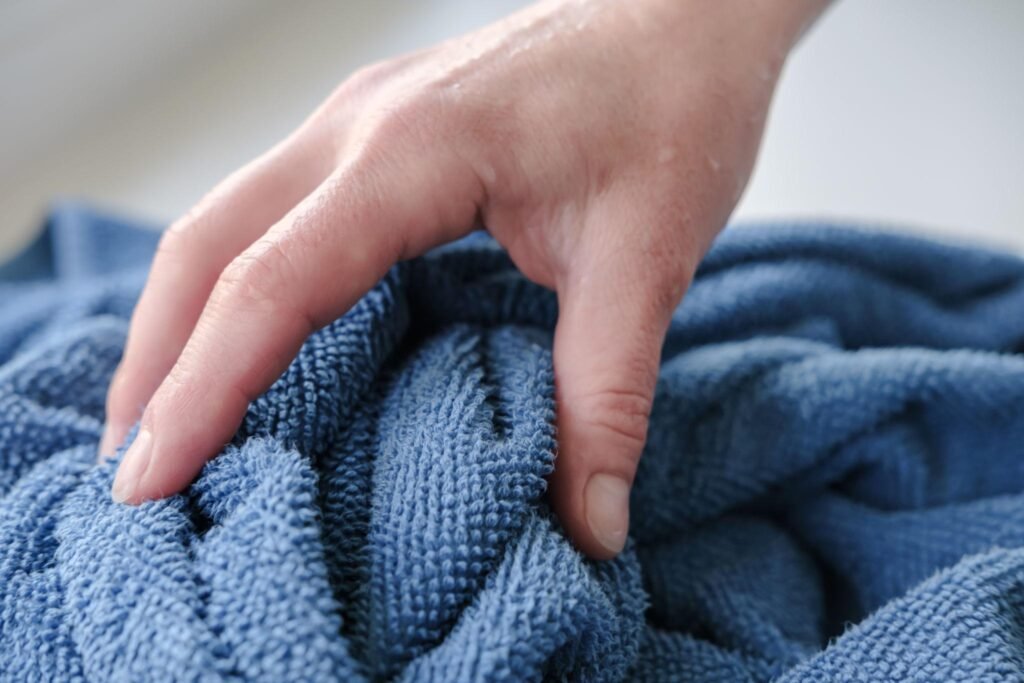
The next time you take a towel from the clothesline, you will probably do what you have always done. Rub it between your fingers, press it against your face, or simply decide whether it feels ready to fold. There will be no conscious calculation about cooling, friction or sensory nerves. Your brain will use familiar signals to reach a conclusion, and most of the time that conclusion will be correct.
The towel does not have to tell your skin that it contains water. The small changes it produces are usually enough.
And that is perhaps why the absence of a wetness receptor has gone unnoticed by most of us. We have spent our entire lives recognising wet things without ever needing to know how we do it.
Author’s Note
What interested me most about this subject was how confidently we recognise something our skin cannot directly measure. Wetness feels like one of the simplest sensations imaginable, yet understanding it requires physics, sensory biology and neuroscience to work together. It is a wonderful reminder that even our most ordinary experiences can depend on surprisingly elaborate processes.
G.C., creator and writer of Ecosociosphere.
References and Further Reading
These are research papers and reviews supporting the article’s principal scientific explanations.
- Filingeri et al. (2014) — Why Wet Feels Wet? A Neurophysiological Model of Human Cutaneous Wetness Sensitivity — Journal of Neurophysiology.
- Filingeri & Havenith (2015) — Human Skin Wetness Perception: Psychophysical and Neurophysiological Bases — Temperature.
- Filingeri et al. (2013) — The Role of Decreasing Contact Temperatures and Skin Cooling in the Perception of Skin Wetness — Neuroscience Letters.
- Filingeri et al. (2015) — Tactile Cues Significantly Modulate the Perception of Sweat-Induced Skin Wetness — Journal of Neurophysiology.
- Filingeri et al. (2015) — Warm Temperature Stimulus Suppresses the Perception of Skin Wetness During Initial Contact With a Wet Surface — Skin Research and Technology.
- Neuroscience review (2017) — The Biology of Skin Wetness Perception and Its Implications in Manual Function and Neuroprosthetics