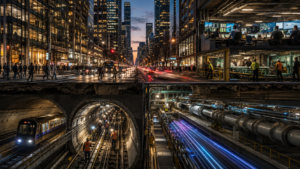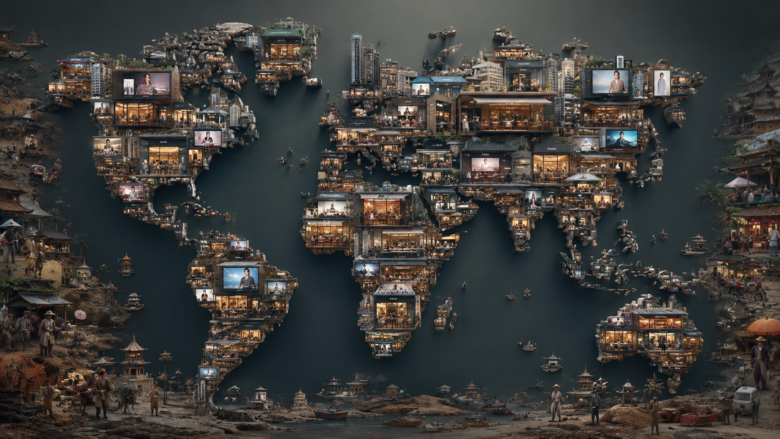
Fun fact: researchers studying urban design have found that major cities across the world are increasingly using the same architectural styles, chain stores, and “Instagram-friendly” spaces — to the point where travellers sometimes struggle to identify which country they are in from photographs alone.
There was a time when arriving somewhere new genuinely felt like arriving somewhere new.
You could walk through a city and immediately sense its personality. The smell of the streets changed. The food looked unfamiliar. Shop signs had different colours, different fonts, different moods. Cafés reflected local habits instead of global trends. Even the silence carried a different personality depending on where you were.
Now you can travel thousands of kilometres and still end up inside the same coffee shop.
The same pale wooden tables.
The same exposed brick walls.
The same hanging yellow lights.
The same carefully arranged croissants beside laptops.
The same people taking the same photographs for the same social media platforms owned by Meta, the technology company that owns Instagram and Facebook.
Somewhere along the way, the world stopped looking local and started looking algorithmic.
And maybe that is why so many people today travel more than previous generations but somehow feel less surprised by the world.
Globalization is not new. Human beings have always borrowed ideas from one another. Cultures have mixed for centuries through trade, migration, war, and storytelling. But what is happening now feels different because the internet is not simply sharing culture anymore. It is flattening it.
The same aesthetics repeat themselves endlessly because platforms reward familiarity. A café owner in Jaipur sees what works in Seoul. A clothing brand in Delhi copies trends from Copenhagen. A luxury apartment in Dubai imitates interiors from Los Angeles. Everyone is quietly studying everyone else through screens.
And eventually, originality starts feeling risky.
You can see this everywhere. Walk into modern malls across different countries and they often contain the same international brands, the same polished lighting, the same background music, the same carefully controlled temperature. Visit airports and entire cities begin blending together emotionally. The experience becomes strangely frictionless. Efficient, clean, recognizable — but forgettable.

Even neighbourhoods now feel designed more for photographs than for actual living.
Entire businesses are being built around “Instagrammable aesthetics.” Restaurants no longer just serve food; they serve visual identity. Walls are painted for selfies. Coffee foam is designed for reels. Bookstores place beautiful covers outward because books now function partly as lifestyle accessories online.
Nothing is allowed to simply exist anymore. Everything must also perform digitally.
And social media influencers accelerated this transformation faster than most people realize.
Influencers are not just people posting content. They have quietly become global taste distributors. Millions of people now decorate homes, dress themselves, travel, eat, and even pose in similar ways because the same handful of online aesthetics dominate attention everywhere.
Minimalism in one year. Beige interiors the next. Scandinavian-inspired cafés after that. Suddenly every city develops the same “creative district” filled with murals, neon signs, vintage bicycles, and overpriced coffee.
Ironically, many of these spaces advertise themselves as “unique.”
But uniqueness cannot survive mass replication.
Even tourism has changed because of this cultural sameness. Travelers increasingly chase places they have already seen online thousands of times before visiting them physically. People arrive not to discover something unfamiliar, but to recreate an image they already consumed digitally.
That changes how places evolve.
Local businesses begin reshaping themselves for tourists with cameras rather than for local communities. Traditional shops disappear because they are not visually marketable online. Older architecture gets replaced with modern designs optimized for global appeal. Regional languages slowly shrink from public spaces because English appears more “international.”
The world becomes easier to consume but harder to truly experience.
And underneath all this sameness is something deeply economic.
Large corporations scale familiarity because familiarity sells. Starbucks, the multinational coffeehouse company, became successful partly because customers know exactly what to expect in every branch. Apple, the technology company that designs consumer electronics, builds stores that look almost identical worldwide because consistency creates trust. IKEA, the Swedish furniture retailer, sells a standardized version of modern living that now influences homes across continents.
Predictability has become profitable.
But human beings are not emotionally nourished by predictability forever.
People say they want convenience, but many secretly crave texture. They crave surprise. They crave places with flaws, local accents, strange customs, awkward signage, unpredictable food, and cultural rhythms that cannot be optimized into an aesthetic template.
That is why certain old neighbourhoods still feel emotionally alive while newly developed “perfect” spaces often feel strangely empty.
Imperfection carries identity.

A small tea stall crowded with noisy regulars may reveal more about a city than a luxury café designed to resemble every luxury café on Earth. A local market filled with regional language arguments, uneven buildings, and handmade signs may hold more soul than an expensive shopping complex that could exist anywhere.
Cultural sameness is not just visual. It affects behaviour too.
People increasingly speak in internet language instead of local expressions. Humour starts sounding identical across countries because everyone consumes the same memes. Fashion cycles synchronize globally through algorithms. Young people in completely different nations now often share more cultural references with each other online than with older people in their own neighbourhoods.
That changes identity at a deep level.
And perhaps the saddest part is that many people no longer even notice this transformation happening. Sameness feels normal because we have been trained to associate it with modernity, progress, and sophistication.
But diversity was never only about flags, languages, or food. It was about different ways of imagining life itself.
When every city wants to look globally acceptable, something quieter begins disappearing: local imagination.
The solution is not rejecting modernity or romanticizing the past. Cultures have always evolved. The problem begins when evolution turns into imitation.
Maybe preserving cultural identity today requires ordinary acts of resistance. Supporting local businesses instead of endlessly chasing international sameness. Designing spaces that reflect where they actually exist. Allowing communities to remain imperfect instead of smoothing every corner into marketable aesthetics.
Because a world where every place looks the same eventually becomes a world that feels emotionally nowhere.
And human beings were never meant to live inside one giant waiting room disguised as civilization.
Conclusion
The modern world has connected humanity in extraordinary ways, but connection without distinctiveness creates emotional flattening. When every café, mall, influencer trend, and city block begins resembling each other, people lose more than visual variety. They lose surprise, memory, and cultural texture.
Perhaps the real challenge now is not simply protecting heritage sites or traditional festivals. It is protecting the right of places to remain different — even if that difference feels messy, inefficient, or unfashionable.
Because the future may become technologically advanced and globally connected, but if every corner of Earth starts feeling emotionally interchangeable, people may eventually discover that convenience alone cannot replace belonging.
Author’s Note
I think this topic stayed with me because I keep noticing how easily places blur together now. Sometimes I look at photographs online and genuinely cannot tell whether they were taken in Mumbai, London, Seoul, or Dubai until I read the caption. That feels small at first, but maybe it is not. Places shape memory. They shape identity. When every corner of the world starts wearing the same face, we risk forgetting how much beauty once existed in difference. Writing about that felt important.
G.C., Ecosociosphere contributor.