
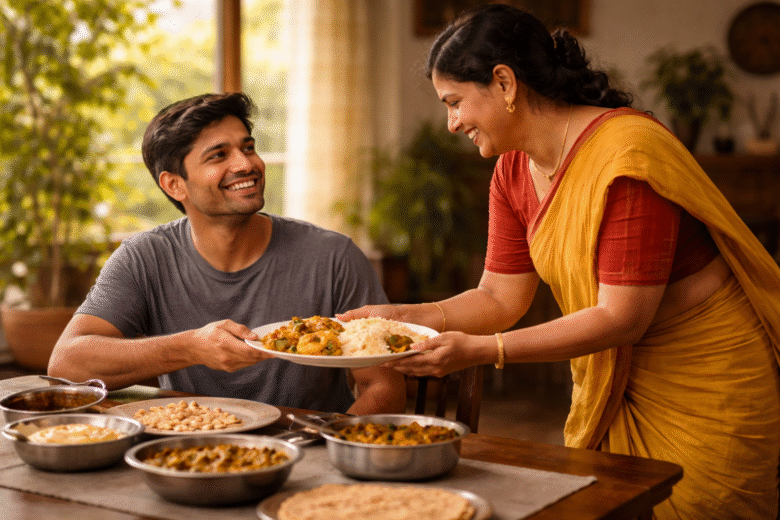
Fun fact: Studies suggest that when you cook your own food, your brain gets used to the smells and tastes before you even eat—making the final bite feel less exciting.
There’s something almost unfair about it. You spend an hour chopping, stirring, tasting, adjusting salt like a scientist in a lab—and when you finally sit down to eat, it feels… ordinary. But the same dish, made by someone else—your mother, a friend, even a roadside cook—suddenly feels richer, fuller, somehow better.
“Why Food Tastes Better When Someone Else Cooks It” isn’t just a casual observation—it’s a quiet truth most of us have lived without questioning. And maybe, just maybe, it says more about how we experience life than about the food itself.
The Science of Familiarity: Your Brain Gets Bored First
When you cook, you are constantly exposed to the food—its smell, texture, taste—long before it reaches your plate. Every time you check the seasoning or inhale the aroma rising from the pan, your brain is already processing the experience.
By the time you sit down to eat, your senses are no longer surprised. But when someone else cooks, you experience the dish fresh. Your brain encounters it as something new, something unexpected. And novelty, as we know, is deeply tied to pleasure.
It’s not that the food is better—it’s that your brain is less tired.
Effort Changes Perception—But Not Always the Way You Think
We often believe that effort increases appreciation. That if you work hard for something, you value it more.
But food is different. Cooking involves micro-decisions—how much oil, when to flip, whether it needs more spice. These decisions create a kind of mental fatigue. By the end of the process, you are not just physically tired—you are cognitively done.
So, when you eat your own food, you’re not just tasting it—you’re evaluating it.
“Could I have added more salt?”
“Is the texture right?”
“Did I overcook this?”
But when someone else cooks, you are free from that burden. You don’t analyse—you just experience.
The Emotional Ingredient: Care Tastes Like Something
Think about the last time food truly felt special. Chances are, it wasn’t just about the ingredients. It was about who made it.
Food carries emotion. When someone else cooks for you, there’s an unspoken message: I took time for you. That message changes how you perceive the food.
A simple dal made by your grandmother doesn’t compete with restaurant food in terms of complexity. But it wins in something else—meaning.
And meaning, it turns out, has a flavour.
The Freedom to Be a Consumer, not a Creator
There’s a subtle but powerful shift that happens when you are not the one cooking. You become a receiver. And receiving, in today’s world, is rare.
We are constantly producing—work, content, decisions, responsibilities. Cooking becomes just another task in that long list. But when someone else cooks, you get to step out of that cycle.
You sit. You wait. You are served. And that experience—of not having to do anything—makes the food feel like a reward.
Memory, Nostalgia, and the Taste of the Past
Food made by others often carries memory.
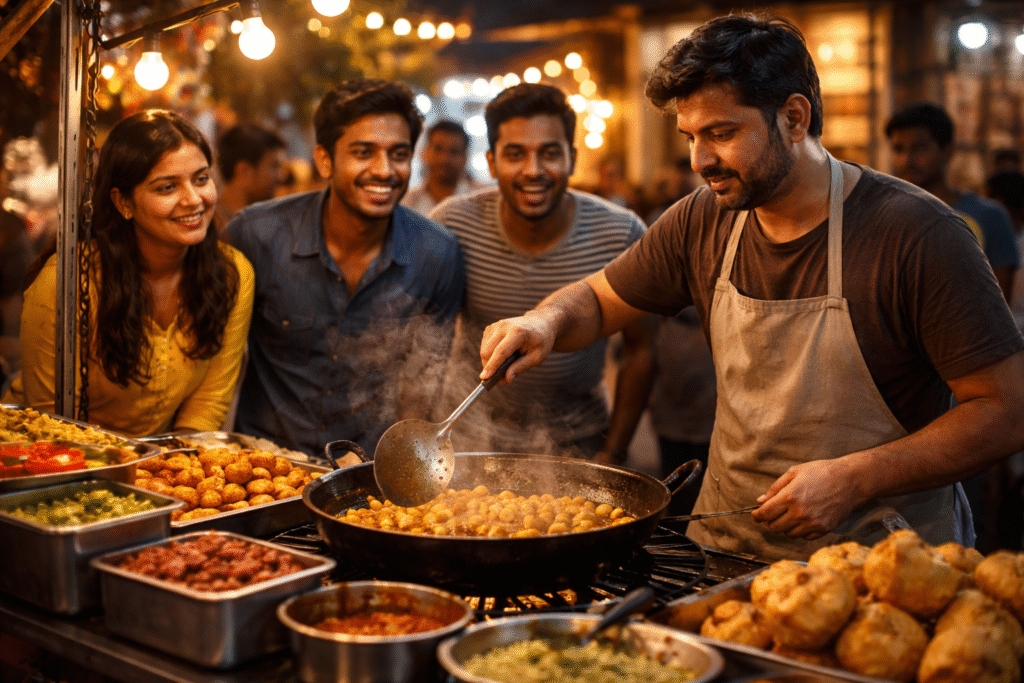
Street food reminds you of college evenings. Your mother’s cooking pulls you back into childhood. Even a friend’s experimental dish can anchor itself in a moment you’ll remember years later.
When you cook for yourself, the experience is present-focused. Functional. Necessary.
But when someone else cooks, it often connects to something beyond the present—something emotional, something personal. And nostalgia has a way of enhancing taste.
The Hidden Truth: We Don’t Just Eat Food—We Eat Context
Here’s the uncomfortable part. Food rarely exists in isolation.
The same meal can taste different depending on where you are, who you’re with, and how you feel. A simple roti-sabzi can feel like a feast after a long day. A rich restaurant meal can feel empty if you’re distracted or stressed.
So, when someone else cooks, it’s not just about the food—it’s about the entire context they create. You’re not simply eating food. You are eating a moment.
Conclusion
So, why does food taste better when someone else cooks it?
Taste doesn’t live only on the tongue; it unfolds in the mind, the memories, and the moment itself. When you cook, you are too close to the process. Too involved. Too aware. But when someone else cooks, you get to experience the food as it was meant to be experienced—fresh, emotional, and free from judgment.
Maybe the real lesson here isn’t about food at all.
Maybe it’s about learning to step back, to receive, to allow ourselves moments where we are not the ones in control.
Because sometimes, the best experiences in life are the ones we didn’t have to create.
Author’s Note
There’s something quietly revealing about this idea—that effort doesn’t always deepen experience. As someone who spends the day explaining things and the night trying to understand them, I find this strangely comforting. Maybe not everything has to be optimized or improved. Maybe some things are meant to be received, not perfected. And maybe that’s where their real value lies.
G.C., Ecosociosphere contributor.



Comments
This post is very informative and easy to read.
Helpful and informative article.