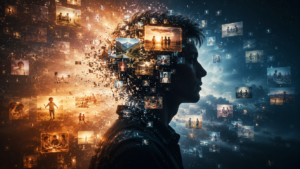
A strange paradox sits at the centre of modern life.
Human beings have never documented themselves more. Every meal, every vacation, every concert, every sunset, every birthday, every reunion, every small moment that once disappeared quietly into memory now has the potential to become a photograph, a video, a story, a reel, or a post.
Future historians may know more about our daily lives than they know about any generation that came before us.
And yet many people report feeling as though life is passing by unusually quickly.
The more we record, the less we seem to remember. The more evidence we collect, the less present we often feel while collecting it. It is one of the defining contradictions of the digital age.
For most of human history, experiences existed primarily inside people. A family gathering lived in conversation. A holiday survived through stories told years later. A beautiful sunset belonged only to those who happened to be standing beneath it.
Memory was imperfect, but that imperfection gave experiences a certain intimacy.
Today, the first instinct during many meaningful moments is not to observe but to capture.
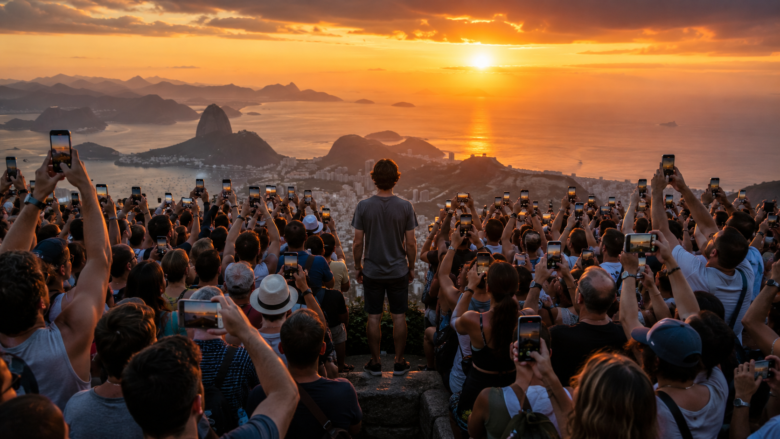
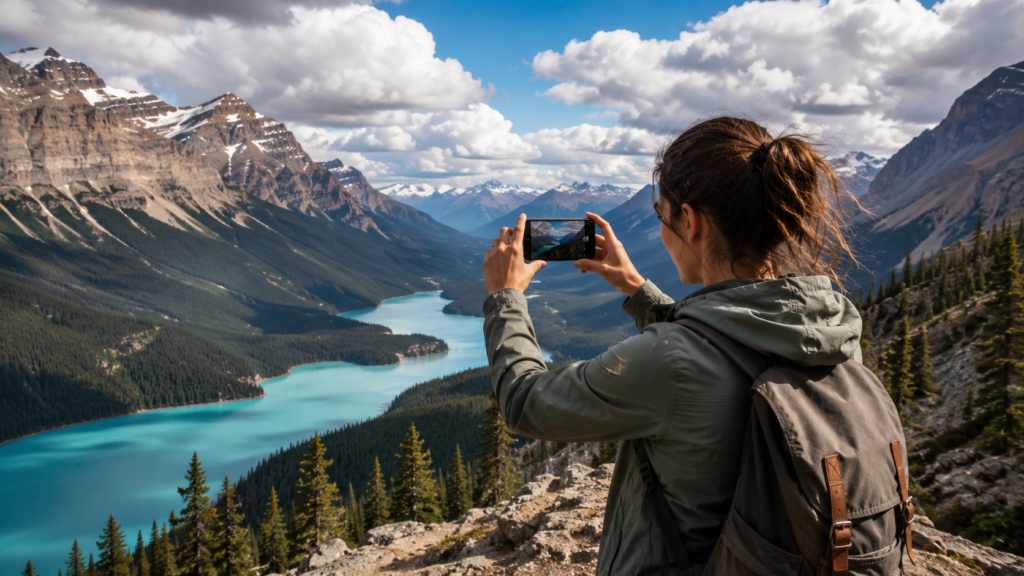
A concert begins. Smartphones appear almost instantly above the crowd. A child blows out birthday candles. Cameras appear before applause. A traveller reaches a breathtaking viewpoint. Before looking at the landscape, they search for the best angle.
The experience increasingly becomes secondary to its documentation.
This shift seems harmless at first. After all, photographs help preserve memories. Videos allow us to revisit important moments. Technology gives us a record that previous generations never had.
The problem is not documentation itself. The problem emerges when documentation quietly replaces participation.
Psychologists have noticed something called the “photo-taking impairment effect.” Several studies suggest that when people focus heavily on photographing an experience, they sometimes remember fewer details about the experience itself.
The brain makes a subtle assumption. It no longer feels entirely responsible for remembering. The device will remember instead.
Rather than fully engaging with the moment, attention becomes divided between living it and recording it.
The result is often a weaker memory despite possessing more evidence. Anyone who has attended a major concert in recent years has probably witnessed this phenomenon.
Thousands of people stand together during a once-in-a-lifetime performance. Yet many spend large portions of the event watching the concert through a six-inch screen held in front of their faces.
Months later, they may possess dozens of videos. But they may struggle to recall how the music felt in the room.
The irony is difficult to ignore. We increasingly collect proof that we were present while becoming less present ourselves.
Part of this behaviour comes from social media.
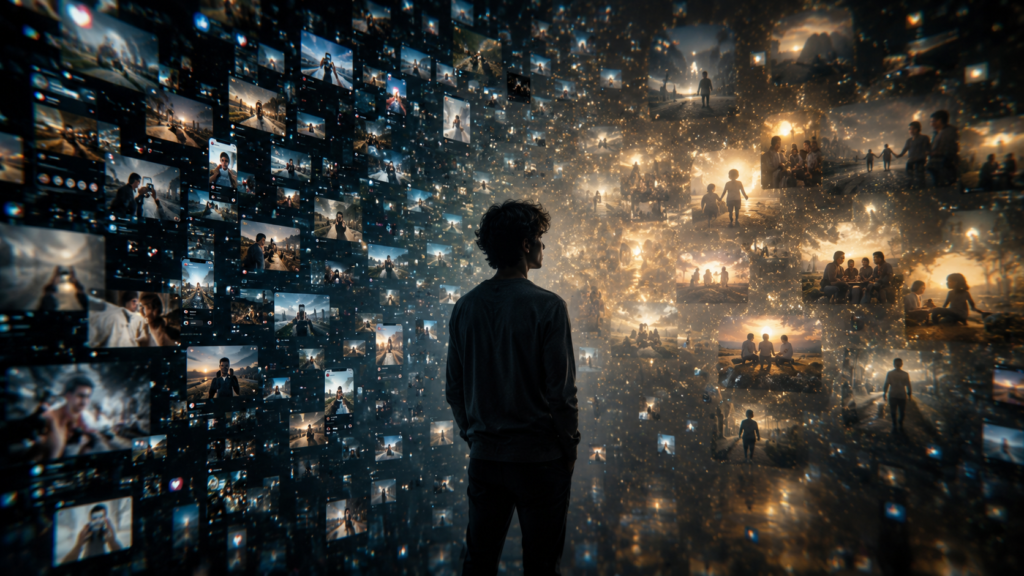
Experiences today often serve two audiences. There is the self experiencing the event. And there is the imagined audience that may eventually see it.
The moment becomes divided. Rather than asking, “What am I experiencing in this moment?” many people unconsciously ask, “How will this look later?”
The mind begins operating as both participant and content creator. This creates a subtle psychological distance from reality. Life starts feeling less like something being lived and more like something being curated.
Even ordinary moments become potential performances. A coffee shop visit is no longer simply a coffee shop visit.
It can become a photograph.
A walk becomes content. A meal becomes content. A relationship becomes content. An opinion becomes content. Gradually, existence itself becomes something that feels publicly observable.
This constant self-awareness changes how experiences unfold.
Research in psychology has long shown that observing ourselves can alter our behaviour. When people become highly conscious of being watched—or even imagine being watched—they often become less spontaneous.
They edit themselves. They perform versions of themselves. They lose some of the freedom that comes from simply existing.
Perhaps this helps explain why some of the most meaningful experiences often happen when nobody is recording anything.
Late-night conversations. Unexpected laughter. Long walks. Shared silence. Moments of grief. Moments of wonder.
The experiences people remember most vividly are often the ones that never appeared online at all.
They survive not because they were documented but because they were felt.
There is another consequence as well. The endless accumulation of digital memories can sometimes weaken the emotional power of remembering.
In previous generations, memory involved reconstruction. People revisited events through stories, imagination, and reflection. Each recollection carried emotion because it required active participation from the mind.
Today, many memories exist as external archives.
Thousands of photographs. Thousands of videos. Thousands of saved moments. Yet abundance can reduce significance. When everything is preserved, nothing feels particularly rare.
A single photograph once carried enormous emotional weight because there were so few. Now a person may take hundreds of nearly identical images and rarely look at them again.
The memory becomes buried beneath its own documentation. None of this means people should stop taking photographs or recording important moments.
The goal is not less technology. The goal is a healthier relationship with it.
Perhaps the question is not whether a moment should be captured. Perhaps the question is whether it has been experienced first.
Can we watch the sunset before photographing it? Can we listen to the song before recording it? Can we be fully present at the wedding before we share it with the world? Can we allow some moments to belong only to us?
The answer may matter more than it appears. Because memory is not merely a storage system. Memory is part of how life becomes meaningful. And meaning rarely emerges from evidence alone.
It emerges from attention. From presence. From emotional participation.
The generation that documents everything may ultimately discover an old truth hidden beneath all the technology.
The most valuable moments are often the ones that never make it into the archive. Not because they were forgotten. But because they were fully lived.
Author’s Note
Technology has given us extraordinary tools for preserving our lives. The challenge is ensuring that preservation does not replace participation. Some experiences deserve a photograph. Others deserve our complete attention.
G.C., Ecosociosphere contributor.