
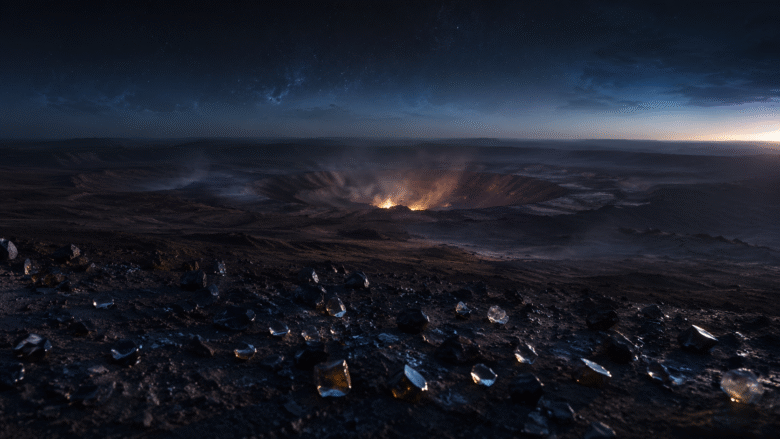
Fun fact: Every time a massive asteroid hits Earth, the ground can melt, fly into the sky, and come back down as glass. Somewhere in Australia, scientists found glass that shouldn’t exist. Not man-made. Not volcanic. Not ordinary. Glass that was born in fire so intense it could only have come from a cosmic collision—an …

Bubbles: a simple joy witnessed from the soapy spheres floating through the air at a child’s party to the frothy top of your morning cappuccino. But have you ever stopped to wonder why bubbles are so captivating, both to the eye and to the mind of a scientist? In this blog, we dive into the …

pH, a term we often encounter in science classes, profoundly influences both the natural world and our daily lives. This simple scale, ranging from acidic to alkaline, is a cornerstone of chemical science, underpinning countless processes from the metabolic pathways in our bodies to the functioning of ecosystems. Despite its scientific origins, the concept of …
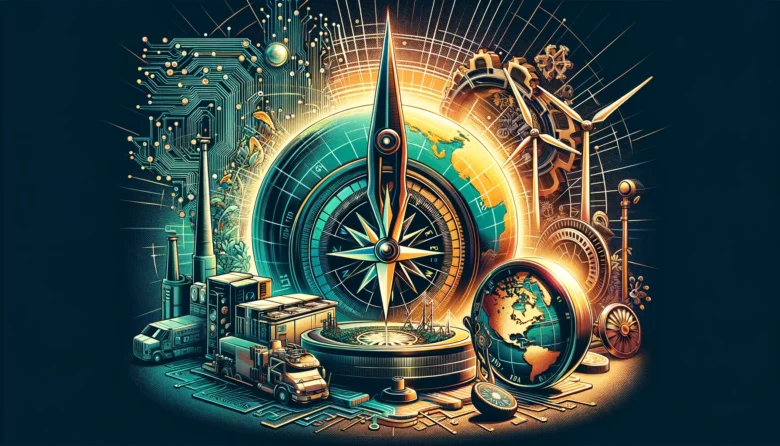
Magnetism, a fundamental force of nature, has captivated human curiosity and ingenuity for millennia. This invisible force, which allows magnets to attract or repel each other and generate electricity, is not just a scientific curiosity but a cornerstone of modern civilization. The journey of magnetism, from guiding ancient sailors through the stars with a humble …