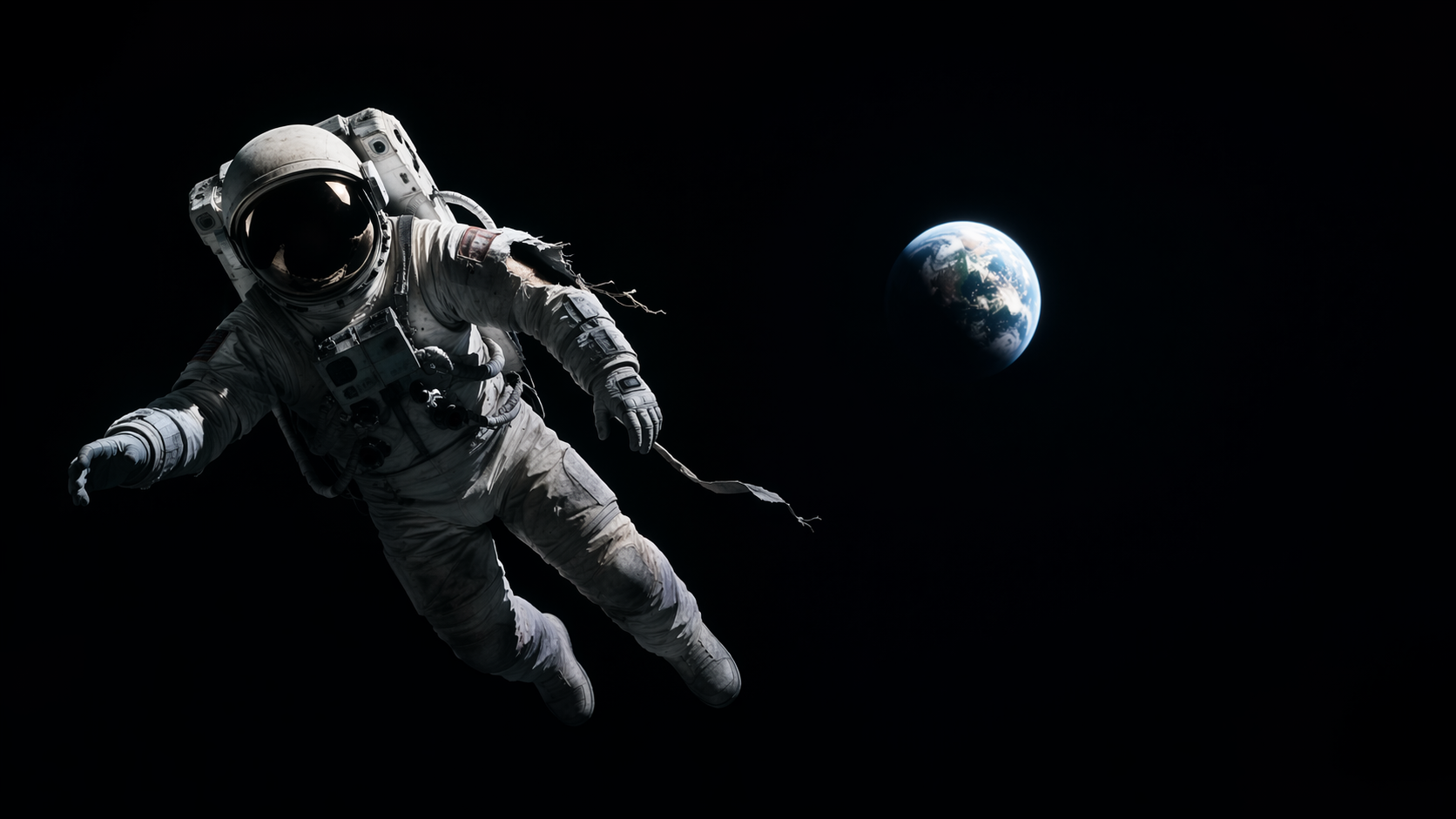
Here’s a strange fact: if you were suddenly exposed to outer space without a spacesuit, you wouldn’t explode—you’d stay conscious for about 10 to 15 seconds before everything begins to shut down. That’s the uncomfortable truth behind the idea that you can survive in space — for about 15 seconds. Not minutes. Not even half …
Fun fact: Every time a massive asteroid hits Earth, the ground can melt, fly into the sky, and come back down as glass. Somewhere in Australia, scientists found glass that shouldn’t exist. Not man-made. Not volcanic. Not ordinary. Glass that was born in fire so intense it could only have come from a cosmic collision—an …
Here’s a strange truth: your body is glowing right now—but not even the darkest room can reveal it. We’re used to thinking of glow as something magical. Fireflies in the night. Neon lights in a city. The soft shimmer of stars. But the most constant, quiet glow you’ll ever encounter is coming from your own …
A caterpillar has been discovered that literally decorates itself with the body parts of the insects it eats. Let that sink in for a moment. In a world where survival often means blending in, hiding, or running away, this creature takes a far more unsettling approach—it wears its past meals like armour. Scientists have nicknamed …
Fun fact: Your brain naturally dips in alertness twice a day—even if you’ve had a full night’s sleep—and one of those dips often hits right in the middle of your class or meeting. “Why People Feel Sleepy in Classrooms or Meetings” is not just a casual complaint—it’s a shared human experience that silently plays out …
Fun fact: That smell you notice when the first drops of rain hit dry ground has a name—petrichor—and your nose is surprisingly good at detecting it, even in tiny amounts. There’s a very specific moment before the rain properly begins. The wind changes a little. The air feels heavier. And then, almost out of nowhere, …
Fun fact: When blindfolded and asked to walk straight, most people unknowingly drift into circles within just a few minutes. There’s something strangely unsettling about the idea that even with the best intentions, the human body cannot always move in a straight line. “Why Humans Naturally Walk in Circles When Lost” is not just a …
If you step outside on a clear night and look up, the sky still feels ancient. Stars shimmer quietly. Constellations drift slowly across the darkness. The universe appears calm, almost untouched. But appearances can be misleading. Above our heads, orbiting the Earth at thousands of kilometres per hour, is an invisible cloud of technology — …
For most of the twentieth century, the space race was about pride. The United States and the Soviet Union competed to reach the Moon, orbit the Earth, and prove technological superiority. Rockets carried astronauts, flags, and dreams of exploration. But the twenty-first century version of the space race looks very different. This time, the prize …
For most of human history, rain was something we prayed for. Farmers watched the sky. Communities performed rituals. Entire civilizations depended on clouds behaving in ways no one could predict. But today, something remarkable — and slightly unsettling — is happening. Across the world, governments are trying to manufacture rain. From China’s massive weather-modification programs …